Showing posts with label france. Show all posts

Wednesday, March 26, 2008

Europe Shouldn't Wait for Hillary Or Obama If It Wishes To Secure Further Trade Liberalization During the Doha Round

http://www.iht.com/articles/2008/03/10/business/rtrinside11.php

Prospects grim as negotiators push for a global trade deal


By Paul Taylor


Reuters


Monday, March 10, 2008


International Herald Tribune


BRUSSELS: To hear some U.S. presidential candidates and European leaders talk, you would think hard times lay ahead for advocates of free trade.
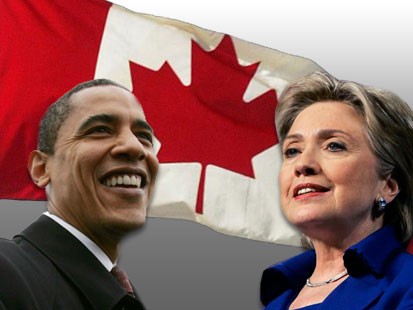
Senators Hillary Rodham Clinton and Barack Obama in the Democratic primaries are criticizing the North American Free Trade Agreement with Canada and Mexico and vowing to renegotiate it to protect American workers.


Clinton, with strong backing from U.S. organized labor, has advocated a "time out" in trade liberalization and questioned whether the theory of comparative advantage that underpins free trade still applies in the 21st century.


On the other side of the Atlantic, President Nicolas Sarkozy of France has urged Europeans to stop being naïve about trade and to develop "a real system of community preferences" to protect European Union agriculture and industry from unfair competition.

[WHAT SARKOZY IS REALLY SAYING, IN NUANCED FRENCH FASHION, IS THAT, GIVEN THE PRESENT ERA OF GLOBALIZATION
IT IS NOW TIME TO UPDATE FORTRESS EUROPE'S PROTECTIONIST DEFENSES WITH NON-TARIFF TECHNICAL BARRIERS TO TRADE DISGUISED AS 'CULTURAL PREFERENCES']


Political opposition has forced the EU's trade commissioner, Peter Mandelson, to delay changes in anti-dumping duties meant to take account of the interests of European firms that produce goods in low-cost countries.


Mandelson has broad powers to negotiate trade agreements on behalf of the 27-nation bloc, but France is doing its best to handcuff him and organized a caucus of 20 farm ministers last month to warn against further concessions on agriculture.


Brussels trade diplomats say that the commissioner, who is British, has long been viewed with suspicion in many member states because of his liberal views on trade and that his influence may be waning.

All this sets a grim backdrop for negotiators at the World Trade Organization, who are preparing yet another "final push" for a global deal to cut tariffs and remove trade barriers. Their aim is to clinch a deal before President George W. Bush leaves office next January.


Turmoil on financial markets and a sharp economic slowdown, especially in the United States, have fueled calls for protecting jobs in wealthy countries.


The trade organization's director general, Pascal Lamy, says the downturn on both sides of the Atlantic should focus minds on the benefits of a trade agreement, not least because failure would damage confidence in the world economy. Keith Rockwell, a spokesman for the agency, said, "Do you fix the roof when the sun is shining or when it's raining? Either way, it's still a good idea to fix the roof."


Politically, a failure of the rules-based multilateral system to deliver progress on trade could undermine European hopes for a more ambitious international agreement in 2009 to curb the greenhouse gas emissions that are blamed for global warming.


As with climate change, a trade deal requires concessions from big emerging nations like India, Brazil and China, which want to be able to protect key sectors of their economies from competition from rich countries.


Those conflicts seriously threaten the trade talks, as does the reluctance of wealthy nations to reduce radically the longstanding protection of their farmers.


"I share the skepticism that anything good will come out of the Doha Development Agenda," said Adam Posen of the Peterson Institute for International Economics in Washington, using the name given to the trade round that began in Qatar in 2001.


Posen said that whoever wins the White House in November, Congress will make trade conditional on labor and environmental standards to shut out cheap competition, mainly from Asia.


Andre Sapir, a trade economist at the Free University of Brussels and former adviser to the European Commission, agrees that the climate in the United States is not favorable for new trade deals, although the Europeans should still push for one.


"You need some bad economic news to make a trade agreement necessary as a booster of confidence," he said. "But even if there is a deal now, the chances are that something is going to be reopened after the U.S. election."


U.S. trade diplomats in Europe are using Clinton's rhetoric and fears of a more protectionist U.S. administration to try to focus on the need to complete a trade deal now.


One senior diplomat, speaking on condition of anonymity because of the sensitivity of the issue, said his message to European counterparts was: "Don't wait for Hillary."

Wednesday, February 6, 2008

Europe Wields Antitrust Law as an Imperialist Sword & Protectionist Shield

http://online.wsj.com/article/SB120053154686996085.html?mod=googlenews_wsj


REVIEW & OUTLOOK


Europe v. U.S. Business


January 17, 2008; Page A16


EU competition chief Neelie Kroes's determination to cow large, successful American firms with antitrust laws is nothing new. But the latest Brussels sally against Microsoft is a good time for Washington to wake up to Europe's regulatory imperialism.


In September, EU courts upheld Brussels's landmark 2004 ruling and €497 million fine against Microsoft. That case hinged on Microsoft's "bundling" of its Media Player with its dominant Windows operating system and alleged refusal to provide rivals with technology to write software that worked with Microsoft programs. Ms. Kroes is now going for the jugular. The formal inquiry she announced Monday focuses on Microsoft's packaging of its Internet Explorer Web browser with Windows, and the compatibility of its popular Office software suite with rival programs.


Brussels has also set its sights on other large U.S. firms. Just since September, EU antitrust regulators have dialed up a case against Qualcomm, continued processing claims against Intel, charged MasterCard with setting illegal fees, searched for reasons to block Google's purchase of DoubleClick, and forced Apple to cut prices for digital songs (though the iPod maker was cleared of any wrongdoing).


All of these cases target American companies that have already come under antitrust scrutiny in the U.S. But Brussels is an attractive venue for competitors to use European antitrust litigation to hobble a rival. We've seen a stampede of lawyers descend on the European capital since September's Microsoft ruling. The U.S. Justice Department has reacted, at most, with a stern press release. There was no American response as far as we could see to Monday's Microsoft news. Words do matter, as Barack Obama says. So does their absence.


Euro-American regulatory cooperation is currently in vogue, with the first meeting last fall of the Trans-Atlantic Economic Council and Washington's recent acceptance of international accounting standards. If there's one legal area that could benefit from such camaraderie, it's antitrust. We're not talking about an International Competition Court but, rather, mutual recognition of American rulings on U.S. companies and EU oversight of European firms. Other countries that want to sign up to the standards could also be included.


We're under no illusions that an arrangement on antitrust would come easily. Brussels seems to enjoy its newfound power. And while U.S. and EU laws on issues such as mergers have been converging, there's still a great deal of water between the two on the treatment of monopolies. For example, American authorities aren't as quick as their Continental counterparts to dismiss the benefits that dominant firms like Microsoft can offer consumers.


In the long run, Europe would also benefit from mutual recognition. In fast-growing economies like China, antitrust law is developing apace. What will be the reaction in Paris and Berlin when French and German companies start encountering "antitrust" cases in Beijing or Seoul?


Today's antitrust multiple-jeopardy -- Intel currently faces litigation in Europe, Japan, South Korea and New York -- is a potential disaster for business. If antitrust cooperation seems a long way off, that's all the more reason for Washington to start fighting back against European overreach.

Monday, February 4, 2008

Environmental Demagoguery: Measuring and Labeling Wine's Carbon Footprint is Needless Undertaking; Will Raise Consumer Costs & Reduces Quality of Life

Bordeaux To Measure Wine’s CO2 Footprint


Environmental Leader


January 29, 2008


http://www.environmentalleader.com/2008/01/29/bordeaux-to-measure-wines-co2-footprint


The Bordeaux Wine Board (CIVB) is launching a project to measure the GHG the region’s industry is producing. The project, called “Bilan Carbone” in French, will run for the next six months in association with the French Environment Agency, and the CIVB says the results will be released in September.


The aim of the study is to give an overview of all emissions resulting from growing and tending vines, making wine, and bottling, storage and delivery. It will also look at associated activities such as personnel, packaging, vine treatments and waste management. According to Roland Feredj, CIVB director, the study will cost about $70,000.Last November, the first-ever attempt at a carbon neutral vineyard in France began in Bordeaux’s Medoc region.

[MORE FRENCH PROTECTIONISM]


Another Bordeaux winemaking family, the Despagne Family, has already launched a carbon reduction project, planting 25 acres of sunflowers that will be used to produce fuel for tractors, but they said studying carbon emissions was a challenge. The Despagnes are using an Australian protocol, developed by Australian wine industry consultant, Provisor, and the Yalumba Wine Company, to measure their GHG and compare them with global standards.

*************************************************************************************
http://afp.google.com/article/ALeqM5gnFLyvTdnNFpzMEUeeN5bbRa0teg

Associated France Presse


Bordeaux to measure wine's CO2 footprint


BORDEAUX, France (AFP) —

The Bordeaux region, one of France's premier wine growing regions, is launching an ambitious project to measure the industry's greenhouse gas emissions to bolster its environmental standards.

The Bordeaux Wine Board (Conseil Interprofessionel des Vins de Bordeaux or CIVB) said it wanted to find out just how much carbon dioxide, one of the main culprits in global warming, it generated.

"We know we produce 756 million bottles of wine per year and that 40 percent of that is exported," said Laurent Charlier of the CIVB, who will be working with environmental consultant Jean Marc Jancovici on the project.


"This study should give a clear idea of what different methods of production or shipment mean, in terms of environmental cost," he said.


[THIS IS NOTHING MORE THAN FRENCH CLIMATE CHANGE CHICANERY - THE FRENCH WINE INDUSTRY IS UNDER INCREASING COMPETITION FROM LOWER COST PRODUCERS FROM AROUND THE WORLD...]

The project, called "Bilan Carbone" in French, will run for the next six months in association with the French Environment Agency (ADEME), and the CIVB says the results will be released in September.


Jancovici, who has worked with the French government, France Telecom, Sony, Alcatel and luxury goods company LVMH, was also responsible for a similar project for producers in the Champagne region.


CIVB director, Roland Feredj, said the launch in October last year of France¹s national environmental action plan was in part responsible for the CIVB initiative but there is a practical side as well.

"Everyone is concerned with the costs of (wine) production, so if we can find ways of saving money and reducing carbon emissions, that would be ideal."

The aim of the study, which Feredj said would cost about 50,000 euros (70,000 dollars), are to give an overview of all emissions resulting from growing and tending vines, making wine, and bottling, storage and delivery.


It will also look at associated activities such as personnel, packaging, vine treatments and waste management.


"We intend to find out the carbon emissions for making different styles of wine," Charlier said. "And at what stages we need to concentrate our efforts to mitigate the emissions."

One Bordeaux winemaking family that has already launched a carbon reduction project, planting 10 hectares (25 acres) of sunflowers that will be used to produce fuel for tractors, welcomed the move, but said studying carbon emissions was a challenge.

"We think it's good and we are going to be part of the study group," said Aymeric Fournier for the Despagne Family which owns 300 hectares of vineyards in Bordeaux.

"This will give us an overview of the situation but it is a complicated thing to do," he warned.
"We started seriously in the spring of 2007 -- although we had already planted the sunflowers -- to look at our carbon emissions but deciding how far to take each measurement is not easy," Fournier said.


"For example, with any of the products needed for the vineyard we need to ask, how far has this come, how much carbon was emitted in its making? Or take the different cars and different distances that employees drive to work. It is a very detailed calculation," he said.


The Despagnes are already using an Australian protocol, developed by Australian wine industry consultant, Provisor, and the Yalumba Wine Company, to to measure their greenhouse gas emissions and compare them with global standards.

"It is quite a piece of work but we are determined to go ahead with it. It helps so much to have this kind of framework. We were a bit stumped as to where to go next before we saw this," Fournier said. "

Monday, January 28, 2008

The French Protection: The Resurgence of Colbertian Statist Economics

http://www.pinr.com/report.php?ac=view_report&report_id=367


Economic Brief: French Protectionism


Report Drafted By:


Erich Marquardt, Dr. Federico Bordonaro


15 September 2005


On August 31, France announced that it would protect from buyouts by foreign companies domestic industries it considers as strategic. French Finance Minister Thierry Breton stated that the country's "very sensitive sectors" would be shielded from foreign bids. While the complete list of protected industries has not been made public yet, some of the protected industries were leaked to the media. As reported by Les Echos, the protected industries include defense, biotechnology, space technology, telecommunication companies, casinos, encryption, IT security, and antidote production.


France's turn toward protectionism follows a global pattern where states with advanced economies are shielding their domestic industries from foreign competition and from potential state rivals.


French Protectionism Returns


For many observers, the ongoing wave of "economic patriotism" advocated by French Prime Minister Dominique de Villepin is nothing else but the renewal of French-style protectionism marked by the Colbertian tradition of statist direction of the national economy.


After rumors circulated in the summer of 2005 about a possible bid from U.S. drinks giant PepsiCo Inc. for French food giant Danone, and a Wal-Mart bid on supermarket chain Carrefour, many in the French political landscape called for an immediate reaction by the current administration so that France's industrial gems could be saved from American takeover. Therefore, on July 27, de Villepin announced that he would gather all available forces to launch a new economic patriotism.


Additionally, France bailed out its major engineering company Alstom in order to promote the French idea of creating "national champions," and avoided Switzerland's Novartis from buying out the French and German pharmaceutical company Aventis by backing Sanofi's merger with Aventis to create Sanofi-Aventis.


E.U. Concern


Protectionist acts from one of the leading states of the European Union have caused justifiable concern in Brussels. Gregor Kreuzhuber, spokesman for the E.U. Commission, told the press that the E.U. does not "want to see any disguised protectionism" and that the E.U. would review France's proposed economic policy.


Paris, predicting the concern in Brussels, quickly argued that its actions would comply with E.U. economic laws. French Budget Minister Jean-Francois Cope explained to the press, "Our move is completely consistent with community law. … Each country is allowed to define 'strategic' sectors in accordance with national interests -- for example in the defense or sensitive technology sectors." Cope further stated, "It's strictly within this framework that the government is considering measures which would be comparable to those in other European Union countries."


While it is obvious that France will try to argue that its protectionist measures abide by E.U. rules and regulations, there is concern that Paris' actions could set an example for other E.U. states to take similar protectionist measures. The fact that the French have casinos listed as one of their strategic industries -- under the notion that casinos could be used for money laundering -- exemplifies E.U. concern that France's actions are "disguised protectionism."


In its attempt to avoid the E.U. from blocking the passage of the new legislation, France will no doubt try to protect only its most vital industries so as to not draw the scorn of Brussels, but also to protect enough industries so as to appeal to domestic interests at home.


Why Protectionism?


French protectionism partly emanates from Paris' concern with foreign companies purchasing major firms in strategic or pivotal industries. Similar to the way that the U.S. Congress reacted to China National Offshore Oil Corporation's attempted purchase of the U.S. energy company Unocal, Paris does not want to see vital industries owned by outside companies tied to the governments of foreign states.


Additionally, however, Paris also wants to protect its domestic industries so that the country does not sustain a loss of jobs, such as factories closing down and moving operations to Eastern Europe or Asia. It provides the French government popularity in time for the upcoming presidential and parliamentary elections in 2007; tackling unemployment and successfully coping with globalization's challenges are vital to enhance the administration's credibility. In fact, without appreciable results in reducing the jobless figure in the country, de Villepin will hardly get the necessary support to achieve his ambitious industrial and energy policy. [See: "Intelligence Brief: French Energy Policy"]


As previously mentioned, de Villepin made the protection of French manufacturers a major policy goal after the PepsiCo Inc. bid was announced. After the bid was presented, President Jacques Chirac was reported saying that "the splitting up and the instability of the capital of certain large French businesses are risk factors for employment and for our industrial strength." It was then that de Villepin boldly announced it was time for France to display "real economic patriotism," or, in other words, economic nationalism. He argued, "When times are hard, when the world is changing, it is a question of gathering our strengths … and defending France and things French."


While Paris' rhetoric is very bold, in the end the French policy is similar to unspoken protectionist policies in other states with advanced economies, as was most recently seen in the protectionist bid by the U.S. and the E.U. against Chinese textile imports.


The important difference, however, is that the protectionist actions in the face of increased Chinese textile imports were taken by the E.U. as a whole, whereas Paris' "economic patriotism" idea is distinctly French. [See: "Economic Brief: Textile Quotas"]


Despite this concern, Les Echos reported that the list of protected industries it acquired did not list any food companies or, for instance, oil companies. However, the French Industry Ministry did state that it would reserve the right to prevent foreign takeovers of companies that had subsidiaries involved in any of the listed "sensitive sectors" and that the government would make the decision to bar a foreign takeover on a case-by-case basis.


The Bottom Line


After decades of dominating political discourse, economic liberalism looks now in a crisis because important decision-makers (such as in France) perceive it as fiction that conceals the hard reality of economic warfare and power relations among states. If France's republican and social-democratic traditions form an axis with the neo-Gaullist right-wing and prevail in the short/medium term over the neo-liberal reformists, look for a new social and political bloc to take shape around the "economic patriotism" policy in France, with considerable consequences for the European Union as a whole.