http://www.eurasiabio.org/media/news/moscow_mayor__going_to_exclude_transgenes_from__muscovites_ration/
Moscow mayor going to exclude transgenes from Muscovites’ ration
Source: AMI TASS
March 20, 2008
Jury Lushkov has proposed to completely ban the sale of GMO containing products in Moscow.
He pointed out that about 6 per cent of products in sale in Moscow contain GMO. Indicating that such products are prohibited in many countries and cities. .Moscow mayor insists this dangerous and still not fully investigated component to be expelled from the capital.
Over 12,8 thousand titles of products have been checked. The GMO level exceeding the 0.9 per cent mark was revealed in 750 articles, mostly diary products.
The bans and limits for transgene cultures in several EG countries are linked to the ecologists' doubts that their uncontrolled dissemination can endanger the ecology balance in Europa.
At the same time the representatives of Institute of Nutrition, Moscow State University, Gamaleja Institute of microbiology and epidemiology stress, that there exists no study proving the GMO danger for the human health.
[MOSCOW STATE UNIVERSITY SCIENTISTS ARE CORRECT IN CITING THAT THERE ARE NO PROVEN HUMAN HEALTH OR ENVIRONMENTAL RISKS POSED BY GMOS]
[See, e.g., LA Kogan Presentation at Moscow State University – BASIC DIRECTIONS OF MODERN BIOTECHNOLOGY: BIOTECHNOLOGY - A SCIENTIFIC & PRACTICAL PRIORITY OF THE RUSSIAN FEDERATION (June 29, 2007), at:
http://www.itssd.org/Programs/BasicDirectionsofModernBiotechnology-KOGANPresentationMoscowConferenceJune29,2007.ppt
Showing posts with label agricultural subsidies. Show all posts
Showing posts with label agricultural subsidies. Show all posts
Wednesday, April 2, 2008


Wednesday, March 26, 2008
Europe Shouldn't Wait for Hillary Or Obama If It Wishes To Secure Further Trade Liberalization During the Doha Round
http://www.iht.com/articles/2008/03/10/business/rtrinside11.php
Prospects grim as negotiators push for a global trade deal
By Paul Taylor
Reuters
Monday, March 10, 2008
International Herald Tribune
BRUSSELS: To hear some U.S. presidential candidates and European leaders talk, you would think hard times lay ahead for advocates of free trade.
 Senators Hillary Rodham Clinton and Barack Obama in the Democratic primaries are criticizing the North American Free Trade Agreement with Canada and Mexico and vowing to renegotiate it to protect American workers.
Clinton, with strong backing from U.S. organized labor, has advocated a "time out" in trade liberalization and questioned whether the theory of comparative advantage that underpins free trade still applies in the 21st century.
On the other side of the Atlantic, President Nicolas Sarkozy of France has urged Europeans to stop being naïve about trade and to develop "a real system of community preferences" to protect European Union agriculture and industry from unfair competition.

 [WHAT SARKOZY IS REALLY SAYING, IN NUANCED FRENCH FASHION, IS THAT, GIVEN THE PRESENT ERA OF GLOBALIZATION
Prospects grim as negotiators push for a global trade deal
By Paul Taylor
Reuters
Monday, March 10, 2008
International Herald Tribune
BRUSSELS: To hear some U.S. presidential candidates and European leaders talk, you would think hard times lay ahead for advocates of free trade.
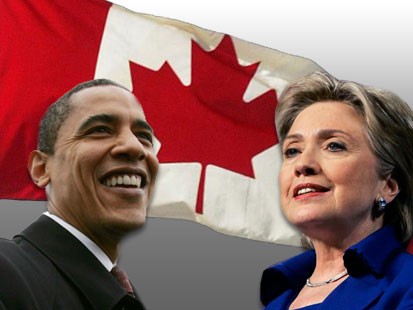 Senators Hillary Rodham Clinton and Barack Obama in the Democratic primaries are criticizing the North American Free Trade Agreement with Canada and Mexico and vowing to renegotiate it to protect American workers.
Clinton, with strong backing from U.S. organized labor, has advocated a "time out" in trade liberalization and questioned whether the theory of comparative advantage that underpins free trade still applies in the 21st century.
On the other side of the Atlantic, President Nicolas Sarkozy of France has urged Europeans to stop being naïve about trade and to develop "a real system of community preferences" to protect European Union agriculture and industry from unfair competition.

 [WHAT SARKOZY IS REALLY SAYING, IN NUANCED FRENCH FASHION, IS THAT, GIVEN THE PRESENT ERA OF GLOBALIZATION
 IT IS NOW TIME TO UPDATE FORTRESS EUROPE'S PROTECTIONIST DEFENSES WITH NON-TARIFF TECHNICAL BARRIERS TO TRADE DISGUISED AS 'CULTURAL PREFERENCES']
Political opposition has forced the EU's trade commissioner, Peter Mandelson, to delay changes in anti-dumping duties meant to take account of the interests of European firms that produce goods in low-cost countries.
 Mandelson has broad powers to negotiate trade agreements on behalf of the 27-nation bloc, but France is doing its best to handcuff him and organized a caucus of 20 farm ministers last month to warn against further concessions on agriculture.
Brussels trade diplomats say that the commissioner, who is British, has long been viewed with suspicion in many member states because of his liberal views on trade and that his influence may be waning.
 Mandelson has broad powers to negotiate trade agreements on behalf of the 27-nation bloc, but France is doing its best to handcuff him and organized a caucus of 20 farm ministers last month to warn against further concessions on agriculture.
Brussels trade diplomats say that the commissioner, who is British, has long been viewed with suspicion in many member states because of his liberal views on trade and that his influence may be waning.
All this sets a grim backdrop for negotiators at the World Trade Organization, who are preparing yet another "final push" for a global deal to cut tariffs and remove trade barriers. Their aim is to clinch a deal before President George W. Bush leaves office next January.
Turmoil on financial markets and a sharp economic slowdown, especially in the United States, have fueled calls for protecting jobs in wealthy countries.
The trade organization's director general, Pascal Lamy, says the downturn on both sides of the Atlantic should focus minds on the benefits of a trade agreement, not least because failure would damage confidence in the world economy. Keith Rockwell, a spokesman for the agency, said, "Do you fix the roof when the sun is shining or when it's raining? Either way, it's still a good idea to fix the roof."
Politically, a failure of the rules-based multilateral system to deliver progress on trade could undermine European hopes for a more ambitious international agreement in 2009 to curb the greenhouse gas emissions that are blamed for global warming.
As with climate change, a trade deal requires concessions from big emerging nations like India, Brazil and China, which want to be able to protect key sectors of their economies from competition from rich countries.
Those conflicts seriously threaten the trade talks, as does the reluctance of wealthy nations to reduce radically the longstanding protection of their farmers.
"I share the skepticism that anything good will come out of the Doha Development Agenda," said Adam Posen of the Peterson Institute for International Economics in Washington, using the name given to the trade round that began in Qatar in 2001.
Posen said that whoever wins the White House in November, Congress will make trade conditional on labor and environmental standards to shut out cheap competition, mainly from Asia.
Andre Sapir, a trade economist at the Free University of Brussels and former adviser to the European Commission, agrees that the climate in the United States is not favorable for new trade deals, although the Europeans should still push for one.
"You need some bad economic news to make a trade agreement necessary as a booster of confidence," he said. "But even if there is a deal now, the chances are that something is going to be reopened after the U.S. election."
U.S. trade diplomats in Europe are using Clinton's rhetoric and fears of a more protectionist U.S. administration to try to focus on the need to complete a trade deal now.
One senior diplomat, speaking on condition of anonymity because of the sensitivity of the issue, said his message to European counterparts was: "Don't wait for Hillary."
Turmoil on financial markets and a sharp economic slowdown, especially in the United States, have fueled calls for protecting jobs in wealthy countries.
The trade organization's director general, Pascal Lamy, says the downturn on both sides of the Atlantic should focus minds on the benefits of a trade agreement, not least because failure would damage confidence in the world economy. Keith Rockwell, a spokesman for the agency, said, "Do you fix the roof when the sun is shining or when it's raining? Either way, it's still a good idea to fix the roof."
Politically, a failure of the rules-based multilateral system to deliver progress on trade could undermine European hopes for a more ambitious international agreement in 2009 to curb the greenhouse gas emissions that are blamed for global warming.
As with climate change, a trade deal requires concessions from big emerging nations like India, Brazil and China, which want to be able to protect key sectors of their economies from competition from rich countries.
Those conflicts seriously threaten the trade talks, as does the reluctance of wealthy nations to reduce radically the longstanding protection of their farmers.
"I share the skepticism that anything good will come out of the Doha Development Agenda," said Adam Posen of the Peterson Institute for International Economics in Washington, using the name given to the trade round that began in Qatar in 2001.
Posen said that whoever wins the White House in November, Congress will make trade conditional on labor and environmental standards to shut out cheap competition, mainly from Asia.
Andre Sapir, a trade economist at the Free University of Brussels and former adviser to the European Commission, agrees that the climate in the United States is not favorable for new trade deals, although the Europeans should still push for one.
"You need some bad economic news to make a trade agreement necessary as a booster of confidence," he said. "But even if there is a deal now, the chances are that something is going to be reopened after the U.S. election."
U.S. trade diplomats in Europe are using Clinton's rhetoric and fears of a more protectionist U.S. administration to try to focus on the need to complete a trade deal now.
One senior diplomat, speaking on condition of anonymity because of the sensitivity of the issue, said his message to European counterparts was: "Don't wait for Hillary."
Wednesday, March 5, 2008
EU Has Long Held Developing World Hostage to Non-Scienced-Based Health & Environmental Standards Deemed Economically & Socially Harmful
http://www.itssd.org/Res%20Ipsa%20Loquitor/Res%20Ipsa%20Loquitor%20-%20Studies%20showing%20impact%20of%20overly%20stringent%20stds%20on%20developing%20countries.pdf
ITSSD Main Website Issues - Studies Evaluating Negative Impacts of Overly Stringent EU Standards on Developing Countries
I. Generally
II. World Bank and Other Studies Quantifying the Impacts of Technical Barriers to Trade
III. World Bank and Other Studies Examining EU Standards Relating to Aflatoxins, in Nuts, Dried Fruits and Cereals
IV. World Bank Study Evaluating EU Maximum Residue Level (MRL) Standards Relating to Tetracyline Use in Beef
V. World Bank Study Evaluating EU MRL Standards For Bananas
VI. World Bank Study Evaluating Impact of Trade on Air Pollution Standards in Developing Countries
VII. World Bank Study Evaluating How Environmental Standards Affect Developing Country Export Competition
VIII. World Bank Study Quantifying the Trade Impact of Sanitary and Phytosanitary (SPS) Standards on Sub-Saharan Africa
ITSSD Main Website Issues - Studies Evaluating Negative Impacts of Overly Stringent EU Standards on Developing Countries
I. Generally
II. World Bank and Other Studies Quantifying the Impacts of Technical Barriers to Trade
III. World Bank and Other Studies Examining EU Standards Relating to Aflatoxins, in Nuts, Dried Fruits and Cereals
IV. World Bank Study Evaluating EU Maximum Residue Level (MRL) Standards Relating to Tetracyline Use in Beef
V. World Bank Study Evaluating EU MRL Standards For Bananas
VI. World Bank Study Evaluating Impact of Trade on Air Pollution Standards in Developing Countries
VII. World Bank Study Evaluating How Environmental Standards Affect Developing Country Export Competition
VIII. World Bank Study Quantifying the Trade Impact of Sanitary and Phytosanitary (SPS) Standards on Sub-Saharan Africa
Overly Strict EU Environmental and Health Regulations Have Long Served as Protectionist Trade Barriers That Harm Developing Country Advancement
http://www.itssd.org/Res%20Ipsa%20Loquitor/Res%20Ipsa%20Loquitor%20-%20Developing%20Countries%20Trade%20Barriers%20Sust%20Dev.pdf
ITSSD Main Website Issues - Developing Countries, EU Regulatory Trade Barriers and 'Negative' Sustainable Development
I. Generally
II. DDT , Malarian and UN POPs Treaty
III. UN Basel Convention and the Waste and Recyling Trade in Asia
IV. The Developing World Response to the EU's Proposed (now Final) REACH Chemicals Regulation
V. Africa's Response to Europe's GM Moratorium
ITSSD Main Website Issues - Developing Countries, EU Regulatory Trade Barriers and 'Negative' Sustainable Development
I. Generally
II. DDT , Malarian and UN POPs Treaty
III. UN Basel Convention and the Waste and Recyling Trade in Asia
IV. The Developing World Response to the EU's Proposed (now Final) REACH Chemicals Regulation
V. Africa's Response to Europe's GM Moratorium
Monday, February 4, 2008
The Future of Doha...
The Future of Doha: Can the Doha Trade Round Be Saved?
http://www.businessweek.com/globalbiz/content/jan2008/gb20080128_519854.htm?campaign_id=rss_daily
January 28, 2008
by Sean O'Grady
BusinessWeek
Peter Mandelson, the European Union trade commissioner, has warned about the consequences if the Doha round of world trade talks were to fail this year.
Mr Mandelson pointed to the approaching US elections as the effective deadline for the consummation of the negotiations, after which the delays associated with the new American administration would effectively kill the process.
A new president would inevitably need to review the negotiations, and Mr Mandelson thought that the Doha round was unlikely to be at the top of their in-tray. The process of appointing, nominating and gaining congressional approval for new trade officials could also take many months.
At the World Economic Forum in Davos, Mr Mandelson said that while 2007 had been called a "year of opportunity", 2008 would be "the year of necessity". He added that he had been struck by business figures who had felt "frustrated" by the length of time taken (the Doha round was launched in 2001), and who perceived that "the level of ambition has fallen". He said that they had urged him not to give up, but also not to allow the negotiations to "linger on" and to give them a "decent burial".
Mr Mandelson suggested that if the Doha round were to be abandoned, economically valuable elements already agreed could be extracted from it, such as a package of development aid. Even so, he was sceptical about the extent to which such "cherry-picking" might be possible.
Mr Mandelson said that "the caravans would move on" if an agreement were not reached in 2008, with countries and trading blocs moving to a series of bilateral treaties in place of the Doha round. These, he conceded, would be beneficial, but still be "no substitute" for a comprehensive multilateral arrangement which would more firmly build in the gains for free trade that have been made in the past few decades.
Since the onset of the credit crisis and the general slowdown in world economic growth, political pressures for protection have been growing, particularly in parts of Europe and the United States. Opposition to sovereign wealth funds and calls for tighter regulation of financial markets are two examples of how recent economic events have fuelled resistance to trade liberalisation.
Last month, Mr Mandelson attacked Hillary Clinton, the US presidential candidate, over her attitude to free trade. He described Mrs Clinton's views on global trade as "disappointing", "misplaced" and symptomatic of a new trend towards protectionism in the West.
In recent days sources close to Mr Mandelson have suggested that more progress was being made than the public realised, and expressed hope that the certainty of a change of incumbent in the White House would force the pace of change.
For her part, the US trade envoy, Susan Schwab, reiterated the commitment of the Bush administration to the success of the talks. The Indian Minister for Trade and Commerce, Kamal Nath, said that he was prepared to negotiate on commerce, but would not do so in matters of "livelihood and security".
Arguments about the level of agricultural subsidies in the West and the willingness of developing nations to open up their markets in services have bedevilled the talks for some time, despite evident goodwill on the part of most of the participants. Informal meetings of 25 trade ministers plus the World Trade Organisation chief, Pascal Lamy, and Mr Mandelson over the weekend do not appear to have resulted in a breakthrough.
http://www.businessweek.com/globalbiz/content/jan2008/gb20080128_519854.htm?campaign_id=rss_daily
January 28, 2008
by Sean O'Grady
BusinessWeek
Peter Mandelson, the European Union trade commissioner, has warned about the consequences if the Doha round of world trade talks were to fail this year.
Mr Mandelson pointed to the approaching US elections as the effective deadline for the consummation of the negotiations, after which the delays associated with the new American administration would effectively kill the process.
A new president would inevitably need to review the negotiations, and Mr Mandelson thought that the Doha round was unlikely to be at the top of their in-tray. The process of appointing, nominating and gaining congressional approval for new trade officials could also take many months.
At the World Economic Forum in Davos, Mr Mandelson said that while 2007 had been called a "year of opportunity", 2008 would be "the year of necessity". He added that he had been struck by business figures who had felt "frustrated" by the length of time taken (the Doha round was launched in 2001), and who perceived that "the level of ambition has fallen". He said that they had urged him not to give up, but also not to allow the negotiations to "linger on" and to give them a "decent burial".
Mr Mandelson suggested that if the Doha round were to be abandoned, economically valuable elements already agreed could be extracted from it, such as a package of development aid. Even so, he was sceptical about the extent to which such "cherry-picking" might be possible.
Mr Mandelson said that "the caravans would move on" if an agreement were not reached in 2008, with countries and trading blocs moving to a series of bilateral treaties in place of the Doha round. These, he conceded, would be beneficial, but still be "no substitute" for a comprehensive multilateral arrangement which would more firmly build in the gains for free trade that have been made in the past few decades.
Since the onset of the credit crisis and the general slowdown in world economic growth, political pressures for protection have been growing, particularly in parts of Europe and the United States. Opposition to sovereign wealth funds and calls for tighter regulation of financial markets are two examples of how recent economic events have fuelled resistance to trade liberalisation.
Last month, Mr Mandelson attacked Hillary Clinton, the US presidential candidate, over her attitude to free trade. He described Mrs Clinton's views on global trade as "disappointing", "misplaced" and symptomatic of a new trend towards protectionism in the West.
In recent days sources close to Mr Mandelson have suggested that more progress was being made than the public realised, and expressed hope that the certainty of a change of incumbent in the White House would force the pace of change.
For her part, the US trade envoy, Susan Schwab, reiterated the commitment of the Bush administration to the success of the talks. The Indian Minister for Trade and Commerce, Kamal Nath, said that he was prepared to negotiate on commerce, but would not do so in matters of "livelihood and security".
Arguments about the level of agricultural subsidies in the West and the willingness of developing nations to open up their markets in services have bedevilled the talks for some time, despite evident goodwill on the part of most of the participants. Informal meetings of 25 trade ministers plus the World Trade Organisation chief, Pascal Lamy, and Mr Mandelson over the weekend do not appear to have resulted in a breakthrough.
EU Farming Subsidies Likely to Continue
EU farming subsidies likely to continue
The future of farming subsidies for the EU is still in the balance even though their efficiency has been brought into question recently (see related article ). But, with support from large farming markets like France, subsidies are likely to remain. Farming subsidies have also been at the center of the climate change debate (see related article) and, therefore, some EU countries are trying label subsidies under environmental schemes even though they are not.
France pressing for farm subsidies after 2013
http://www.fwi.co.uk/Articles/2008/01/04/108898/france-pressing-for-farm-subsidies-after-2013.html
FarmersWeekly, UK
January 4, 2008
Momentum is beginning to build within the European Parliament that the European Union should continue to give financial support to agriculture after the current arrangements end in 2013.
Speaking at the Oxford Farming Conference on 3 January, Conservative MEP for the south west and current chair of the European Parliament's agricultural committee, Neil Parish expressed confidence that support was likely to continue after 2013.
"There will be a payment after 2013, it will be a lesser one and it will probably be spread too thinly," he told delegates.
France is understood to be taking the lead on the issue with strong support from the new member states.
The €40bn currently allocated to the Common Agricultural Policy budget is likely to be the starting point for negotiations with France likely to argue for it to continue in something close to its currant form.
However, Germany, as the primary funder of the CAP, is likely to argue that any arrangements should be based on co-financing principles which would reduce its burden.
The UK is likely to object to any continuation of support payments and insist that any future payments are directed only at environmental schemes.
Furthermore, unless any co-financing arrangements are made compulsory it is unlikely that UK farmers would receive anything more than minimum available.
For more on the Oxford Farming Conference visit the FWi landing page by clicking here
The future of farming subsidies for the EU is still in the balance even though their efficiency has been brought into question recently (see related article ). But, with support from large farming markets like France, subsidies are likely to remain. Farming subsidies have also been at the center of the climate change debate (see related article) and, therefore, some EU countries are trying label subsidies under environmental schemes even though they are not.
France pressing for farm subsidies after 2013
http://www.fwi.co.uk/Articles/2008/01/04/108898/france-pressing-for-farm-subsidies-after-2013.html
FarmersWeekly, UK
January 4, 2008
Momentum is beginning to build within the European Parliament that the European Union should continue to give financial support to agriculture after the current arrangements end in 2013.
Speaking at the Oxford Farming Conference on 3 January, Conservative MEP for the south west and current chair of the European Parliament's agricultural committee, Neil Parish expressed confidence that support was likely to continue after 2013.
"There will be a payment after 2013, it will be a lesser one and it will probably be spread too thinly," he told delegates.
France is understood to be taking the lead on the issue with strong support from the new member states.
The €40bn currently allocated to the Common Agricultural Policy budget is likely to be the starting point for negotiations with France likely to argue for it to continue in something close to its currant form.
However, Germany, as the primary funder of the CAP, is likely to argue that any arrangements should be based on co-financing principles which would reduce its burden.
The UK is likely to object to any continuation of support payments and insist that any future payments are directed only at environmental schemes.
Furthermore, unless any co-financing arrangements are made compulsory it is unlikely that UK farmers would receive anything more than minimum available.
For more on the Oxford Farming Conference visit the FWi landing page by clicking here
Subscribe to:
Posts (Atom)


