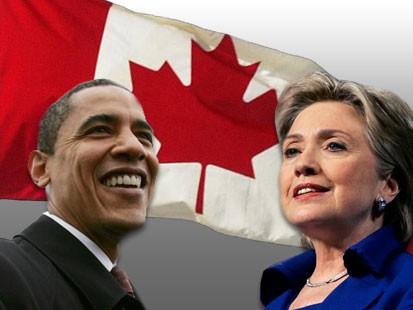
Thursday, April 3, 2008

Congressman Rangel and Other House Ways & Means Committee Majority Members Provide Political Cover for Clinton & Obama to Promote Trade Protectionism

http://waysandmeans.house.gov/


U.S. Must Enforce Laws to Break Down Trade Barriers


March 28, 2008


Committee on Ways and Means, U.S. House of Representatives


WASHINGTON, DC – Senior House Democrats today sent a letter to President Bush, renewing their call for stricter enforcement of U.S. rights under trade agreements. The letter was sent in anticipation of the Administration’s annual "National Trade Estimate" (NTE) report listing barriers to U.S. exports.

[The 2008 National Trade Estimate (NTE) Report is accessible here:
http://www.ustr.gov/assets/Document_Library/Reports_Publications/2008/2008_NTE_Report/asset_upload_file365_14652.pdf ].

In their letter, the Democrats expressed hope that the Administration would move past merely inventorying the systemic, recurring trade barriers that U.S. companies face, and, and to take a positive step forward and begin enforcing U.S. rights more vigorously."


In the Democrats’ view, stricter enforcement of trade laws would avoid further growth of the U.S. trade deficit and unsustainable levels of foreign-owned U.S. debt.


In 2007, the U.S. trade deficit was $711.6 billion – the third highest in history and a shocking five percent of the U.S. economy. Over the past six years alone, foreign-owned debt has more than doubled, currently standing at $2.4 trillion or 17 percent of U.S. gross domestic product (GDP). As noted in the letter, the Bush Administration has accumulated more debt to foreign governments and individuals than all previous administrations combined.


The Democrats' letter is accessible here: http://waysandmeans.house.gov/media/pdf/110/cbr%20potus.pdf .


[A REVIEW OF THE POINTS MADE IN THIS LETTER WILL REVEAL CERTAIN TRUTHS, THEY BEING: 1) THE ADMINISTRATION ARGUABLY HAS FAILED TO PROTECT U.S. PROPERTY RIGHTS BY NOT VIGOROUSLY ENFORCING WORLD TRADE ORGANIZATION (WTO) RULES AGAINST VIOLATING WTO MEMBER NATIONS; 2) THE U.S. TRADE DEFICIT NO LONGER REFLECTS STRICTLY LOW-COST, VALUE-ADDED IMPORTS - RATHER IT NOW INCLUDES ALSO HIGH TECHNOLOGY IMPORTS DUE TO CORPORATE OUTSOURCING/ OFFSHORING; AND 3) THE RESULTING TRADE DEFICITS FROM NONENFORCEMENT OF WTO LAWS AND THE GROWING HI-TECHNOLOGY IMPORTS ARGUABLY CREATES MORE FOREIGN-OWNED U.S. DEBT AS U.S. CITIZENS BUY MORE & MORE OF PRODUCTS DESIGNED, DEVELOPED & MANUFACTURED FROM OVERSEAS SOURCES ON CREDIT. ]


[AND, ARGUABLY, THE USTR SHOULD HAVE LONG AGO BEGUN CONSULTATIONS WITH VARIOUS U.S. KEY TRADING PARTNERS, AS A PRESAGE TO COMMENCING A POSSIBLE WTO ACTION AGAINST PARTICULAR WTO MEMBER GOVERNMENTS IF U.S. CONCERNS ABOUT MARKET ACCESS TRADE BARRIERS ARE NOT ADEQUATELY ADDRESSED.


THE QUESTION, HOWEVER, IS WHICH KEY TRADING PARTNERS HAVE IMPOSED THE MOST EXTENSIVE, SYSTEMIC AND DAMAGING TRADE BARRIERS AGAINST CRITICAL U.S. PRODUCTS AND PROCESSES, OR HAVE DIMINISHED THE VALUE OF OR OTHERWISE EXPROPRIATED KEY U.S. ASSETS UNDERLYING HI-TECHNOLOGIES WHICH SERVE AS THE CORE OF AMERICA'S 21ST CENTURY ECONOMY?? HERE IS WHERE THE RANGEL REPORT GOES ASTRAY AND IS ARGUABLY DISINGENUOUS. THE RANGEL LETTER FOCUSES ON THE FOLLOWING U.S. TRADING PARTNERS: CANADA, CHINA, THE EUROPEAN UNION, JAPAN, KOREA, MEXICO RUSSIA AND THE UNITED KINGDOM].


[IT IS INTERESTING TO SEE IN THE RANGEL LETTER THAT WHILE THE EUROPEAN UNION (EU) IS INCLUDED AS A KEY U.S. TRADING PARTNER WITH WHICH THE USTR SHOULD ENGAGE IN CONSULTATIONS TO PROTECT U.S. RIGHTS, NOT MUCH IS MENTIONED ABOUT THE MANY VERY EXPENSIVE AND COMPLEX NON-TARIFF ENVIRONMENTAL AND HEALTH (SUSTAINABLE DEVELOPMENT)-RELATED SANITARY AND PHYTOSANITARY, LABELING & TRACEABILITY, PRE-MARKET REGISTRATION, CONFORMITY ASSESSMENT REGULATORY-BASED TECHNICAL BARRIERS TO TRADE WHICH THE EU HAS ADMITTEDLY ERECTED AGAINST THE U.S. SINCE AT LEAST 2002. THESE REGULATORY RESTRICTIONS WHICH DOUBLE AS DISGUISED TRADE BARRIERS, HAVE AFFECTED BILLIONS OF DOLLARS $$$$ OF U.S. EXPORTS, AS WELL AS, DIMINISHED THE EXERCISE AND VALUE OF U.S. PROPERTY RIGHTS. CONSEQUENTLY, THEY HAVE RESULTED IN A SIGNIFICANT TRADE DEFICIT WITH EUROPE, WHICH THE RANGEL REPORT FAILS TO MENTION.


APPARENTLY, THERE IS A 'GOOD' REASON FOR THIS. MR. RANGEL AND HIS COLLEAGUES ARE UNLIKELY TO ADMIT IT, BUT THEY WISH TO ADOPT THESE VERY SAME EXPENSIVE AND COMPLEX REGULATORY REQUIREMENTS HERE IN AMERICA SO THAT AMERICAN BUSINESS ARE PLACED ON THE SAME COSTLY FOOTING AS THEIR EUROPEAN COUNTERPARTS. THIS IS WHAT THE DEMOCRATS AND THE EUROPEANS REFER TO AS 'LEVELING THE PLAYING FIELD' OR TRANSATLANTIC 'REGULATORY HARMONIZATION'. PERHAPS, THIS IS LARGELY WHY CONGRESSMAN RANGEL AND HIS COLLEAGUES HAVE EFFECTIVELY GIVEN EUROPE A 'PASS'.


INDEED, REGULATORY RESTRICTIONS NOW LOOK POLITICALLY PALATABLE TO THE DEMOCRATIC PARTY PRESIDENTIAL CANDIDATES AS A 'QUICK FIX' FOR THE CURRENT TRADE DEFICITS, EVEN THOUGH THEY KNOW FULL WELL THAT EARLY 20TH CENTURY HISTORY HAS SHOWN HOW TRADE PROTECTIONISM BY ONE COUNTRY CAN DEVOLVE INTO A SERIES OF SIMILAR PRACTICES EMPLOYED BY OTHER NATIONS THAT RESULT IN MORE & MORE TRADE PROTECTIONIST DEVICES BEING ERECTED. IN FACT, THE TRADE PROTECTIONISM OF THAT ERA WAS PARTLY RESPONSIBLE FOR THE EVENTS THAT LED TO WORLD WAR II!!! THE INTERNATIONAL TRADING SYSTEM WAS CREATED TO PREVENT THAT FROM EVER OCCURRING AGAIN.


[IN ADDITION, THE RANGEL LETTER FAILS TO MENTION EITHER BRAZIL OR THAILAND, TWO OF THE LEADING NATIONS RESPONSIBLE FOR TRYING TO CHANGE THE INTERNATIONAL LEGAL PARADIGM FOR INTELLECTUAL PROPERTY - PATENTS, COPYRIGHTS & TRADE SECRETS, SO THAT THEY MAY ACQUIRE U.S. SCIENCE & TECHNOLOGICAL KNOW-HOW AT CONCESSION-RATE PRICES!!! DOCUMENTARY EVIDENCE DEMONSTRATES HOW THESE TWO NATIONS HAVE, FOR AT LEAST 8 YEARS, LED AN INTERNATIONAL GROUP OF DEVELOPING COUNTRIES, WITH THE ASSISTANCE OF WELL-FUNDED HEALTH & INFORMATION ACTIVIST GROUPS, TO CHANGE INTERNATIONAL TRADE, INTELLECTUAL PROPERTY AND HEALTH LAW. THEY HAVE UTILIZED A NUMBER OF DIFFERENT UNITED NATIONS AGENCIES & ORGANIZATIONS TO CONVERT PRIVATE INTELLECTUAL PROPERTY RIGHTS INTO THE PUBLIC INTERNATIONAL GOODS OF FREE HEALTHCARE AND FREE DIGITAL KNOWLEDGE. BRAZIL AND THAILAND HAVE WORKED TOGETHER IN THE WTO, WORLD HEALTH ORGANIZATION (WHO), WORLD INTELLECTUAL PROPERTY ORGANIZATION (WIPO), THE UN COMMISSION ON HUMAN RIGHTS (UNCHR), THE UN DEVELOPMENT PROGRAM (UNDP) AND UN EDUCATION, SCIENCE & CULTURAL ORGANIZATION (UNESCO). IN FACT, BOTH BRAZIL AND THAILAND HAVE, WITHOUT LEGAL JUSTIFICATION, ISSUED COMPULSORY LICENSES AGAINST U.S.-OWNED DRUG PATENTS, WHICH IS ESSENTIALLY THE SAME THING AS A GOVERNMENT DECLARING EMINENT DOMAIN ON ONE'S PRIVATELY OWNED HOME. INTERESTINGLY, U.S. SENATOR PATRICK LEAHY AND OTHER CONGRESSIONAL DEMOCRATS HAVE PROPOSED LEGISLATION WHICH WOULD ALLOW THE U.S. GOVERNMENT TO DECLARE COMPULSORY LICENSES ON THE PATENTS AND COPYRIGHTS OF U.S. TAXPAYER-OWNED HI-TECHNOLOGIES!!! PERHAPS, THIS IS LARGELY WHY CONGRESSMAN RANGEL AND HIS COLLEAGUES HAVE GIVEN BRAZIL AND THAILAND A 'PASS'.


[INSTEAD, MR. RANGEL AND HIS COLLEAGUES DEVOTE CONSIDERABLE INK TO 'BASHING CHINA' WHICH, FOR SOME UNEXPLAINABLE REASON, DEMOCRATIC POLITICIANS ARE OBSSESSED WITH, AS ARE THEIR EUROPEAN COMMISSION COUNTERPARTS.]


[A CLOSE REVIEW OF THE NATIONAL TRADE ESTIMATE REPORT WILL REVEAL THAT EUROPE IS SECOND ONLY TO CHINA IN THE NUMBER OF 'TRADE BARRIERS' LISTED AND DESCRIBED. THE REPORT DEVOTES 45 PAGES TO EUROPE, AND 67 PAGES TO CHINA, BUT EUROPE IS NOT REALLY BEING FOCUSED ON BY MR. RANGEL!!].


FURTHERMORE, THE NATIONAL TRADE ESTIMATE REPORT SHOWS THAT THE FOLLOWING COUNTRIES HAVE BETWEEN 10 and 20 PAGES OF DESCRIBED TRADE BARRIERS, BUT ONLY JAPAN & RUSSIA ARE MENTIONED, NOT TAIWAN, SOUTH AFRICAN CUSTOMS UNION OR INDIA. HAVE MR. RANGEL AND HIS COLLEAGUES GIVEN THESE COUNTRIES A 'PASS' AS WELL???


[THE FOLLOWING COUNTRIES HAVE FEWER THAN 10 PAGES ALLOCATED TO THEM, BUT THEY ARE ALSO INCLUDED ON MR. RANGEL'S 'BAD BOY' LIST:

- KOREA – 5 PAGES;
- CANADA – 10 PAGES;
- UNITED KINGDOM – ¼ PAGE.

WHAT IS INTERESTING HERE IS HOW THE U.K. IS CITED FOR PHARMACEUTICAL MARKET ACCESS BARRIERS BASED ON OVERLY CONTROLLED PRICING SCHEMES: THIS PROVIDES ONE MAJOR EXAMPLE OF WHY U.S. DRUG PRICES ARE SO HIGH – NAMELY, B/C U.S. PHARMA COMPANIES FIRST SUBSIDIZE THE COST OF DRUG DEVELOPMENT IN OTHER COUNTRIES WHICH DO NOT PAY HIGH ENOUGH PRICES FOR APPROVED DRUGS THAT WOULD PROVIDE THESE SAME U.S. COMPANIES WITH ADEQUATE RETURN ON INVESTMENT (ROI) TO REINVEST INTO NEW INNOVATIVE PRODUCTS.


ARGUABLY, IF MR. RANGEL AND HIS COLLEAGUES ON THE COMMITTEE ON WAYS AND MEANS FOCUSED INSTEAD ON ASKING THE ADMINISTRATION TO NEGOTIATE WITH OTHER COUNTRIES, INCLUDING THOSE IN EUROPE, TO RAISE THE ACCEPTABLE LEVEL OF DRUG PRICES PER THEIR GOVERNMENT-RUN MEDICINE REIMBURSEMENT PROGRAMS, SAY 10-15%, THIS WOULD EASE PRICE PRESSURES IN THE U.S. SOMEWHAT, AND MOST LIKELY RESULT IN MORE AFFORDABLE, CUTTING-EDGE MEDICINES].


[The OECD nations, including the United States, have effectively been subsidizing the health care costs of developing country governments and citizens. Unfortunately, this subsidization has not occurred with all OECD members paying their fair share. Considering the extent of pharmaceutical price controls currently being imposed in countries such as Australia, Canada, Japan, and the Member States of the EU, some of which are extremely proud of their social welfare systems, it is arguable that Americans are likely to bear most of these costs, especially in the near term.


In fact, this concern was duly noted within a recent 2004 United States Commerce Department study evaluating pharmaceutical pricing in high income countries. It called for higher patented drug prices in Canada, Europe, Japan, Australia and other OECD countries in order to reduce the degree to which American consumers subsidize global drug development costs.


The report concludes that these countries have been free-riding off American patent rent extraction by setting government reimbursement prices too low. . . A recent speculative estimate, based on industry data and calculations . . . suggests that eliminating OECD price controls on patented drugs would increase revenues by $17.6 to $26.7 billion per
year, with additional R&D of $5.3 to $8 billion per year. Implicit in this estimate is the assumption that about a third of incremental revenues would be spent on R&D. . . ."


See Kevin Outterson, Nonrival Access to Pharmaceutical Knowledge, Submitted to the CIPIH (Jan. 3, 2005), at note 190, ¶ 7.2., available at: http://www.who.int/intellectualproperty/submissions/KevinOutterson3january.pdf. ]


Wednesday, April 2, 2008

Moscow Mayor's Myopic Motivations for Banning GMOs Reflects Political Protectionism at Work; Will Also Harm Russian Biotech Market Advances

http://www.eurasiabio.org/media/news/moscow_mayor__going_to_exclude_transgenes_from__muscovites_ration/


Moscow mayor going to exclude transgenes from Muscovites’ ration


Source: AMI TASS


March 20, 2008


Jury Lushkov has proposed to completely ban the sale of GMO containing products in Moscow.
He pointed out that about 6 per cent of products in sale in Moscow contain GMO. Indicating that such products are prohibited in many countries and cities. .Moscow mayor insists this dangerous and still not fully investigated component to be expelled from the capital.


Over 12,8 thousand titles of products have been checked. The GMO level exceeding the 0.9 per cent mark was revealed in 750 articles, mostly diary products.


The bans and limits for transgene cultures in several EG countries are linked to the ecologists' doubts that their uncontrolled dissemination can endanger the ecology balance in Europa.


At the same time the representatives of Institute of Nutrition, Moscow State University, Gamaleja Institute of microbiology and epidemiology stress, that there exists no study proving the GMO danger for the human health.


[MOSCOW STATE UNIVERSITY SCIENTISTS ARE CORRECT IN CITING THAT THERE ARE NO PROVEN HUMAN HEALTH OR ENVIRONMENTAL RISKS POSED BY GMOS]


[See, e.g., LA Kogan Presentation at Moscow State University – BASIC DIRECTIONS OF MODERN BIOTECHNOLOGY: BIOTECHNOLOGY - A SCIENTIFIC & PRACTICAL PRIORITY OF THE RUSSIAN FEDERATION (June 29, 2007), at:
http://www.itssd.org/Programs/BasicDirectionsofModernBiotechnology-KOGANPresentationMoscowConferenceJune29,2007.ppt

Tuesday, April 1, 2008

US Presidential Politics Could Derail Mexican Economic and Social Progress

http://www.gfmag.com/index.php?idPage=777


NEIGHBORHOOD UNREST - MEXICO


Mexico’s recent economic progress could be derailed by turmoil in the US economy and the outcome of the US presidential election.


Global Finance Magazine


By Antonio Guerrero


March 2008


The last time the US economy posted a slowdown, after the 2001 terrorist attacks, the Mexican economy contracted by 0.2%, nearly crushing its industrial sector. With the threat of a US recession looming large and uncertainties over what US-Mexican relations will look like once a new occupant moves into the White House next year, the outlook is beginning to look gloomy south of the border. However, Mexican government officials say the country is better prepared this time around to meet the challenge.


Mexico’s finance ministry estimates assume the US economy will grow by a meager 1.8% this year, prompting officials to reduce their own 2008 GDP forecast in February to 2.8% from the 3.7% forecast the ministry included in the federal budget last September. This would be Mexico’s slowest expansion in three years, after posting 3.2% GDP growth last year. Local banks had already adjusted their forecasts ahead of the government. Banamex, Citi’s Mexican subsidiary, cut its 2008 growth outlook to 2.9% from a previous 3.6%, while BBVA Bancomer slashed its prediction to 2.7% from 3.4%.


With 80% of Mexican exports going to the United States and domestic capital markets moving nearly in tandem with their counterparts in New York, a US recession would have a swift impact on Mexico—and perhaps test many of the structural reforms implemented by the Felipe Calderón administration that have helped to at least partly decouple the two economies. Calderón has tried to ease Mexicans’ fears about a potential US slowdown, saying, “We will seek growth opportunities from within ourselves, in our internal market, in the strong productive apparatus and in the country’s competitiveness.”


Calderón’s reform package includes a fiscal overhaul launched last September that should boost federal revenues by 1.5% of GDP this year, as well as labor reform to introduce greater flexibility. The next hurdle is energy reform, which legislators say should be ready by April. The controversial plan would open the Pemex state-owned oil monopoly to partnerships with private investors to inject capital into a company struggling with rising debt and dwindling oil reserves. Oil accounts for 40% of federal revenues, and, with its output of 1.3 million barrels a day, Pemex is the United States’ third-largest oil supplier.


The Mexican government’s 2008 budget will boost investment by 45%, the biggest increase in 45 years, with most additional spending earmarked for infrastructure projects that will boost competitiveness and create jobs. The aim is to spark 5% annual GDP growth by 2012, falling short of the 6% growth that analysts say is needed to generate the 1.3 million new jobs Mexico requires each year to absorb workers entering the job market. But the Calderón administration counters that its $295 billion public-private infrastructure investment program approved last year should alone create 800,000 jobs.


According to a Merrill Lynch report, “A positive political agenda should create three positive effects in the medium-term: (1) reduce the country’s growth dependence on US activity and oil prices; (2) reinforce domestic engines for growth: credit, domestic consumption and productivity gains; and (3) promote GDP per capita growth, also addressing Mexico’s social agenda: improve social services and decrease poverty.” Merrill Lynch expects economic growth will be supported by 22% credit growth this year, along with a 4.1% expansion in domestic consumption.


US Election Raises Tension


While Mexico is hoping to shield itself from a US recession, it may be harder for it to stay out of the US presidential election as Republican and Democratic candidates alike tackle the issues of immigration, drug trafficking and free trade. Calderón recently asked US presidential candidates to tone down the anti-immigrant and anti-Mexican rhetoric in their campaigns. But candidates may be responding to genuine concerns, as a recent Zogby poll in the US shows more than 76% of respondents said a candidate’s position on immigration will be a “very important” or “somewhat important” factor in deciding whom to vote for this year. Another 36% said “job creation to stem migration” is the most important foreign policy measure the US should take toward Latin America.


The fight against drug trafficking, likely to be a key concern for the next US president, is already being tackled by the Mexican government, with the Calderón administration deploying more than 24,000 troops to regions with high drug production and trafficking activity, as well as extraditing drug lords to the US and seizing large amounts of illicit drugs. The moves have been well received in Washington, where the White House last October announced a $1.4 billion military and security package designed to help Mexico and Central America tackle drug cartels.“


Given the dimensions of the problem, cooperation with the government of the United States is indispensable,” Mexico’s foreign minister Patricia Espinosa told the press. The US aid package is made more politically palatable to Mexican authorities by, unlike the controversial Plan Colombia, not involving any deployment of US military personnel to Mexico.


Both governments may find themselves embroiled in a less congenial dialogue this year over the future of trade between the two nations. In January the last remaining exceptions to the North American Free Trade Agreement (Nafta) were lifted, allowing US corn, sugar, beans and milk to enter Mexico under the pact. While the measure could help lower food prices, Mexican farmers are less than thrilled and not only have unleashed street protests but have called on their government to renegotiate the treaty, which went into effect in 1994.


According to Lawrence Kogan, president and CEO of the Institute for Trade, Standards and Sustainable Development (ITSSD) in Princeton, New Jersey, the controversy may lead to “managed” trade, which he feels is a euphemism for quota-like restrictions on trade in selected agricultural products. “Mexican farmers may end up receiving the short end of the stick here,” says Kogan. “We must wait and see what is ultimately agreed to and then wait to see how it is actually applied in practice.”


Kogan, also a professor of International Trade Law and Policy at Seton Hall University, says the impact on Mexican exports to the US could be determined by who wins the presidency. “A Democratic Congress would likely become emboldened if a Democrat were in the White House. Assuming the Republicans fail to retake Congress, Congress would be more inclined to impose new environmental, health and safety, and labor standards through Nafta and the WTO to raise the cost of Mexican goods and services so that they no longer could compete effectively with US products,” he says.


Meanwhile, capital market investors remain cautiously bullish on Mexico. Merrill Lynch predicts a 23% total return on Mexican equities this year, below the 26% Latin American average and 28% for Brazil, but higher than Chile’s 22% and Argentina’s 19%—adding that the appreciation will be driven by 16% earnings growth (in US dollars) in 2008 and 11% in 2009. Citi upgraded Mexican shares to overweight, arguing that a US recession has been nearly fully priced into Mexican stocks. The sovereign also set a new fixed-income benchmark in January that extended its yield curve to 2040 and saw the order book soar to $3 billion for a $1.5 billion issue that had been upped from an initial $1 billion.


Mexico’s central bank governor Guillermo Ortiz remains more cautious, saying at the World Economic Forum in Davos that Mexico has not yet felt the full impact of the global economic crisis, and there could be more pain ahead. “We’re in round one or two,” he said, “but this is a 15-round fight.”

Monday, March 31, 2008

Eco-Fashion or Eco-Fashism: How Involved is the EU Commission in Promoting 'Market-Based' Eco-Labels as Disguised Trade Barriers?

http://www.europe.org.uk/index/-/id/137


Eco-fashion


Europe in the UK


As the Craft Council's exhibition 'Well Fashioned: Eco Style in the UK' begins its nationwide tour, Lucy Lethbridge tells us more about 'green' couture in Europe.


The very idea of environmentally-friendly fashion may seem a contradiction in terms. Clothes that are fairly traded, vegetable-dyed, animal-loving, free of pesticides, harmful chemicals and toxic bleach and made entirely by adults paid a living wage? You must be talking hemp jerkins or homespun cardigans dyed with woad - it's surely not haute couture, or even faintly trendy.


But think again. Fashion designers, boutiques and clothing companies all over Europe are the latest to ride the wave of ethical, environmental, sustainable, ecologically-aware products that currently account for a massive £24 billion of the UK market alone.


The success of eco-friendly designers like the Dutch firm Kuyichi demonstrates that there is increasing interest in where your clothing comes from as well as what it looks like. This business is about more than just shopping and fashion: Kuyichi advertises itself first and foremost by its ethical credentials: the company has been responsible for "5,000,000 metres of organic yarn"; 450 farmers growing our organic cotton in India; 15 per cent of our profits go to the people who help make Kuyichi".


Who wouldn't want to be part of such a beneficent world force - even if it meant paying a lot more for a t-shirt than in Primark or Matalan? The fact is that once you know that cotton growing is so heavy on the use of chemicals that 25 per cent of the world's pesticides are used on cotton alone - well, it rather puts you off that cheap T-shirt in bright, bright white. (Take a look at the Clean Clothes Campaign - ww.cleanclothes.org - supported by Oxfam and other European NGOs for some firsthand information on the truth behind the T-shirt - and don't think that if it was made in an eastern Europe sweatshop it makes it more ethical than one made in an Asian sweatshop.)


Environmental NGO Greenpeace are active campaigners in support of textiles that demonstrate an environmentally and socially responsible source. They have compiled a detailed directory, Natural Matters, (http://www.naturalmatters.net/) of organic cotton manufacturers and sustainable clothing producers. As one designer said to me, "You need to be on one of these green directories - it gives credibility".


There are jeans made with organic denim; recycled jumpers, saris and evening dresses; clothes and jewellery made in co-operatives that pay fair wages to women in developing countries; a booming industry in pesticide-free baby clothes; shoes made with vegetable-dyed leather from happy cows. What is more, they all look pretty good: sharp, cosmopolitan, fashionable - and not remotely like the smelly, saggy sackcloth of the hippyish past.


Eco-fashion is now attracting the interest of top designers as well as fashion graduates who are setting up businesses allied with organisations, banks and NGOs such as Solidaridad, the Dutch campaigners for organic and fairly-traded cotton, the Soil Association, the British campaign group for organic agriculture, and Triodos (http://www.triodos.com/), the Europe-wide bank, founded in the Netherlands, which lends only to enterprises concerned sustainable and ethical businesses, that makes "positive contributions to the environment and to social projects". James Niven of Triodos in Bristol says that the interest is growing: "Ethical fashion is not just an outside runner but a really good and robust business proposition".


The European Union itself has established an "EU Eco-label" in the shape of a flower logo which is awarded to companies that have been checked by independent experts who will vouch for their eco-credentials.

[ http://ec.europa.eu/environment/ecolabel/index_en.htm -
http://www.eco-label.com/default.htm ]


[??? - THESE PEOPLE ARE HARDLY EXPERTS - RATHER THEY ARE SELF-APPOINTED ENVIRO-GURUS WITH DELEGATED GOVERNMENT ENFORCEMENT POWERS THAT IMPOSE THEIR PREFERENCES ON COMPANIES & CONSUMERS!!] who will vouch for their eco-credentials ???].


The Soil Association in Britain has an accredited list of organic textile suppliers including growers of hemp - perhaps the most environmentally friendly and under-used of crops. ["The Soil Association is the UK's leading campaigning and certification organisation for organic food and farming... The Soil Association symbol can be found on over 70% of Britain's organic produce - a guarantee that it has been grown or produced to the highest standards of organic integrity [??]. We also undertake certification of timber and wood products. Soil Association Certification Ltd enforces these standards through certification and regular inspections of producers, processors and suppliers."


The imagination and ingenuity of these emerging designers is inspiring. Kate Goldsworthy lectures on sustainable textiles and fashion at Chelsea College of Art in London, one of the only art colleges in Europe to offer a course on sustainability and fashion. She has noticed a "massive" rise in the number of students wanting to apply for the course:


"There is now a much more ingrained ethos about sustainability. People are beginning to react against the speed and profligacy of the fashion cycle". Instead of worrying about quick-change fashion next season, eco-designers are concerned about creating clothing that won't be thrown away, but will be handed down for generations. Take Amy Twigger, of Keep & Share, based in Shropshire, who makes beautiful, hand-made jumpers - only one at a time and to order: Twigger says: "I'm trying to create pieces that people will keep and will rise above trends. They are perennial classics". As fashion historian Jane Mulvagh puts it: "In fact what is happening is that people are beginning to rediscover the make-do and mend ethos of their grandparents - a period when cuffs were turned, stockings were darned and clothes were made to last. If it means paying more, it also means that you take care of these clothes because you respect the craftsmanship that has gone into them".


The ingenuity and imagination of the new generation of designers is dazzling. They have taken recycling out of the thrift shops and converted them into marvels of one-off chic. Edson Raupp, for example, a Brazilian-German designer, based in London, makes bags out of classically tailored English suits that had been consigned to the dustbin or the charity shop. A chalk-striped suit, beautifully tailored of the finest cloth, can make four witty bags. The buttons are then collected, dyed in different colours and sewn onto evening bags in long trailing strands held together by plastic label tags. Finally the suits' labels are cut out and sewn onto other bags in collages. Raupp buys secondhand suits in bulk. He started by purchasing them in charity shops but now finds he needs to go to the organisations that supply the shops to have them delivered in the quantity he now needs.


The Indian Sari is another garment that has undergone a remarkable transformation. Sittal Hari of Sari Couture buys up unwanted or second-hand saris in enormous quantities and has them made into beautiful jackets, skirts and coats. British-born Hari was inspired to start her business when she visited relatives in India bringing with her old saris as presents from her family. She found her relatives didn't want them, and wondering what she could do with these beautiful lengths of fabric she came up with the idea of Sari Couture. All the garments (which start at £200) are made in a factory in London as Hari wants to keep the production local. "We are totally dedicated to recycling" she says, "and we see it as part of our company ethos to go out and talk to schools and give workshops on how to reuse and re-make beautiful things". Hittal set up Sari Couture with a grant of £5000 from London Re-made, an initiative to help recycling projects established by the Mayor of London's office (http://www.londonremade.com/). It has a brief to support what the Office calls "enviro-entrepeneurs", small and medium-sized businesses with a recycling and environmental policy - and it has a fund of £1.8 million from the London Development Agency behind it.


Among the other ethical businesses it has sponsored is Beyond Skin, a vegetarian shoe label.
Lancelot Clark, of the Clark Shoes dynasty, and his son Galahad, have continued the Quaker ideals of their shoemaking forebears with the Worn Again range of their shoe company Terra Plana. Their anti-apathy trainers are made from materials such as old tyres, used coffee-bags, army surplus jackets and scrap car-seat leather. And they look really pretty good. At a different end of the market, in France, Michele and Olivier Chatenet make divine clothing from second-hand haute couture pieces - an Yves St Laurent evening dress remodelled into a two-piece suit perhaps or a silk skirt. In Finland, for the sportier, lumberjacking kind of fashionisti, Globe Hope make heavy-duty utilitarian pieces out of old hospital textiles and army uniforms.


Eco-fashion is not just the concern of a few idealists content to pay over the odds for an unbleached baby-gro. With shoppers more informed now about the real story behind a new T-shirt or a pair of jeans or trainers, it makes good business sense to look for ethical ways to make and market fashion products. Caring, saving, recycling - it's beginning to hit the catwalk. And you don't have to be a vegetarian to get in on the act either. The designers behind Romp, makers of the most luxurious fur, leather and suede coats (all of them the product of happy, free-range, organically-fed animals identified by name and destined for food anyway) puts it like this: "If you don't care at all you are probably quite sad and lonely and I hope that you get some love and learn to smile again soon".


Yes, I know, some of those virtuous "mission statements" can be annoying: but don't let them put you off, this is booming business and makes good sense for everyone from designer to maker to wearer.


The Craft Council's Touring exhibition 'Well Fashioned: Eco Style in the UK' can be seen here:
· The City Gallery, Leicester: 15 July to 26 Aug 2006
· The Design Centre, Barnsley: 7 Sep to 20 Oct 2006
· City Museum & Records Office, Portsmouth: 4 Nov 2006 to 7 Jan 2007
· Bilston Craft Gallery, Wolverhampton: 20 Jan to 3 March 2007

© Lucy Lethbridge. All views expressed in this article are those of the author and do not necessarily represent the views of, and should not be attributed to the European Commission.


The European Commission Representation in the United Kingdom maintains this website to enhance public access to information about its initiatives and European Union policies in general. Our goal is to keep this information timely and accurate. If errors are brought to our attention, we will try to correct them. However the Commission accepts no responsibility or liability whatsoever with regard to the information on this site.
http://www.europe.org.uk/disclaimer


*****************************************************************************************
THE EU ECO-LABEL IS CENTRAL TO EUROPE'S CAMPAIGN TO PROMOTE ENLIGHTENED ENVIRONMENTALISM THROUGHOUT THE WORLD. CONSEQUENTLY, ECO-LABELS ARE A CREATURE OF EU GOVERNMENTAL REGULATION.


The EU Ecolabel (The Flower) is the EU's own high-level award scheme for products which meet very high environmental standards. Businesses which can show that their product meets the demanding criteria set by the scheme can apply to the body running the scheme in their member state (the Competent Body) to use the Ecolabel's Flower logo on the product and in advertising.


The scheme currently covers twenty-four product groups, including tourist accommodation and campsites, and the logo appears on thousands of products across Europe. The Ecolabel was originally established by an EU Regulation in 1992, which was revised in 2000. The Commission, which coordinates the running of the scheme, is currently reviewing and revising it again. The public consultation, which was carried out through an online questionnaire, was the second part of a process which began with an evaluation study in 2005.


The evaluation study concluded that the original ideas behind the voluntary scheme were still valid and desirable from a business perspective: The EU Ecolabel provides EU consumers with an environmental certification they can trust, unlike certain other labels which are 'selfclaims'. Additionally it can give businesses the opportunity to use one label for all their pan- European or global marketing.

In summary the study showed that:

• The Ecolabel has contributed to setting targets for better environmental product
performance;

• It has influenced the demand for suppliers to meet high environmental standards;

• Companies participating in the EU scheme use the Ecolabel in their marketing
campaigns;

• Neither users nor non-users of the Ecolabel want to see the label abolished;

• The concept of the EU Ecolabel is preferred to that of national labels.


However:

• There is still low awareness and uneven geographic take-up of the label;

• There are insufficient product group categories;

• It suffers from cumbersome procedures and organisational structures - i.e. bureaucracy which limit the Scheme's ability to grow and respond to opportunities;

• Fees and cost of getting the label are perceived as barriers;

• There is a lack of perceived public purchasing benefits
.


See Report on the Public Consultation Revision of the EU Ecolabel Regulation (EC) No 1980/2000, European Commission (Oct. 2007) at: http://ec.europa.eu/environment/ecolabel/pdf/revision/revision_report2007.pdf .


THE 2007 REPORT FOLLOWED FROM A PRIOR 2005 STUDY PREPARED BY CONSULTANTS ON BEHALF OF THE DIRECTORATE GENERAL ENVIRONMENT, OF THE EU COMMISSION. THE PRIOR STUDY REFLECTS HOW EUROPEAN INDUSTRY LOBBIED FOR EU GOVERNMENTAL INVOLVEMENT TO ENSURE A COMPETITIVE ADVANTAGE THROUGH USE OF EU REGIONAL 'ECO-LABEL' & ENVIRONMENTAL MANAGEMENT SYSTEM
STANDARDS (EMAS). THIS WAS THOUGHT POSSIBLE BY EMBEDDING ECO-LABEL CERTIFICATION, VERIFICATION & PERFORMANCE STANDARDS/REQUIREMENTS WITHIN EU REGULATIONS AND BY INCORPORATING THEM INTO GOVERNMENT PUBLIC PROCUREMENT REQUIREMENTS


B7. Desired incentives and measures for the EU Eco-label revision:

• Information and promotion campaigns and other actions aimed at increasing the knowledge and the demand of the EU Eco-label are perceived as the most effective measures for supporting the scheme and endorsing its success as a marketing opportunity.

• External incentives are also widely requested. Fiscal incentives, such as tax abatement, are thought to be effective, insofar as they enable producers to lower the costs and prices of Eco-labelled products. Another of the ‘most wanted’ incentives is the inclusion of the EU Eco-label as a facilitating condition for public procurement.

• Other desirable measures directly relate to various modifications that can be introduced in the Regulation or in its institutional and applicative framework, such as a higher number of product groups or a further extension of the EU Eco-label to services.

• Outsourcing the EU Eco-label to an entirely private body obtains a low degree of support (but also the idea of making it entirely Commission-managed also raises many objections).

• Lowering the number and/or the stringency of the criteria to make the scheme ‘easier’ is not strongly supported (although on the whole the idea is favoured by the literature).

• Finally, it should be emphasised that the proposal of having a graded label, strongly debated in recent years, has been definitively rejected.


C1. Evidence and desired incentives:

• To some extent, the product dimension is already part of EMAS: the environmental management system influences product performance in other phases of the life-cycle and/or in the supply chain.

• There is a certain awareness of the potential benefits emerging from a stronger link and synergy between EMAS and the EU Eco-label.

• “Synergy” between the two voluntary schemes does not mean merging them, but exploiting all the possible opportunities for mutual reinforcement.

• ISO type III labels can be a synergetic tool for both schemes: many opportunities were identified (both in the desk and in the in-field research) for pursuing integration with ISO type III labels, with reference to operational, marketing and institutional synergies.

• A major issue for the revision of both the schemes is integrating and linking them with existing legislation and environmental policies (to a wider extent).

In particular, a considerable consensus was found during the desk and in-field research on the strong need for integrating and embedding EMAS and the EU Eco-label in other product-related policy and private-certification instruments (other labels and forms of certifications, other IPP tools, etc.).

• A more general request is also being made by stakeholders and organisations taking part in the two schemes for a truly effective and consistent embedding of EMAS and the EU Eco-label in existing and forthcoming legislation, in policy implementation and even in the enforcement of environmental legislation (e.g. regulatory relief and flexibility). Some of the most frequently suggested policy areas for promoting synergy are, for EMAS: the IPPC directive, the Emission trading directive, the Seveso Bis Directive; for the EU Eco-label: EuP, RoHS and, to a minor extent, REACH.


The prior findings was set forth in a 2005 study prepared a group of consultants for the Directorate General Environment, of the EU Commission.


See “EVER: Evaluation of EMAS and Eco-label for their Revision”, Executive Summary (12/26/05) at: http://ec.europa.eu/environment/ecolabel/pdf/revision/executive_summary.pdf .

The full study is available at: http://ec.europa.eu/environment/ecolabel/pdf/revision/final_recommendations.pdfvironment/ecolabel/pdf/revision/final_recommendations.pdf .


See also Using Eco-Labels to Promote Producer & Consumer Behavior Modification May Very Well Give Rise to Disguised Trade Barriers, Admits UN
http://itssdinternationalstandards.blogspot.com/2008/03/using-eco-labels-to-promote-producer.html


**************************************************************************************
[THE EU HAS ALSO INTERVENED IN THE MARKETPLACE TO ESTABLISH AND MONITOR ECO-FRIENDLY FURNITURE PRODUCTION & PROCESSING, AS REFLECTED WITHIN ENVIRONMENTALLY FRIENDLY FURNITURE ECO-LABELING SCHEMES, AS PART OF THE EUROPEAN UNION'S SUSTAINABLE FOREST MANAGEMENT (SFM) POLICY FRAMEWORK


The EU had shown interest in tying ecolabelling and furniture product branding together with regional sustainable forest management policy as early as 2001.


A 2001 report prepared for the European Commission recommended that SFM certification be included as an indispensable criterion for award of such a label, through official EU involvement, if necessary. ‘[I]f [private] demand does not exist, it can be created through awareness activities or through procurement requirements in the case of public procurements’ (emphasis added).


See Jurgen Barsch, E. Deliege and P.W.J. Luiten, The Feasibility of an EU Eco-Label for Furniture (FRG Umweltbundesamt (Federal Environmental Agency, February 2001), at pp. 31, 35, available at www.ec.europa.eu/environment/ecolabel/pdf/furniture/feas_study.pdf .


See also Discerning the Forest From the Trees: How Governments Use Ostensibly Private and Voluntary Standards to Avoid WTO Culpability
http://itssdinternationalstandards.blogspot.com/2008/01/discerning-forest-from-trees-how.html


-------------------------------------------------------------------------------------------------


[ONE IMPORTANT QUESTION READERS SHOULD ASK THEMSELVES, GIVEN THE EMOTIONAL AND OBSSESSIVE CAMPAIGN WAGED BY EUROPEAN AND NOW CERTAIN AMERICAN (DEMOCRATIC PARTY) POLITICIANS (INCLUDING FORMER V.P. AL GORE, SENATORS CLINTON & OBAMA, AND THE 110TH CONGRESSIONAL MAJORITY, IS HOW CLOSELY DOES ENVIRONMENTALISM RESEMBLE CLASSICAL FACISM??? TO THIS END, READERS MAY FIND INFORMATIVE THE FOLLOWING WEBSITES. See, e.g. http://www.ecofascism.com/index.html .


READERS SHOULD AT LEAST CONSIDER THE FINDINGS OF THE FOLLOWING BOOK:

Ecofascism: Lessons from the German Experience

By Janet Biehl and Peter Staudenmaier© Copyright: 1995

Janet Biehl and Peter StaudenmaierLibrary of Congress Cataloguing-in-Publication DataBiehl, Janet, 1953-- Ecofascism: lessons from the German experience / by Janet Biehl and Peter Staudenmaier p. cm. Includes bibliographical references. ISBN 1-873176 73 2 (paper) 1. Green movement--Germany--History--20th century. 2. Fascism-- Germany. 3. Environmental policy--Germany. 4. Environmentalism. 5. Political policy--Germany--History. 6. Right and left (Political science) 7. Grünen (Political party) I. Staudenmaier, Peter, 1965-- . II. Title HC79.E5B5 1995 304.2'0943'--dc20 95-40752
CIP British Library Cataloguing in Publication DataA catalogue record for this title is available from the British Library.First published in 1995 by AK Press AK Press 22 Lutton Place P.O. Box 40682 Edinburgh, Scotland San Francisco, CA EH8 9PE 94140-0682

http://www.spunk.org/texts/places/germany/sp001630/janet.html

Wednesday, March 26, 2008

110th Congress' Obstruction of Colombia-US Free Trade Agreement Foolishly Harms American Exporters As Well As Colombian Businesses & Democracy

http://www.azcentral.com/arizonarepublic/opinions/articles/0312wed2-12.html


To a freer Latin America


Mar. 12, 2008 12:00 AM


By obstructing a free-trade agreement with Colombia, Congress is achieving a mathematical impossibility.


If opposition to the deal made no sense in terms of rational self-interest when it was sealed between the U.S. and Colombia in 2006, it makes even less sense now. Less than zero sense.

The agreement signed in November 2006 effectively stabilized an imbalance between the countries.


Most Colombian exports to this country arrive largely duty-free, courtesy of the 1991 Andean Trade Preference Act, which reduced or eliminated trade barriers to Latin American countries that took effective steps to fight drug-trafficking. A former narco-terror hell on Earth, Colombia has taken greater steps to fight the narcotics cartels than, arguably, any nation in the region.


The same relaxed trade rules do not hold for U.S. exports to the South American nation, however.


In 2006, for example, Arizona companies exported a relatively paltry $9.8 million worth of manufactured goods and electronics to Colombia, according to the U.S. Department of Commerce. And they paid a healthy fee for that privilege, including tariffs of 10 to 20 percent.


Congressional approval of the Colombian free-trade agreement would strike that imbalance and almost certainly would prove an immediate godsend to Arizona manufacturers that do business with Bogota.


Even as a matter of politics, the obstruction makes no sense.


Since assuming office in 2002, Colombian President Alvaro Uribe has made huge progress in stabilizing his formerly war-torn nation. He has created one of the most stable democracies on a continent that otherwise seems to be backsliding toward its tragic roots of totalitarianism, despotism and revolution.


Uribe's long-standing friendship with the U.S. - which is to say, his friendship with President Bush - is the source of his unpopularity on Capitol Hill, of course.


That political principle - any friend of my enemy is my enemy - took center stage on March 1 when Uribe sent his commandos a mile and a half into neighboring Ecuador to take out an encampment of narco-terrorists, killing notorious rebel leader Raul Reyes.


Many congressional Democrats condemned Uribe for daring to chase the murderous, kidnap-happy
terrorists into a nation that fawns over the drug-running revolutionaries.

Many of them, too, sided in the resulting border flare-up with Uribe's mortal enemy in South American, Hugo Chavez, the leftist president of Venezuela
whose popularity in Congress is directly proportional to his hostility to Bush.


Trade protectionism, and the economic menace that surely would accompany it, is in the air this election season.


But snubbing a trade deal with staunchly democratic Colombia - a deal that is pure win-win for the U.S. - makes no sense, regardless.


Congress is protecting no one by fighting the Colombia trade agreement. It should approve the measure now.

Europe Shouldn't Wait for Hillary Or Obama If It Wishes To Secure Further Trade Liberalization During the Doha Round

http://www.iht.com/articles/2008/03/10/business/rtrinside11.php

Prospects grim as negotiators push for a global trade deal


By Paul Taylor


Reuters


Monday, March 10, 2008


International Herald Tribune


BRUSSELS: To hear some U.S. presidential candidates and European leaders talk, you would think hard times lay ahead for advocates of free trade.

Senators Hillary Rodham Clinton and Barack Obama in the Democratic primaries are criticizing the North American Free Trade Agreement with Canada and Mexico and vowing to renegotiate it to protect American workers.


Clinton, with strong backing from U.S. organized labor, has advocated a "time out" in trade liberalization and questioned whether the theory of comparative advantage that underpins free trade still applies in the 21st century.


On the other side of the Atlantic, President Nicolas Sarkozy of France has urged Europeans to stop being naïve about trade and to develop "a real system of community preferences" to protect European Union agriculture and industry from unfair competition.

[WHAT SARKOZY IS REALLY SAYING, IN NUANCED FRENCH FASHION, IS THAT, GIVEN THE PRESENT ERA OF GLOBALIZATION
IT IS NOW TIME TO UPDATE FORTRESS EUROPE'S PROTECTIONIST DEFENSES WITH NON-TARIFF TECHNICAL BARRIERS TO TRADE DISGUISED AS 'CULTURAL PREFERENCES']


Political opposition has forced the EU's trade commissioner, Peter Mandelson, to delay changes in anti-dumping duties meant to take account of the interests of European firms that produce goods in low-cost countries.


Mandelson has broad powers to negotiate trade agreements on behalf of the 27-nation bloc, but France is doing its best to handcuff him and organized a caucus of 20 farm ministers last month to warn against further concessions on agriculture.


Brussels trade diplomats say that the commissioner, who is British, has long been viewed with suspicion in many member states because of his liberal views on trade and that his influence may be waning.

All this sets a grim backdrop for negotiators at the World Trade Organization, who are preparing yet another "final push" for a global deal to cut tariffs and remove trade barriers. Their aim is to clinch a deal before President George W. Bush leaves office next January.


Turmoil on financial markets and a sharp economic slowdown, especially in the United States, have fueled calls for protecting jobs in wealthy countries.


The trade organization's director general, Pascal Lamy, says the downturn on both sides of the Atlantic should focus minds on the benefits of a trade agreement, not least because failure would damage confidence in the world economy. Keith Rockwell, a spokesman for the agency, said, "Do you fix the roof when the sun is shining or when it's raining? Either way, it's still a good idea to fix the roof."


Politically, a failure of the rules-based multilateral system to deliver progress on trade could undermine European hopes for a more ambitious international agreement in 2009 to curb the greenhouse gas emissions that are blamed for global warming.


As with climate change, a trade deal requires concessions from big emerging nations like India, Brazil and China, which want to be able to protect key sectors of their economies from competition from rich countries.


Those conflicts seriously threaten the trade talks, as does the reluctance of wealthy nations to reduce radically the longstanding protection of their farmers.


"I share the skepticism that anything good will come out of the Doha Development Agenda," said Adam Posen of the Peterson Institute for International Economics in Washington, using the name given to the trade round that began in Qatar in 2001.


Posen said that whoever wins the White House in November, Congress will make trade conditional on labor and environmental standards to shut out cheap competition, mainly from Asia.


Andre Sapir, a trade economist at the Free University of Brussels and former adviser to the European Commission, agrees that the climate in the United States is not favorable for new trade deals, although the Europeans should still push for one.


"You need some bad economic news to make a trade agreement necessary as a booster of confidence," he said. "But even if there is a deal now, the chances are that something is going to be reopened after the U.S. election."


U.S. trade diplomats in Europe are using Clinton's rhetoric and fears of a more protectionist U.S. administration to try to focus on the need to complete a trade deal now.


One senior diplomat, speaking on condition of anonymity because of the sensitivity of the issue, said his message to European counterparts was: "Don't wait for Hillary."

Wednesday, March 12, 2008

Other-Than-Trade Regulations: Do They Protect Foreign Investors, Domestic Industries or Local Employment??

http://www.ft.com/cms/s/0/58699264-ef9c-11dc-8a17-0000779fd2ac.html


Concern grows over global trade regulation


By Alan Beattie


Financial Times


March 12 2008


Amid the noisy battering the North American Free Trade Agreement is taking from both Democratic presidential hopefuls, one recent statement from Hillary Clinton was particularly resonant. “We will have a very clear view of how we’re going to review Nafta,” the New York senator said. “We’re going to take out the ability of foreign companies to sue us because of what we do to protect our workers.”

[IS THIS MERELY POLITICAL PANDERING??]


The treaties and tribunals that regulate international investment have become both more powerful and more controversial as global trade becomes less about goods flowing across borders and more about multinationals siting abroad. Concern is growing not only among US presidential candidates but also among emerging market governments and development campaigners.


There are now nearly 3,000 bilateral investment treaties (BITs) between countries worldwide, designed to protect foreign-owned companies from discrimination, arbitrary nationalisation or other unfair treatment by the host country government.


The tribunals that settle disputes between investors and authorities are generally modelled on ad hoc commercial arbitration panels rather than public courts. The International Centre for the Settlement of Investment Disputes (ICSID), one of the world’s most prominent arbitration panels, operates out of the World Bank in Washington.


Argentina has been hit by dozens of arbitration cases since its financial crisis in 2001-02, when Buenos Aires forcibly changed contracts from dollars into pesos and froze utility prices to cushion the impact on Argentine consumers. Foreign companies including Mobil, France Telecom and Vivendi have won a string of rulings against Argentina at the ICSID, awarding them hundreds of millions of dollars in compensation for lost earnings.


But Argentina has so far declined to pay any of the awards, and has argued that the financial crisis was an emergency that gave it permission under international law to breach contracts.


[UNDER WHAT CIRCUMSTANCES DO GOVERNMENTS HAVE THE RIGHT TO EXEMPT THEMSELVES FROM INVESTMENT TREATY OBLIGATIONS??]


The ICSID is also embroiled in a controversy involving Bolivia, which last year became the first country to announce its withdrawal from the ICSID’s jurisdiction. Bolivia lost a prominent case to Bechtel, the US engineering and construction company, after cancelling a water supply contract. It has argued that the tribunal should ignore cases filed after Bolivia gave the foreign investors notice to withdraw.


Meanwhile, ExxonMobil is claiming billions of dollars in compensation from Venezuela at the ICSID after walking away from an oil project following government attempts to take control.


Development campaigners say the tribunals violate national sovereignty. A recent petition from 863 campaign groups including Friends of the Earth and the Sierra Club called on the ICSID to stop hearing cases against Bolivia. Sarah Anderson of the left-leaning Institute for Policy Studies said: “The global petition reflects growing concerns around the world about a system of investor rights that undermines democracy and human rights.”


And as Mrs Clinton suggested, even the White House and Congress were surprised and disturbed when the US ended up being on the end of several high-profile claims under Nafta. With companies from emerging markets like India and China investing abroad, the rich countries could find themselves increasingly targeted by litigation.


Nonetheless, the system of international investment arbitration continues to expand its reach. European and American business lobbies, often dominated by service sector companies like telecommunications, retailers and banks that invest abroad, are keen on new investment treaties and on adding investment rules to broader trade deals.


The US is pursuing BITs with the “Brics” (Brazil, Russia, India and China) group of emerging market countries. A US trade official says that Washington’s model for BITs deals with some of the problems encountered under Nafta by including rules against frivolous claims, along with consolidation procedures allowing multiple claims to be considered simultaneously rather than clog up the system. But the official adds: “It is inconceivable to think that we would sign a [BIT] without provisions for investor-state litigation.”


That aspect may prove a sticking point for some. Brazil, Latin America’s largest recipient of foreign direct investment, has traditionally been suspicious about investment treaties. A senior Brazilian foreign ministry official said recently that the Argentine example was “very politically visible” and that it would be enormously difficult to get investor-state arbitration through the country’s congress.


One Washington trade lawyer says: “The US business community clearly still likes BITs. But why Brazil or any other country would agree to sign one after looking at Argentina defeats me.”

...................................................

Argentina case shows panel’s flaws


Arbitration panels such as the International Centre for the Settlement of Investment Disputes (ICSID) aim to operate quietly – critics would say secretively – and quickly.


An ad hoc arbitration panel convened from practising lawyers rather than a regularly sitting court with permanent judges, ICSID has a review committee with limited powers rather than a formal appeals process.


Such a committee recently looked at one of ICSID’s rulings against Argentina – a $133m award to CMS, a US energy company – and concluded that, while the original panel had made “manifest errors of law”, it lacked the power to overturn the judgment.


Luke Peterson, editor of Investment Treaty News, a widely read briefing service, says: “Such a curious outcome has infuriated Argentina, at the same time as it has stoked debate amongst observers as to whether [ICSID] needs an overhaul – including perhaps an appeals court with greater powers to correct any mistakes.”


The involvement of governments in the rulings raises the political stakes, particularly for a country such as Argentina in which politicians have repeatedly blamed foreign investors and institutions such as the International Monetary Fund for the country’s periodic crises.


A Washington trade lawyer says: “When the [ICSID] challenge committee says that a decision is flawed but still has to be enforced, they essentially make it politically impossible for the government of Argentina to pay.”


But for many lawyers, introducing an appeals procedure would defeat the whole object – to provide swift and binding decisions without recourse to sometimes slow, biased or corrupt national court systems. “In an ad hoc arbitration process, it makes no sense to have an appeal,” says Robert Volterra at the law firm Latham Watkins, the lead attorney for Bechtel in the Bolivia case.


“It is just one ad hoc group of lawyers evaluating the same facts and law as another ad hoc group of lawyers has just done.”


Copyright The Financial Times Limited 2008