Showing posts with label doha stalled. Show all posts

Wednesday, March 26, 2008

Europe Shouldn't Wait for Hillary Or Obama If It Wishes To Secure Further Trade Liberalization During the Doha Round

http://www.iht.com/articles/2008/03/10/business/rtrinside11.php

Prospects grim as negotiators push for a global trade deal


By Paul Taylor


Reuters


Monday, March 10, 2008


International Herald Tribune


BRUSSELS: To hear some U.S. presidential candidates and European leaders talk, you would think hard times lay ahead for advocates of free trade.
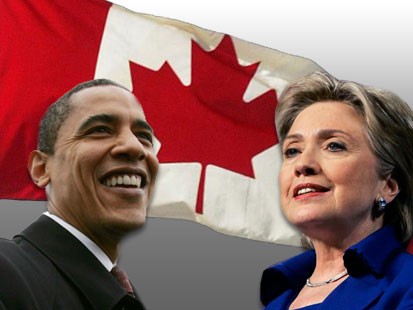
Senators Hillary Rodham Clinton and Barack Obama in the Democratic primaries are criticizing the North American Free Trade Agreement with Canada and Mexico and vowing to renegotiate it to protect American workers.


Clinton, with strong backing from U.S. organized labor, has advocated a "time out" in trade liberalization and questioned whether the theory of comparative advantage that underpins free trade still applies in the 21st century.


On the other side of the Atlantic, President Nicolas Sarkozy of France has urged Europeans to stop being naïve about trade and to develop "a real system of community preferences" to protect European Union agriculture and industry from unfair competition.

[WHAT SARKOZY IS REALLY SAYING, IN NUANCED FRENCH FASHION, IS THAT, GIVEN THE PRESENT ERA OF GLOBALIZATION
IT IS NOW TIME TO UPDATE FORTRESS EUROPE'S PROTECTIONIST DEFENSES WITH NON-TARIFF TECHNICAL BARRIERS TO TRADE DISGUISED AS 'CULTURAL PREFERENCES']


Political opposition has forced the EU's trade commissioner, Peter Mandelson, to delay changes in anti-dumping duties meant to take account of the interests of European firms that produce goods in low-cost countries.


Mandelson has broad powers to negotiate trade agreements on behalf of the 27-nation bloc, but France is doing its best to handcuff him and organized a caucus of 20 farm ministers last month to warn against further concessions on agriculture.


Brussels trade diplomats say that the commissioner, who is British, has long been viewed with suspicion in many member states because of his liberal views on trade and that his influence may be waning.

All this sets a grim backdrop for negotiators at the World Trade Organization, who are preparing yet another "final push" for a global deal to cut tariffs and remove trade barriers. Their aim is to clinch a deal before President George W. Bush leaves office next January.


Turmoil on financial markets and a sharp economic slowdown, especially in the United States, have fueled calls for protecting jobs in wealthy countries.


The trade organization's director general, Pascal Lamy, says the downturn on both sides of the Atlantic should focus minds on the benefits of a trade agreement, not least because failure would damage confidence in the world economy. Keith Rockwell, a spokesman for the agency, said, "Do you fix the roof when the sun is shining or when it's raining? Either way, it's still a good idea to fix the roof."


Politically, a failure of the rules-based multilateral system to deliver progress on trade could undermine European hopes for a more ambitious international agreement in 2009 to curb the greenhouse gas emissions that are blamed for global warming.


As with climate change, a trade deal requires concessions from big emerging nations like India, Brazil and China, which want to be able to protect key sectors of their economies from competition from rich countries.


Those conflicts seriously threaten the trade talks, as does the reluctance of wealthy nations to reduce radically the longstanding protection of their farmers.


"I share the skepticism that anything good will come out of the Doha Development Agenda," said Adam Posen of the Peterson Institute for International Economics in Washington, using the name given to the trade round that began in Qatar in 2001.


Posen said that whoever wins the White House in November, Congress will make trade conditional on labor and environmental standards to shut out cheap competition, mainly from Asia.


Andre Sapir, a trade economist at the Free University of Brussels and former adviser to the European Commission, agrees that the climate in the United States is not favorable for new trade deals, although the Europeans should still push for one.


"You need some bad economic news to make a trade agreement necessary as a booster of confidence," he said. "But even if there is a deal now, the chances are that something is going to be reopened after the U.S. election."


U.S. trade diplomats in Europe are using Clinton's rhetoric and fears of a more protectionist U.S. administration to try to focus on the need to complete a trade deal now.


One senior diplomat, speaking on condition of anonymity because of the sensitivity of the issue, said his message to European counterparts was: "Don't wait for Hillary."

Monday, February 4, 2008

The Future of Doha...

The Future of Doha: Can the Doha Trade Round Be Saved?


http://www.businessweek.com/globalbiz/content/jan2008/gb20080128_519854.htm?campaign_id=rss_daily


January 28, 2008


by Sean O'Grady


BusinessWeek


Peter Mandelson, the European Union trade commissioner, has warned about the consequences if the Doha round of world trade talks were to fail this year.


Mr Mandelson pointed to the approaching US elections as the effective deadline for the consummation of the negotiations, after which the delays associated with the new American administration would effectively kill the process.


A new president would inevitably need to review the negotiations, and Mr Mandelson thought that the Doha round was unlikely to be at the top of their in-tray. The process of appointing, nominating and gaining congressional approval for new trade officials could also take many months.


At the World Economic Forum in Davos, Mr Mandelson said that while 2007 had been called a "year of opportunity", 2008 would be "the year of necessity". He added that he had been struck by business figures who had felt "frustrated" by the length of time taken (the Doha round was launched in 2001), and who perceived that "the level of ambition has fallen". He said that they had urged him not to give up, but also not to allow the negotiations to "linger on" and to give them a "decent burial".


Mr Mandelson suggested that if the Doha round were to be abandoned, economically valuable elements already agreed could be extracted from it, such as a package of development aid. Even so, he was sceptical about the extent to which such "cherry-picking" might be possible.


Mr Mandelson said that "the caravans would move on" if an agreement were not reached in 2008, with countries and trading blocs moving to a series of bilateral treaties in place of the Doha round. These, he conceded, would be beneficial, but still be "no substitute" for a comprehensive multilateral arrangement which would more firmly build in the gains for free trade that have been made in the past few decades.


Since the onset of the credit crisis and the general slowdown in world economic growth, political pressures for protection have been growing, particularly in parts of Europe and the United States. Opposition to sovereign wealth funds and calls for tighter regulation of financial markets are two examples of how recent economic events have fuelled resistance to trade liberalisation.


Last month, Mr Mandelson attacked Hillary Clinton, the US presidential candidate, over her attitude to free trade. He described Mrs Clinton's views on global trade as "disappointing", "misplaced" and symptomatic of a new trend towards protectionism in the West.


In recent days sources close to Mr Mandelson have suggested that more progress was being made than the public realised, and expressed hope that the certainty of a change of incumbent in the White House would force the pace of change.


For her part, the US trade envoy, Susan Schwab, reiterated the commitment of the Bush administration to the success of the talks. The Indian Minister for Trade and Commerce, Kamal Nath, said that he was prepared to negotiate on commerce, but would not do so in matters of "livelihood and security".


Arguments about the level of agricultural subsidies in the West and the willingness of developing nations to open up their markets in services have bedevilled the talks for some time, despite evident goodwill on the part of most of the participants. Informal meetings of 25 trade ministers plus the World Trade Organisation chief, Pascal Lamy, and Mr Mandelson over the weekend do not appear to have resulted in a breakthrough.

2008: Trade Barriers or Trade Liberalization??

2008: Trade Barriers or Trade Liberalization??


Trade Disputes Will Mark 2008


http://www.forbes.com/opinions/2008/01/28/doha-trade-talks-oped-cx_ccp_0129doha.html


FORBES


C. Christopher Parlin


January 28, 2008


Washington, D.C. -


The trade policy outlook for this year is grim, though a concerted effort and a change in approach by many businesspeople could stem backsliding into protectionism.


In the U.S., worsening economic news coupled with the upcoming elections guarantee slow, if any, progress in reducing worldwide trade barriers and increasing market access for U.S. companies. Around the world, these negatives are reinforced by fear of ever-expanding Chinese exports, lack of political will in the World Trade Organization's (WTO) Doha negotiators, and reluctance by trading partners to make concessions to the U.S. in the absence of the president's fast track negotiating authority (aka trade promotion authority).


There will be tensions this year because of the economic and political climate and the lack of breakthroughs in the Doha negotiations. There will be disagreements regarding actions taken (and not taken) as a result of this tension. The question is how these disagreements will be managed and whether they will lead to trade disputes.


The default option is a significant increase in disputes, as the focus of the U.S. and its trading partners leads to protectionist and discriminatory policies. Most will lose in the long run if this happens. The challenge now is to analyze the difficulties that the multilateral trading system will face and develop strategies to limit the resulting harm and serve as stepping stones for resumed progress when the worldwide economic and political climate improves.


Historically, trade liberalization efforts have succeeded only in a healthy worldwide economic climate (the Uruguay Round negotiations creating the WTO in the early 1990s) or after an economic cataclysm (the General Agreement on Tariffs and Trade, or GATT, after World War II). At such times, governments and businesses focus on the horse trading necessary to achieve greater worldwide liberalization. The concept of giving in order to get--of reducing some of your trade barriers to secure reductions from others in areas of greater interest to you--is recognized and acted on. Those losing protection don't like it, but the pro-liberalization forces are stronger.


By contrast, in problematic economic climates, fear of giving predominates. Politicians hear more from constituents condemning adverse effects of imports (and now globalization) on income and jobs than they do from those seeking to give or receive expanded market access. In the U.S., this shift was apparent in the 2006 congressional elections. And it becomes more evident every day as signs of an economic slowdown grow. Bipartisan efforts to enact a stimulus package are welcome, but they are extremely unlikely to improve the trade policy picture.


At the same time, the prospects for a pro-trade congressional majority are nil, and, although much of the protectionist rhetoric of U.S. presidential candidates is just talk, the prospects for a trade-friendly administration are uncertain, at best. The systemic concern caused by a weakening economy is bolstered by particularized fear of a continued Chinese economic juggernaut. No amount of learned discourse, or administration exhortation about the economic benefits of further trade liberalization for the country as a whole, can counteract the present fearful mood in the U.S.


Since the end of the Second World War, the U.S. has been described as the locomotive of world trade liberalization. A very solid argument can be made that GATT was created and the WTO evolved from it as a result of U.S. willingness to make the market-opening concessions necessary to drive other countries to agree to ever greater reductions of trade barriers and increases in market access opportunities.


Despite valiant efforts by the U.S. trade representative, Susan C. Schwab, the country now is stopped on a siding. The public does not accept pro-trade rhetoric, and the administration is unable to credibly promise trading partners that Congress will enact trade-liberalizing measures such as reducing agricultural support (enhancing the competitiveness of other agricultural exporters) or changing certain U.S. anti-dumping rules that most of our trading partners view as blatantly protectionist.


A replacement locomotive is needed, but none has appeared. Neither the European Union, Japan nor any collection of countries has stepped forward to provide leadership in the WTO's Doha negotiations. Instead, the goal seems to be to ensure that blame for failure is attributed to someone else. This is intensified by the inability of the administration to secure renewal of trade promotion authority (under which Congress agrees to an up or down vote on trade agreements, ceding its normal ability to condition ratification on amendments to the negotiated text). Not surprisingly, many of our trading partners will use the absence of fast track as an excuse for not making concessions sought by the U.S., asserting that Congress would demand additional concessions beyond those ultimately negotiated by the administration.


What is to be done? One possibility is to hunker down and wait for better times. That would ensure at best a standstill, but more likely a worldwide increase in protectionism throughout 2008. There is a better option, though. This could be a bad year for forward-looking trade policy, but it need not be a disaster. Rather than ceding the field to those advocating policies of increased protection and unilateralism, the proponents of multilateral liberalization could seek to preserve the positive aspects of the Doha negotiations. Even though significant breakthroughs leading to a successful conclusion will not occur in 2008, the negotiations need not collapse.


Experience during the Uruguay Round is instructive. There was a three-year period when none of the major negotiating parties was able to move on politically sensitive issues such as agriculture, services and textiles. Despite this high-level paralysis, all of the 15 subject matter negotiating groups continued to plug away. As a result, when worldwide political will re-emerged in mid-1993, most of the technical underbrush had been cleared away. A similar scenario could occur this year. The negotiating gains achieved to date could be preserved and steps taken to make technical progress where possible.


On the domestic front, too, 2008 need not be a disaster. Here, the keys will be education and understanding.


To avoid significant backsliding, those supporting multilateral liberalization must emerge from their foxholes and engage more actively and effectively in the globalization debate, educating politicians and opinion makers about the benefits of additional liberalization. At the same time, they must not ignore the dark side of globalization: It has not benefited all Americans. Many have legitimate concerns about their income and jobs.


Economics 101 lectures about the overall benefits of free trade may be sound economically, but will not be politically successful, especially given the worsening economic climate. To strengthen their presentation, advocates of trade liberalization must work to reformulate, advocate and implement policies that will assist those whose lives are negatively affected by globalization. The choice is theoretical purity and political defeat, or creative solutions that recognize the political climate.


Effectively, the course of trade policy today is dependent on what is done by those supporting increased trade liberalization. If they do nothing, the year will see significantly increased international economic tensions, disagreements and disputes. The challenge is to develop a new model in support of liberalization, one that accepts reality and proposes solutions for those who are harmed by globalization. By doing so, we may limit protectionist backsliding so progress can resume when the worldwide economic and political climate improves.

“Zeroing” In: The Future of a Questionable Anti-Dumping Methodology

“Zeroing” In: The future of a questionable Anti-Dumping methodology


Just last month, a WTO Panel ruled in favor of the US in a zeroing dispute case with Mexico (Link to Article). This is a fairly significant step for the US. Since the US began to impose its zeroing methodology, many WTO countries have rallied staunchly in opposition questioning the legality and fairness of this practice. So the question remains: how will zeroing be treated in the ensuing Doha Round negotiations?


Anti-dumping row roils WTO, isolates U.S.


http://www.reuters.com/article/reutersEdge/idUSL1044224620080110?sp=true


Jan 10, 2008


By Jonathan Lynn - Analysis


GENEVA (Reuters) - An arcane row at the World Trade Organization (WTO) pitting the United States against the rest of the group's members on how to deal with unfairly priced imports has raised temperatures like few other issues there.


The tussle has unnerved U.S. consumer and retail bodies, seen a WTO dispute panel ignore rulings by the body's top court and created another big hurdle in the WTO's long-running Doha round to open up world trade.


Trade experts said it was difficult to imagine the United States succeeding in embedding its controversial practice of "zeroing" in WTO rules.


The term refers to the practice of only taking into account imports priced at a lower level than in their home markets (dumped goods) and ignoring or "zeroing" any offset from imports which are priced higher than in their home markets.


Some trade experts believe the row can be defused as countries realize that in a changing economy they can equally be the target as well as the initiator of anti-dumping measures.


"Zeroing has been on the ropes for a long time because there have been multiple rulings against the U.S.," said Brendan McGivern, an expert in international trade disputes and a partner in the Geneva office of lawyers White & Case.


"It's wildly optimistic of the U.S. to think they'll get this back through negotiations," he told Reuters.


HEART OF THE SYSTEM


The dispute goes to the very heart of the global trading system umpired by the WTO to ensure that trade is fair for all.


It turns on the methodology for calculating the duties that countries are allowed to impose on imports that are sold at unfairly cheap prices in their markets.


Zeroing, now mainly used by the United States, leads to excessively high compensatory duties, other countries say.


The United States has now lost a dozen WTO disputes over zeroing, rulings strengthened on appeal in some cases by the WTO's top court, the Appellate Body.


Last month a key group of countries issued a statement denouncing zeroing for undermining the central goal of the Doha round -- trade liberalization.


Washington will therefore find it difficult to find supporters in the WTO, which operates by consensus, who will spell out a role for zeroing in a new deal when it has been ruled out of court in litigation, said McGivern, former head of dispute settlement in Canada's WTO mission.


Another case is brewing, with Japan unhappy that the U.S. has not dropped zeroing in line with an Appellate Body ruling last January.


As a result the United States has now abandoned zeroing in some cases. But it insists zeroing is allowed under WTO rules.


The head of the U.S. WTO mission, Peter Allgeier, denounced last month the "severely flawed legal reasoning" of the Appellate Body and told WTO members that a new trade deal would not get through the U.S. Congress without zeroing.


ENCOURAGED


The Americans have been encouraged by two things.


Firstly, the chairman of the Doha round talks on rules, which include anti-dumping, Guillermo Valles Galmes, issued a draft negotiating text at the end of November that allowed zeroing in certain circumstances.


Secondly, in the latest zeroing dispute at the WTO, a Mexican complaint about U.S. anti-dumping duties on stainless steel, the dispute panel last month ignored previous rulings from the Appellate Body and allowed zeroing in some cases.


Valles, who is Uruguay's WTO ambassador, saw his proposals on zeroing slammed by a range of countries from the European Union to India and Japan.


He is holding another round of negotiations in the week of January 21 where he expects key countries to propose the balance they say is missing from his paper.


Valles's proposals also upset the United States by retaining some bans on zeroing, introducing a limit of 10 years on anti-dumping measures instead of allowing them to run indefinitely, and calling for consumers as well as affected competitors to be consulted on the measures.


Valles points out that the negotiations on rules are different to the rest of the Doha Round. Whereas the long-term aim is to reduce tariffs and subsidies to zero, rules will always be there, evolving to meet changing circumstances.


"The challenge is for countries to imagine where they will be in 15 or 20 years," he told Reuters. "The object is that rules are used in a transparent and predictable way, with no country just a user or a target."


Indeed, some U.S. business lobbies are already calling on Washington to ensure that WTO rules such as zeroing cannot be abused to put up barriers against U.S. exports.


The National Retail Federation noted in November that the U.S. is now the third biggest target of anti-dumping actions.


And frequent targets China and India are increasingly bringing actions against other countries.

(Editing by Matthew Jones)

Sunday, January 27, 2008

Biofuels Protectionism Trumps Climate Concerns: Just How Green is Biofuel?

http://www.reuters.com/article/GlobalAgricultureandBiofuels08/idUSN1661111120080116?sp=true


Biofuels protectionism trumps climate concerns


By Inae Riveras


Reuters


January 16, 2008


SAO PAULO (Reuters) - Despite world concerns about global warming and the impact of biofuel production on food prices, policy makers have done little to boost international trade of cheaper and more environmentally friendly fuels for consumers, experts said.


Import tariffs and trade barriers have prevented, for example, an increase in cane-based ethanol exports from Brazil, the world's most competitive producer of the biofuel. Shipments are actually expected to be lower in 2008 than last year.


In Europe, biodiesel producers have been hit by an increase in U.S. imports, which benefit from subsidies if they are blended with mineral diesel. To counterattack, the EU bloc may impose countervailing duties, industry leaders said.


The EU has also been affected by large volumes of Argentine biodiesel at cheap prices, which are encouraged by preferential taxes. The product is charged a 5 percent tariff by Argentina's government, while edible oil exports have a 30 percent duty.


"Some countries are trying to solve a world problem, which is global warming and climate change, just with national solutions," said the head of Brazil's Sugar Cane Industry Union (Unica), Marcos Jank, at the Reuters Global Agriculture and Biofuel Summit.


According to Unica, cane-based fuel has higher productivity than other feedstocks. Sugar cane yields seven liters of ethanol per hectare compared with three liters with corn.


Production costs are lower, and energy efficiency -- amount of energy used in the process versus energy resulting -- is five times higher with cane than with corn, Unica said.


Moreover, its impact on food prices is much more limited than the one caused by corn or wheat. Almost a third of the next U.S. crop may be turned into fuel, increasing upward pressure on food inflation.


But tariffs in some of the world's largest fuels markets like the U.S. and Europe will limit ethanol exports. Shipments from Brazil are to drop this year to 3.4 billion liters, down from 3.8 billion liters in 2007, Datagro consultants said.


GLOOM PERSPECTIVES


Unica argues its position is not self-promotional as cane-based ethanol could come also from Asia, Africa or South America. More than 100 countries -- most of them poor nations -- have natural conditions to grow cane.


"Europe is trying to subsidize their farmers to produce ethanol from beet and wheat instead of buying ethanol from abroad. The same happens in the U.S. Most of the ethanol there will come from corn, probably from biomass in the future, but not imported (ethanol)," Jank said.


"We believe that if these countries consider to import more from developing countries, the energy and environmental balance would be much better, and costs would be much lower."


But signals from these countries point to the opposite direction.


The chairman of the U.S. House Agriculture Committee, Rep. Collin Peterson, said on Tuesday tax credits and tariffs on ethanol would have to be maintained to create the necessary conditions for the development of cellulosic ethanol.


"We are hoping that we won't have any changes in the tax or tariffs any time soon," he said.
Brazilian ethanol is charged with a 54-cent-a-gallon tariff to enter the U.S. market. This makes direct sales possible only on specific and uncommon occasions, depending on low prices in Brazil and high prices in the United States.


And perspectives remain negative as the U.S. passed in December its Energy Bill, which sets a target for biofuel use of 36 billion gallons -- none of them imported, in principle.


"They (U.S.) won't open their market. They will stick to its import tariff and create a quota, and then administrate this quota under geopolitical criteria," said the president of Brazil's Datagro consultants, Plinio Nastari.


Wallace Tyner, professor at Purdue University in West Lafayette, Indiana, said it would be necessary either alter the mandate or change the tariff for U.S. to meet its goal.


"Brazil and a lot of Central American countries have a capacity to expand pretty quickly their ethanol production if they get signals that there's a market for it," Tyner said.

The Time For Doha Is Now

http://www.merinews.com/catFull.jsp?articleID=129745


2008 is ‘make or break’ for Doha trade talks: World leaders


MeriNews, India


Mineguruji, 27 January 2008,


Amidst fears of a worldwide fiscal depression mounting, trade leaders at the WEF pressed businesses to push their governments to seek a successful conclusion to the Doha Round of trade talks this year or risk rise in new barriers to international business


WITH FEARS of a global economic recession growing, trade leaders at Davos urged businesses to press their governments to seek a successful conclusion to the Doha Round of trade talks in 2008, or risk seeing a rise in new barriers to international commerce.


“If it’s not concluded this year, it won’t be concluded next year - and by 2010 the caravans will have moved on elsewhere,” Peter Mandelson, commissioner, Trade, European Commission, Brussels, told participants at the World Economic Forum Annual Meeting 2008. “Not only will the caravans have moved on in different directions of trade negotiations, but what has already been on the table, which in my view is quite substantial, will have been put into deep freeze.”


After more than six years of stop-start negotiations, the Doha talks between members of the World Trade Organization have ground to a halt. With less than a year before US President George Bush leaves office, time is rapidly running out for reaching an agreement to reduce tariffs, subsidies and promote freer and fairer trade, panelists said.


The plenary session “Threats to the Global Trading System” followed an informal lunch meeting of trade ministers in Davos. Despite important progress on technical issues over the past six months, panelists revealed, the group remains no closer to an agreement and scepticism is high. Concerns persist among developing countries that lower tariffs will unfairly expose poor rural farmers to global competition and jeopardise growth that would be a potential buffer against a global slowdown.


“The content of this Round must deliver to healthy economies in Asia, in Africa, in the Pacific and in Latin America because that’s the goose that’s laying the golden egg,” said Kamal Nath, minister of Commerce and Industry of India.


But the cost of failure is rising, panelists said. Failure in the Doha Round would be likely to increase protectionist pressures around the world and result in a rollback from the progress already made towards freer global trade. Mandelson said the negotiations had become a prisoner to some extent of the American political calendar. Campaigning is already underway for elections to replace Bush next January, and a new president is unlikely to be able to put the Doha Round at the front of the US policy agenda, he said. The new President is likely to want to review any commitments that have already been made.


President Bush remains strongly committed to reaching a trade deal, insisted US representative Susan Schwab, and bipartisan support for a deal in the US Congress means there is still time to ratify a deal if one can be reached, she said.


Pascal Lamy, director general, World Trade Organization (WTO), Geneva, said a failure in the talks could exacerbate the impact of a slowing global economy and heighten geopolitical tensions. Celso Amorim, minister of Foreign Relations of Brazil, echoing these concerns, said failure to reach a deal in 2008 would “give the wrong signals to the global economy. And this will be detrimental to everybody, most of all the developing economies.”


Indeed, continued delays had lost the negotiators’ credibility among voters and companies, said Doris Leuthard, federal councillor of Economic Affairs of the Swiss Confederation. “When we don’t get a result, national protectionism is a big threat,” she said.


While businesses may be frustrated with the lack of progress in the Doha Round, companies still have a great deal to gain from it, Mandelson stressed - and a great deal to lose if a deal is not reached. “There is very significant economic value in binding the existing openness in the global economy,” he said.


Companies, therefore, most overcome their scepticism to push for a successful deal, panelists said. “The capacity of any one of us to deliver such a package through our political systems will depend in large measure on what the private sector is doing and saying, and whether they hold accountable leaders in their countries,” said Schwab.