Wednesday, August 20, 2008

Uninformed Vermont Legislator Makes Big Stink About China's WTO Objections To State's Waste Rules

http://www.wptz.com/news/17172503/detail.html


For Sending A Letter, Vt. Lawmaker Says China Overstepped Its Bounds

5 WPTZ.com


BURLINGTON, Vt. -- A state senator from Chittenden County said a letter received from a Chinese official criticizing legislation she has pending in Montpelier "flies in the face of state sovereignty and democratic principles."
http://www.wptz.com/video/17173558/index.html


Sen. Virginia Lyons of Chittenden County chairs the Natural Resources and Energy Committee. Lyons held a news conference Tuesday to discuss the implications of the undated letter she said she received in April.


The three-page communication, in both English and Chinese, was signed by "Wang Ni Ni" who identified himself as director general for the "China WTO/TBT National Notification & Enquiry Center" and listed an address in "Hai Dian District, Beijing."


The letter opened by saying "we appreciate the opportunity to submit comments on the regulation under the notification proposed by the State of Vermont."


Wang then outlined objections to Lyons' bill that would impose fees on manufacturers of electronic goods sold in Vermont. The fees, which would be calculated based on the weight of an item, would establish a fund for eventual recycling of e-waste. Wang suggests the mechanism would affect manufacturers unevenly and amount to an "unfair restriction of trade."


Lyons said her bill would effectively reduce the volume of electronic waste now winding up in Vermont landfills. Her proposal has yet to see debate at the state capital. But most of her ire focused on what she considers an unwelcome intrusion.


"It's simply not OK for other governments, foreign national governments, to feel they have a right to intervene in our state legislative process in the way China has," Lyons said.


[MAY WE SUGGEST THAT SENATOR LYONS TAKE A WTO COURSE FROM THE USTR?? HOW ABOUT A REFRESHER COURSE IN THE U.S. CONSTITUTION FROM NONE OTHER THAN THE FACULTY OF VERMONT LAW SCHOOL??]


She said Maryland and Missouri legislators have also felt "push back" from the Chinese over proposals they don't like. Lyons said she recently sent a complaint to the U.S. Department of Commerce. A spokeswoman there - and at the Office of the U.S. Trade Representative - both declined comment.


Lyons said she worries Vermont lawmakers would feel a "chilling effect" from the Chinese official's letter. She said she was "a little unnerved" the communication listed her home phone and address.


[WE SUGGEST THAT VERMONT STATE SENATOR LYONS WAKE UP FROM HER DEEP SLEEP OR SELF-IMPOSED STUPOR AND LOOK OUT OVER THE GLOBAL HORIZON TO SEE A BRAVE NEW WORLD OF INTERNATIONAL TRADE, THE INTERNATIONAL LEGAL FRAMEWORK OF WHICH HAS CONTINUED TO EVOLVE SINCE 1947. WITH THE CONCLUSION OF THE URUGUAY ROUND OF TRADE NEGOTIATIONS DURING 1994, AND THE CREATION OF THE WORLD TRADE ORGANIZATION AND ITS BINDING DISPUTE SETTLEMENT MECHANISM, AS WELL AS, THE EXECUTION OF NEW MULTILATERAL TRADE AGREEMENTS, INCLUDING THE TECHNICAL BARRIERS TO TRADE (TBT)AGREEMENT, THE FEDERAL, STATE & LOCAL GOVERNMENT TECHNICAL REGULATIONS OF ALL WTO NATIONAL MEMBERS, AND EVEN THE PRODUCT & PROCESS STANDARDS OF RECOGNIZED PRIVATE STANDARDS BODIES OPERATING WITHIN THE JURISDICTIONS OF WTO MEMBERS, ARE NOW SUBJECT TO INTERNATIONALLY AGREED UPON RULES.]

---------------------------------------------------------------------------------------


http://www.worldtradelaw.net/chinavermont.pdf


115 STATE STREET STATE OF VERMONT PHONE: (802) 828-2228
MONTPEUER, VT 05633-5201 FAX: (802) 828-2424


SENATE CHAMBER


For Immediate Release Contact: Katie Manaras
August 12, 2008 (802) 828-3806


Senator Virginia Lyons Statement on Chinese Objection
to Proposed Environmental Legislation in Vermont


Vermont State Senator Virginia Lyons held a press conference on Tuesday, August 12, 2008 at 2:30 p.m. at Main Street Landing in Burlington, Vermont to make a statement regarding a letter she received from a foreign nation, asking her to "cancel" or "revise" a bill she had introduced during the legislative session. The subject of the bill is control and disposal of electronic waste. The nation complaining about the Vermont bill is the People's Republic of China.


In an official communication-which was sent to the home address of this citizen-legislator- China asserted that Senator Lyons' bill (S.256) presents an obstacle to international trade. In its letter, China cited an existing U.S. commitment under World Trade Organization (WTO) rules as a reason why Senator Lyons should withdraw her bill.


This wasn’t the first such occasion in which the People's Republic of China has 'pushed back' on state legislation they didn't like. China earlier had complained about state bills dealing with lead, phthalates, and other toxic materials found in children's toys. On that occasion, federal trade negotiators in Washington told the state legislator who introduced the bill that the communication from China was a 'mistake' and wouldn't be repeated.


However, the 'mistake' was repeated-this time in relation to a proposed Vermont law on electronic waste-and Senator Lyons felt it was extremely important to address this problem now.


According to Senator Lyons, "The People's Republic of China questions the authority of the Vermont legislature to enact legislation to protect human life and the environment. This attempted interference by the People's Republic of China in the democratic process in Vermont is alarming and threatens basic principles of our system of government. Common sense solutions to health issues at the state and local level should not be subject to international pressure."


She stresses that, "This is part of a disturbing trend toward undermining state's rights. Its simply not OK for other governments to feel that they have a right to intervene in our state legislative process in this way. It wouldn't matter whether the bill addressed by the Chinese government was about health care, workers benefits, land use permitting, or in this case, electronic waste recycling, the underlying principle is the same: respect for democratic decisionmaking. And so, we have to let folks in Washington DC and in Beijing know that this an unacceptable intrusion."


Senator Lyons was taken aback by how quickly China obtained the information about an introduced bill. "It appears that the Bush Administration alerted the Chinese," Lyons said. In a letter to Bryan O'Byrne, at the Department of Commerce's Trade Compliance Center, Senator Lyons asked about how-and why-this notification took place. See attached letter.


[DEAR MS. LYONS: IT IS THE LEGAL OBLIGATION OF THE U.S. GOVERNMENT TO NOTIFY OTHER WTO PARTIES IF U.S. FEDERAL, STATE OR LOCAL LAWS AND REGULATIONS BEING PROPOSED, ADOPTED and/or APPLIED (ENFORCED) WILL AFFECT THE FLOW OF TRADE FROM THAT OTHER WTO PARTY AND IMPACT THE RIGHTS OF THEIR CONSTITUENTS.]


Whatever the case, it appears that China is taking an aggressive stand to push back on recycling and product-registration requirements for consumer electronics-and the push-back has now 'gone global.'

[DEAR MS. LYONS, YOU SHOULD GET OUT MORE AND READ THE NEWSPAPERS. FOR EXAMPLE, CHINA IS NOT THE FIRST WTO MEMBER TO CHALLENGE THE FEDERAL LAWS OF OTHER NATIONS ON WTO GROUNDS. SINCE THE MID-1990'S, THE U.S. GOVERNMENT UNDER THE ADMINISTRATIONS OF TWO PRESIDENTS (DEMOCRAT & REPUBLICAN) HAVE CHALLENGED THE NON-SCIENCE AND NON-ECONOMICS-BASED ENVIRONMENTAL & FOOD SAFETY LAWS OF THE EUROPEAN UNION and ITS MEMBER STATES, ALLEGING, AS HAS CHINA, HERE, THAT THE FAILURE OF THE EUROPEAN LEGISLATURE TO SUBJECT THE PRODUCTS IT WAS SEVERELY RESTRICTING OR OUTRIGHT BANNING TO A SCIENCE-BASED RISK ASSESSMENT, AND THEN TO EMPLOY ECONOMIC COST-BENEFIT ANALYSES IN ASCERTAINING WHICH OF THE AVAILABLE RISK MANAGEMENT MEASURES THAT ARE LEAST TRADE RESTRICTIVE COULD BE ADOPTED IN LIEU OF THE DISPUTED MEASURES. IN PARTICULAR, THE U.S. GOVERNMENT OBJECTED TO THE EU REGULATIONS ON CHEMICALS ('REACH'), AND ITS DIRECTIVES ON WASTE RECYCLING, 'TAKE-BACK', E-WASTE, HAZARDOUS SUBSTANCES ON ELECTRICAL AND ELECTRONIC EQUIPMENT, ETC. THE U.S. GOVERNMENT ALSO PREVIOUSLY RAISED OBJECTIONS CONCERNING CHINA'S ADOPTION OF SIMILAR RULES.]


[See Lawrence Kogan, Exporting Precaution: How Europe's Risk-Free Regulatory Agenda Threatens American Free Enterprise, Washington Legal Foundation (Nov. 2005), at:


"Electronic products, such as computers and televisions, contain lead, mercury, cadmium, and similar hazardous materials," Lyons explained. "My bill simply provides a system for the recycling of electronic products as a means of limiting the release of these dangerous heavy metals from landfills and thereby protecting the environment and public health in Vermont."


"After S256 was introduced and was under consideration in committee, I received an e-mail from Beijing. The e-mail included a World Trade Organization document indicating that the U.S. federal government had notified a WTO Committee that S256 could be in violation of international trade law. Also attached was a cover letter from Wang Ni Ni, Director General of the China WTO Notification and Enquiry Center, and official comments by the Peoples Republic in response to the U.S. notification to the WTO regarding S. 256."


"And right on the front of that mailing from China was my home address and telephone," Lyons added, "which wasn't exactly what I would expect from an official communication regarding a WTO matter. It was a bit unnerving."


Two weeks ago, at the Annual Meeting of the National Conference of State Legislatures, Senator Lyons introduced a resolution deploring China's action, and alerting other state legislators to this new pushback. [The text of this Resolution can be found at
http://www.ncsLorg/printlstandcommlsclaborecon/ChinaLyons.pdf ] The resolution passed unanimously from the initial committee of jurisdiction and is now pending in a second committee.


"This was an important step to educate legislators about what's at stake here. I understand that the global trade rules mean that the United States is supposed to notify the WTO about major regulatory changes. How the Chinese concluded from this that they had a right to intervene in a state legislative process, long before new regulations are written, is quite beyond me.
[WAKE UP MS. LYONS!!!!]


"I just hope the Chinese weren't being encouraged to file complaints against state legislation by our own federal trade officials in Washington," concluded Senator Lyons.


WTO/TBT
China WTO/TBT National Notification & Enquiry Center
No.7, Ma Dian Dong Ac, Uai Dian District, Beijing, China, TeL 86 10 8226 0618 Fax: 86 0 8226 2448


FAX
TO.
National Center for Standards and
Certification Information (NCSCI)
National Institute of Standards and
Technology (NIST)
100 Bureau Drive
MS-2 160 Gaithersburg, MD USA
20899-2160
Tel:-i-(1301)975 4040
Fax ±(1 301)9261559
E-mail: ncsci@nist.gov
Website:http:/!ts.nist.gov/ncsci

Senator Virginia Lyons
241 White Birch Lane
Williston,VT 05495 USA
Tel: +(802) 863 6129
Email: vlyons@leg.state.vt.us
url: http://www. legstate.vt.us

Date: , 2008
Number of pages: 2+3
Copies:

Department for WTO Affairs, Ministry
of Commerce of P.R.China
Fax: +86 10 65 197726;65 128304
E-mail: wtonoti@mofcom.rnv.cn
liuna@mofcom.gov.cn
Permanent Mission of P.R. of China to WTO
Fax: +41-22-9097699/9097688
E-mail: guoxueyan9999@gmail.com

WTO Affairs Office, General,
Administration for Quality, Supervision, Inspection and Quarantine, PR.C.

Fax: +86 10 82260553
E-mail: jo@atsig.gov.ca
xuj @aqsiq.gov.cn

Department for Supervision on Inspection, AQSIQ of P.R.China
Fax: +86 10 82261949
E-mail: ijusy@agsig,gov.cn
From:

China WTO/TBT National Notification & Enquiry Center, Standard and Regulation Researching Center, AQSIQ, P.R,China
Tel: 86-10-82260618
Fax: 86-10-82262448
E-mail: tbtP aqsiq.gov.c n
Subject:

Comments on USA Notification G,TBT/N/USAJ34O
An Act Relating to the Disposal of Electronic Waste. S256

Comments on USA Notification G/TBT/N/USA/34O

An Act Relating to the Disposal of Electronic Waste, S256


Dear Sir or Madam,

We appreciate the opportunity to submit comments on the regulation under the notification proposed by State of Vermont.


Enclosed please find comments in English and Chinese.


Please acknowledge receipt of the comments by e-mail to tbt@agsig.gov.cn. Thank you very much in advance for State of Vermont consideration of our comments.


Formal reply from State of Vermont will be appreciated.


Best regards


Wang NiNi
Director General
China WTO/TBT National Notification & Enquiry Center
No. 9 Ma Dian Dong Lu, Hai Dian District, Beijing
Post Code: 100088
Tel: 86-10-82260611/0619
Fax:86- I 0-82262448
E-mail: 4kt@aqsiq.gov.cn


Comments from China on USA Notification
G/TBTIN/USA/340

An Act Relating to the Disposal of Electronic Waste, S256


China appreciates U.S. for fulfilling WTO transparency obligation, to notify Notification G/TBT/N/USA/340. After careful study, we hereby put forward the following comments on the notified regulation.


I. China thinks the registration fee referred in Article 7303-(a) of the notified regulation lacks science, which is likely to result in unfairness, and will create unnecessary obstacles to the trade. The article is not in consistency with Article 2.2 of TBT Agreement, "Members should ensure that technical regulations are not prepared, adopted or applied with a view to or with the effect of creating unnecessary obstacles to international trade." Therefore, China suggests canceling or revising the article of the regulation. Specific reasons are as follows:


a) In Article 7303(a) (2) of the notified regulation, "The registration fee for the initial program year during which a manufacturer's video display devices are sold is $5,000.00. Each year thereafter, the registration fee is equal to a base of $2,500.00, plus a variable recycling fee calculated according to the formula in subdivision (3) of this subsection."; as wet! as in Article 7303-(a) (6) of the notified regulation, "The registration fee for the initial program year and the base registration fee thereafter for a manufacturer who produces fewer than 100 video display devices for sale annually to households is $1,250.00."


b) The manufacturer pays the "variable recycling fee" according to provisions of the proposal, and both registration fee for the initial program year and the base registration fee thereafter added based on this are unreasonable. Difference in the market sales amounts results in difference in unit cost increase of the manufacturer. which is obviously unfair. Therefore, we don't think it is scientific for the determination of above registration fees. b) What's more, similar proposals involved in the notifications of US confederation member states Missouri and Virginia, G/TBTINIUSAI332, G/TBT/N/USA1333, G/TBTINIUSAI342, all don't provide for payment of registration fee.


c) In Article 7303-(a)-(3)(E) of the notified draft, E (the estimated per pound cost of recycling used to calculate the variable recycling fee) is set at 0.5 dollar per pound. which may obviously increase the cost of the video display devices sold to households. Take CRT display devices as an example, it is estimated that the cost will increase by IO3O%. Please provide detailed scientific basis for such determination of the value, taking account of reducing the value as much as possible.

d) d) In Article 73O3(a)(3) (C) of the notified regulation, it is provided that, "C = the number of pounds of recovered electronic devices recycled by a manufacturer from households during the previous program year, as reported to the agency under section 7305 of this title", it is lack of science and operability to determine the data, which is likely to create unfairness. Reasons are in below:


i For small manufactures newly entering into the market of the state, compared with large and local manufactures in the terms of recovery and collection channels or recovery technology control and use, they are obviously in an inferior position, which may likely result in more cost for them to obtain pounds for equivalent recovery designated electronic devices.


ii. The value relies on statistics and feedback of the recycler, while there isn't any provision relating to obligation of the recycler to provide true and comprehensive recovery data in the regulation, which is likely to result in incorrect value statistics as well as bad operability.


2. Effective date and approval time limit


a) It is stipulated in Article 73O2(b)-(5) that, "A registration is effective upon receipt by the agency and is valid until July 1 of each year". We think it is inappropriate to fix the effective date of registration to a fixed date, and it is suggested for U.S. to revise this article.


b) It is suggested to clearly define the acceptance and approval time limit of the agency of natural resources after the manufacturer applies for registration with the agency,


3. It is suggested to consider adding in Article 73O5(b): the recycler should cooperate with the manufacturer in the inspection and tracking, and provide the evidence indicating the recycling and disposal of covered products by the manufacturer and whether the product of the manufacturer is recycled without permission or sold after simple repair.


4. The responsibility of the collector throughout the recycling link is not stated in the regulation. It is suggested that the responsibility of the collector be added in the article.

Comments in Chinese are as follows…

----------------------------------------------------------------------------------------

Forum on democracy & trade


Preliminary Analysis of Allegations by the Peoples Republic of China (PRC) Regarding S.256 (2008) Introduced by Senator Virginia Lyons


Introduction


International trade agreements are negotiated by the United States Trade Representatives (USTR). Individual states are not involved in the negotiations, although trade agreements are presented to Congress. The 1974 Trade Act gives states very little policy input on trade, despite the fact that economic decisions regarding trade have powerful consequences for cities and states. There is only one advisory group to USTR that includes representatives from states.

States have not found this limited input to be sufficient to protect state interests. As a result, several states, including Vermont, Maine and New Hampshire, have created special Commissions to explore the impacts of international trade agreements on state sovereignty and to communicate state interests with USTR, other states, and Congress.


Analysis of Objections


The United States sent a notice to the World Trade Organization (WTO) about Senator Lyons bill, S,256. Based on a notification document issued by the WTO Committee on Technical Barriers to Trade, it appears that the PRC allegations are a response to a U.S. notification filed with the WTO related to Senator Lyons' bill.


The WTO Agreement on Technical Barriers to Trade contains various rules governing "technical regulations." The term "technical regulation" is defined as a "document which lays down product characteristics or their related processes and production methods...." (TBT Agreement, Annex 1). The proposed Vermont legislation, it might be argued, constitutes a "technical regulation" because it is related to product characteristics - i.e. specified types of electronic products containing heavy metals and other dangerous substances. At the same time, it might be argued that the essential thrust of the bill, to establish and finance a system of electronic product recycling, is not "technical regulation." Furthermore, it is not even clear that Chinese manufacturers are covered by the definition of "manufacturers" in S25, although any additional regulatory and financial burdens carried by their U.S. distributors as a result of the legislation might have some impact on the volume of sales in Vermont that could indirectly reduce the profits of Chinese firms. Nonetheless, the PRC, the U.S. federal government, and the WTO are treating it as a technical regulation subject to WTO jurisdiction.


Under Article 3.2 of the TBT Agreement, WTO member nations, including the United States, are required to notify other members whenever a state or provincial government such as Vermont proposes to enact a "technical regulation" that is not based on international standards and that will have a "significant effect on trade of other IWTOI Members." See Articles 3.2 and 2.9.2.


The notification is required to be made "at an early appropriate stage, when amendments can still be introduced, and comments taken into account." It seems that the U.S. federal government notified the WTO of the Lyons legislation pursuant to Article 3.2 of the TBT.


The WTO notification on S256 cites the "protection of human life and health" as the 'objective and rationale' of the legislation. Unlike several other WTO agreements, the TBT does not have a 'general exception' regarding the "protection of human life and health." A country might attempt to challenge such a legislative measure by claiming that the regulation will not be implemented in the 'least trade restrictive' way possible; is discriminatory against foreign commerce; does not follow international standards; gives too much discretion to regulators; etc.


These are the kinds of complaints that might be made by the PRC.


The PRC alleges that the Lyons bill violates WTO law, Without much explanation, the Peoples Republic declares that Senator Lyons' bill is inconsistent with Article 2.2 of the TBT Agreement, which states that "Members should ensure that technical regulations are not prepared, adopted or applied with a view to or with the effect of creating unnecessary obstacles to international trade." Under this strict "necessity test," trade values arguably trump other public policy values unless there is no conceivable alternative policy that is less burdensome on trade. The PRC asserts, also without much factual or legal explanation:


• That registration fees and recycling fees paid by manufacturers under S256 are unfair and not determined on a scientific basis;

• That similar regulatory proposals in Missouri and Virginia do not require payment of a registration fee by manufacturers (perhaps suggesting that a registration fee is an "unnecessary obstacle" to international trade?);

• That the variable recycling fee may increase the cost of video display devices by 10 to 30 percent;

• That the annual administrative process for calculating the pounds of electronic devices recycled by a manufacturer from households has no scientific basis, is unfair to small manufacturers entering the Vermont market, and relies on statistics and feedback from recyclers who are under no obligation to furnish reliable data; and

• That revisions are needed in the bill related to the effective date for registration by manufacturers, a more clearly defined time schedule for agency acceptance and approval of a registration, and greater specification of the responsibilities of collectors and recyclers.


Conclusion


As illustrated by this event, other countries could and are beginning to use the trade system to apply pressure to state legislatures and to impact the state legislative process. Since trade promotion authority has expired, states see an opportunity to evaluate the process for providing input on trade issues and to improve federal-state communication. A new system for improving communication between states, USTR, and Congress should be a strong priority for the next Congress and President to ensure that out democratic system of government is protected.


For more information, contact Peter Riggs, dggs@forumdemocracy.net or William Waren, wtw2@law.georgetown.edu

[APPARENTLY, FORUM FOR DEMOCRACY, A POLITICALLY MOTIVATED DEMOCRATIC PARTY NON-GOVERNMENTAL ORGANIZATION, IS ADVOCATING U.S. TRADE POLICIES THAT CLOSELY RESEMBLE A BILL THAT WAS PROPOSED DURING SPRING-SUMMER 2008 IN CONGRESS, WHICH WOULD HAVE CAUSED GREAT HARM TO U.S. INTERNATIONAL TRADE AND FOREIGN RELATIONS. See OBAMA-BROWN-MICHAUD Non-Tariff Trade Barrier Act Likely to Devastate US Economy, Trigger a Global Trade War & Endanger World Peace, ITSSD Journal on Disguised Trade Barriers, at: http://itssddisguisedtradebarriers.blogspot.com/2008/06/us-trading-partners-beware-obama.html ].

[STATES MUST REMEMBER THAT THEY CANNOT ENACT INITIATIVES THAT INTERFERE WITH THE CONSTITUTIONAL AUTHORITY OF THE PRESIDENT AND THE CONGRESS TO CONDUCT FOREIGN COMMERCE AND FOREIGN AFFAIRS, OR OTHERWISE IMPAIR THE TREATY POWER ENJOYED BY THE EXECUTIVE & LEGISLATIVE BRANCHES OF THE FEDERAL GOVERNMENT. See New Jersey, Other States Tread on Thin LegaI Ice: Declare Right to Impair President's & Congress' Constitutional Authority to Conduct Foreign Commerce, ITSSD Journal on Disguised Trade Barriers, at: http://itssddisguisedtradebarriers.blogspot.com/2008/08/new-jersey-other-states-tread-on-thin.html .]
-------------------------------------------------------------------------------------------------


115 STATE STREET STATE OF VERMONT PHONE: (802) 828-2228
MONTPELIER, VT 05633-5201 SENATE CHAMBER FAX: (802) 828-2424


7 August 2008


Bryan O'Byrne
Trade Compliance Center
International Trade Administration
Deartment of Commerce
14 Street and Constitution Avenue NW
Washington, D.C. 20230


Dear Mr. O'Byrne,


During the 2008 Vermont legislative session, I put forward a bill designed to regulate the movement and handling of toxic materials from used electronics, a so-called se-waste bill.' Imagine my surprise when several weeks later I received a threatening notice [???] from the People's Republic of China's WTO Compliance Center in Beijing, attempting to dissuade me from pursuing this bill in the Vermont Senate. Given your role in the Department of Commerce's Trade Compliance Center I am wondering if you could shed some light on this turn of events.


I chair the Vermont's Senate Natural Resources Committee. I have a Master's Degree in Nutritional Biochemistry (Rutgers) and a Doctorate from the University of Vermont in Planning and Administration, and consequently am very familiar with both the science and legislative politics of electronic waste disposal debates. As a board member of Parent to Parent Vermont and mother of two daughters, I am also deeply concerned about the impact of toxics in our environment. The e-waste bill (S. 256) was designed to address those concerns in a manner that in no way discriminates against foreign electronics manufacturers, or impacts negatively on international trade in any way.

[MS. LYONS - YOU WOULD NEED TO PROVE IT, IF YOU CAN.]


The bill was published in committee on January 7. It notes that "the establishment of a system to provide for the collection and recycling of electronic devices in Vermont is consistent with the state's duty to protect the health, safety, and welfare of its citizens; maintain and enhance the quality of the environment; conserve natural resources; prevent pollution of air, water, and land; and stimulate economic growth." The bill did not pass during this legislative session-due to limited time available during the legislative session, rather than any local opposition.


Opposition, it seems, has come from a very different quarter. By following the 'paper trail' back from China, we have found that the Department of Commerce, and/or the Office of the United States Trade Representative (USTR), notified Beijing of the August 7th 2008 existence of this bill by January 10th -just a couple days after the bill would have been published on a state website. The China WTO-TBT Compliance Center sent a letter challenging provisions of my bill in early April of this year. Most disturbingly for me, China referenced my home address in making their complaint.


I would very much appreciate it if you could respond to these questions and concerns:


a) Is your office designated the national inquiry point' for the WTO-TBT agreement? How do you and your staff interact with other 'national inquiry points', such as the one that wrote me from China?


b) Do you prepare a listing of proposed state laws with any new regulations potential impacts on international trade to notify other countries? Does the Trade Compliance Center have dedicated staff working to review state laws and proposed technical standards?


c) How do you interpret the phrase, "draft regulations"? We understand that the United States has an obligation to notify other WTO member states if the U.S. has proposed changes in regulations that could impact on international commerce. Is it standard procedure to notify trading partners before such laws are passed-that is, well in advance of the actual drafting of regulations?


d) How does the Department of Commerce interpret the provision in the TBT that allows for a comment period before the publication of new technical standards and regulations? Is it Commerce's position that foreign trading partners should be allowed to comment on proposed state laws prior to their debate on the floor of the legislature?


e) Does the Department of Commerce have resources available to assist state legislatures, executive agencies, and offices of attorney general to respond to comments submitted by U.S. trading partners?


The Commerce Department website indicates that the United States previously raised concerns about China's regulatory environment regarding toxic chemicals. Could you briefly state what those concerns were? Do you feel that China's action against Vermont's law-making powers could be a form of retaliation against the US inquiry?


Knowing that China pushed back' on the 2003 European Union-Directive on Waste Electrical and Electronics Equipment-and that most of the action in addressing c-waste concerns within the U.S. is happening at the state level-I am concerned that China's TBT notification to Vermont was an attempt to weaken emerging global standards on e-waste and on cradle-to-cradle' manufacturing standards. A weakening of these standards may very well provide international competitive advantage to Chinese firms, given that they do not have strict c-waste standards to adhere to in their home markets.


Let me close by stating how much we appreciate the work that you do on behalf of American exporters. As a percentage of total exports by value, Vermont is more dependent on 'high-tech' exports than any state in the nation. The Department of Commerce's support of marketing opening efforts, and its 'US Notify' website, are important tools in expanding opportunities for U.S. companies. We are concerned about the competitiveness of our own electronics firms; we wish to maintain the high standards of environment and public health which are a key part of Vermont's market 'brand' and its attractiveness as a business destination; and at the same time, we intend to take every democratic measure necessary to keep e-waste out of our landfills and to protect our environment and the health of Vermont's children.


Thank you very much for your kind attention to these matters, I look forward to hearing from you in writing via my legislative office:


Sincerely yours,


Senator Virginia Lyons


cc: Dana Eidsness, Vermont International Trade Director, USTR State Point of Contact
Kay Wilkie, Chair, InterGovernmental Policy Advisory Committee (IGPAC)
Tiffany Moore, Director, Public Liaison Office, USTR
Peter Shumlin, Senate ProTem, Vermont Legislature
Hon. Peter Welch, Representative
Hon. Bernie Sanders, Senator
Hon. Patrick Leahy, Senator
[HALLELUJAH!!! MS. LYONS IS LEARNING!!]

New Jersey, Other States Tread on Thin LegaI Ice: Declare Right to Impair President's & Congress' Constitutional Authority to Conduct Foreign Commerce

http://www.forumdemocracy.net/downloads/New%20Jersey%20Assembly%20Majority%20Office,%20May%2022,%202008.pdf

EGAN'S 'JOBS TRADE AND DEMOCRACY ACT' ADVANCES - Measure Would Reinforce Legislature's Role in Decisions to Bind New Jersey To International Trade Agreements


New Jersey Assembly Majority Office


Speaker, Joseph J. Roberts, Jr., Majority Leader Bonnie Watson Coleman and Speaker Pro Tempore Jerry Green


May 22, 2008


(TRENTON) - The Assembly Labor Committee today released legislation Assemblymen Joseph V. Egan sponsored to provide the public and lawmakers in New Jersey the opportunity to weigh-in on federal international trade policies that could potentially impact the state's economy.


"In today's global marketplace, international trade agreements have a significant impact on our New Jersey's economy, business and jobs," said Egan (D-Middlesex), chairman of the labor panel.


"In these challenging economic times, we must ensure that New Jersey's voice can be heard loud-and-clear before we bind ourselves to accords that may have a detrimental impact on jobs and the economy in the state."


Egan noted that states have enjoyed a significant measure of autonomy to set their own procurement policies. However, recent international trade pacts - including the World Trade Organization's Agreement on Government Procurement, bilateral accords with Chile and Australia, and a growing number of multi-lateral trade agreements - have sought to impose broad restrictions on the ability of a state to set its own procurement rules.


An individual state's decision to abide by international trade agreements negotiated by the United States Trade Representative (USTR) is purely voluntary and have traditionally been given through letters of consent from a governor to the USTR. However, few legislatures have recognized and exercised their power to help determine whether such consent should be given.


"The decision to bind New Jersey to an agreement that would directly impact jobs and business in our state should be done with the Legislature's advise and consent," said Egan.


The Assemblyman noted that in the case of the Central American Free Trade Agreement, the governors of six states - Iowa, Maine, Minnesota, Missouri, Oregon and Pennsylvania - actually withdrew their letters of consent. Governors in Montana and Wisconsin have informed the USTR of their intentions to not bind their states to future trade agreements.

[See, e.g., National Conference of State Legislatures Votes Down Resolution Supporting Colombia FTA Second Time in Three Months, Public Citizen Global Trade Watch (July 24, 2008) at: http://www.citizen.org/hot_issues/issue.cfm?ID=1963 .]


Egan's measure (A-2754) - the "Jobs, Trade and Democracy Act" - would cement the Legislature's role in setting statewide trade policy by empowering state legislators to play a direct role in the decision to bind New Jersey to a trade agreement.


Egan's legislation would:

• Require lawmakers approve any provision that would bind New Jersey to a trade agreement;
• Provide for the designation of four members of the Legislature to serve as official liaisons with the Governor's office and the federal government on trade policy;
• Establish a Citizen's Commission on Jobs, Trade and Democracy to monitor trade negotiations and disputes and assess the social, environmental, legal, and economic impacts of trade agreements and proposed trade agreements through public hearings;


"It is likely that only a few in Trenton have ever recognized that we have a direct role to play in the setting of fair international trade policy," said Egan. "Protecting, preserving, and promoting our state's economy in the global marketplace cannot simply be left to federal officials in the White House. We must ensure that decisions which will impact New Jersey are, in fact, made in New Jersey."


The bill was released from the committee 8 to 0 with 1 abstention. It now heads to the Assembly Speaker, who decides if and when to post them for a floor vote.
[IT IS ONE THING FOR NEW JERSEY AND OTHER STATES TO OBJECT TO AN INTERNATIONAL TRADE AGREEMENT BROKERED/ NEGOTIATED BY the U.S. TRADE REPRESENTATIVE (USTR) WHICH IS SHOWN TO HAVE PROBABLE OR LIKELY NEGATIVE EFFECTS ON STATE INTERESTS, NOT MERELY POENTIAL, POSSIBLE or
HYPOTHETICAL NEGATIVE IMPACTS.]


[YET, IT IS ENTIRELY ANOTHER, WHERE NEW JERSEY AND OTHER STATE LEGISLATURES AND ADMINISTRATIVE AGENCIES ENACT LEGISLATION and REGULATIONS (e.g., environmental, health or labor regulations) THAT WILL LIKELY IMPAIR THE PRESIDENT’S and CONGRESS’ PLENARY AUTHORITY TO CONDUCT FOREIGN AFFAIRS. SUCH STATE INITIATIVES ARGUABLY INTRUDE UPON THE CONSTITUTIONAL AUTHORITY OF THE PRESIDENT, SUBJECT TO THE CONSTITUTIONALLY SANCTIONED TREATY POWER OF THE CONGRESS, TO CONDUCT FOREIGN AFFAIRS ON BEHALF OF THE NATION, NOT TO MENTION THE AUTHORITY OF CONGRESS TO REGULATE COMMERCE WITH FOREIGN NATION. CONSEQUENTLY, SUCH INITIATIVES ARE THUS SUSCEPTIBLE TO CHALLENGE UNDER ARTICLE I, SECTIONS 8 AND 10, and UNDER ARTICLE II, SECTION 2, CLAUSES 1 AND 2 OF THE U.S. CONSTITUTION.]


[SIMILARLY, NEW JERSEY AND OTHER STATE RULES THAT ADVERSELY AFFECT INTERSTATE or FOREIGN COMMERCE ARE ALSO PROHIBITED BY THE U.S. CONSTITUTION. THIS IS ESPECIALLY THE CASE WHERE STATES ACT INDEPENDENTLY, BUT THIS RULE APPLIES, AS WELL, WHERE STATES ACT COLLECTIVELY, BY ADOPTING SIMILAR BUT NOT IDENTICAL (GENERALLY ‘UNIFORM’) RULES UNDER A COORDINATED MODEL FRAMEWORK. TO THE EXTENT THAT COMMERCE CROSSING INDIVIDUAL STATE, REGIONAL AND/OR NATIONAL LINES IS ADVERSELY AFFECTED BY THE IMPOSITION OF WHAT ARE ARGUABLY OTHER THAN THE LEAST TRADE RESTRICTIVE RULES AVAILABLE TO ACHIEVE A STATE’S LEGITIMATE PUBLIC POLICY GOALS, THERE MAY BE CAUSE TO CHALLENGE SUCH RULES UNDER ARTICLE I, SECTION 8, CLAUSE 3 OF THE U.S. CONSTITUTION (the Interstate and Foreign Commerce Clause). THIS PROVISION RESERVES TO THE CONGRESS THE “POWER…TO REGULATE COMMERCE WITH FOREIGN NATIONS AND AMONG THE STATES…”]


[See Lawrence A. Kogan, The Extra-WTO Precautionary Principle: One European ‘Fashion’ Export the United States Can Do Without, 17 Temple Political & Civil Rights Law Review 2 (2008) (forthcoming)]

Tuesday, August 12, 2008

UK Report Criticizing CO2-Embedded Imports from Developing Countries IS Nothing More Than Carbon Protectionism - With a Spot of 'Carbon Delusion'

Development of Imbedded Carbon Emissions Indicator


"[T]he launch of the SCP framework has led to an increasing policy focus on the environmental impacts of the products consumed by households within the UK, wherever those impacts occur, and to a demand for a better understanding of the life cycle impacts of the whole range of goods and services consumed by British households. More recently there has been an increasing emphasis on the idea that British companies take some responsibility for the upstream impacts of the goods which they sell or use, on the environmental impacts of particular products such as clothing which are heavily dependent upon imports, and on the importance of ‘sustainability dialogues’ between the UK Government and key trading partners. Attention is therefore focusing not just on the overall impacts of trade to and from the UK, but on which sectors, products and countries the trade relates to."

(Rpt., p. 3)


Dear Dr. Kogan,


The UK Department for Environment, Food and Rural Affairs (DEFRA) commissioned the Stockholm Environment Institute (SEI) at the University of York and the Centre for Integrated Sustainability Analysis (ISA) at the University of Sydney for a research study regarding the "DEVELOPMENT OF AN EMBEDDED CARBON EMISSIONS INDICATOR." (Please see attached copy.)


[Wiedmann, T., Wood, R., Lenzen, M., Minx, J., Guan, D. and Barrett, J. (2008) Development of an Embedded Carbon Emissions Indicator – Producing a Time Series of Input-Output Tables and Embedded Carbon Dioxide Emissions for the UK by Using a MRIO Data Optimisation System, Report to the UK Department for Environment, Food and Rural Affairs by Stockholm Environment Institute at the University of York and Centre for Integrated Sustainability Analysis at the University of Sydney, June 2008. Defra, London, UKhttp://randd.defra.gov.uk/Document.aspx?Document=EV02033_7331_FRP.pdf ].


According to its authors, a new modeling approach, called multi-region input-output analysis, was developed specifically for the UK and thoroughly tested for its robustness. This study provides an insight into the impacts of all the goods and services consumed by British households, including those emissions that occur in countries exporting to the UK, which are usually excluded from standard emissions analysis. According to the results listed in Table 2, page 21, the Consumers Emissions increased from 647.2 million tones in 1992 to 762.4 million tones in 2004. This represents an increase of 17.8%.


Carbon dioxide emissions embedded in imports went up from 35% of UK emissions in 1992 to 67% in 2004, while those embedded in exports increased from 31% to 45% of emissions over the same period. This suggests that while the UK has made progress in reducing its own carbon dioxide emissions, these reductions have been offset by increased emissions in other countries through the consumption of imported goods and services. Trade data also indicates an increasing dominance of emissions embedded in UK imports from newly emerging economies such as China, India and Russia.Roger Harrabin, BBC environment analyst, reports that these results "are a massive blow to the British government which claimed to have grasped the Holy Grail of climate policy - decoupling economic growth from emissions growth." (http://news.bbc.co.uk/2/hi/science/nature/7536421.stm ).


Thank you for posting this note and accompanying report to your blog.


Sincerely,


Soren, Straja, PhD.
Blogmaster,
ITSSD Journal on Energy Security

-------------------------------------------------------------------------------------------------
(http://news.bbc.co.uk/2/hi/science/nature/7536421.stm )


UK in 'delusion' over emissions


By Roger Harrabin


BBC News


7/31/08


The UK has been living under a delusion over its claim to be cutting greenhouse gases, according to two reports that will shake the climate change debate.


They show that instead of falling since the 1990s, UK greenhouse emissions have been growing in line with the economy.


This is dependent on emissions from aviation, shipping and imported goods being counted. At the moment they are excluded under the internationally agreed system for carbon accounts.


Both reports are from the respected Stockholm Environment Institute (SEI) based at the University of York.


They are a massive blow to the British government which claimed to have grasped the Holy Grail of climate policy - de-coupling economic growth from emissions growth.


The government has known about this for a very long time but has just refused to face up to it Stuart Bond, WWF.


An SEI report to be published shortly by the campaign group WWF will suggest that the UK's total greenhouse gas emissions are 49% higher than reported emissions.


And a recent little-noticed report for the government department Defra showed that rather than going down 5% as ministers claimed, CO2 emissions have gone up 18% between 1992 and 2004 when all emissions are counted.


The government sat on the Defra SEI report since February, tested its calculations, then published it in an obscure press release on 2 July.


This confirms, as BBC News pointed out last year, that the UK's apparently virtuous carbon cuts have only been achieved because we are getting countries like China to do our dirty work.


Some would say this allows them to be blamed for increasing their CO2 emissions on our behalf.
In response, the government said the findings highlighted how important it was to tackle climate change on a global scale as well as at a national level.


"I think it's very misleading to say that these figures challenge our figures; they are a different calculation altogether," said Environment Minister Phil Woolas.


"You have to look at emissions globally. These figures will enhance the UK's credibility, not decrease it."


Consumer boom


The Defra-SEI report shows that as manufacturing in the UK has closed down, some of the production has shifted to countries where manufacturing is more carbon intensive than it would be here - in other words, more CO2 is emitted per unit of production.


At the same time, the long consumer boom has led to an increase in the volume and diversity of products being imported. This in turn leads to increased emissions from cargo shipping. Meanwhile, the cheap flights bonanza has pushed up emissions still higher.


Under internationally agreed methodology, emissions from international aviation, shipping and imports are not included in a country's greenhouse gas statistics, so this has allowed the UK government to calculate that its greenhouse gases have been falling.


WWF says the new figures are "breathtaking" and make a mockery of the UK's claims of global leadership.


Stuart Bond, WWF's head of research, said: "This shows our claims on emissions are simply a big lie.


"The government has known about this for a very long time but has just refused to face up to it.


"There is no way the government can hope to achieve any of its emissions targets without cheating unless it changes its policies on encouraging flying and hoping to satisfy people's insatiable demands for buying more and more stuff."


Computer modelling


A Defra source said of its SEI report: "It can't be absolutely precise but it is a best estimate of where we are. It is very much in line with other studies on the subject so we are fairly confident of it. It is very interesting background information."


The source said that it would be impossible to include the catch-all SEI figure alongside the UK's annual official emissions statistics because it was based on import/export figures from the Office of National Statistics which would not be updated until 2010.


It would also be undesirable to publish the figure annually, he said, because the "real" number relevant to the UK was the standard CO2 measure calculated according to UN principles.
The SEI report involved a lot of computer modelling, so the UK government "would not want to be held to an international target on it".


WWF said this was a very "convenient" position for the UK to take.


John Barrett, author of the SEI reports to both Defra and WWF, said they could have implications for any post-Kyoto global climate deal.


"Holding China and India responsible for emissions from manufactured goods they sell to us is going to prove very hard to negotiate.


"It would be much easier to base any future deal on emissions at the point of consumption. That feeds into the equity debate in which poor countries will be allowed to increase their CO2.


"It's at the very least misleading for the UK government to claim reductions while we export our emissions. This is a problem no government wants to face.


"In emissions terms, we are constantly battling against increases of wealth. Every year, we don't even manage to improve our energy efficiency to keep up with wealth increases, let alone to cut emissions.


"There's a very fundamental problem here that no-one really wants to talk about."


New deal


The Defra source said it would be almost impossible to negotiate a new climate deal based on consumer nations taking responsibility for the emissions created from manufacturing the goods they import.


The government's new Climate Change Committee under Adair Turner may advise by the end of the year whether the government should include imported emissions in its CO2 inventory.
Aviation emissions are relatively simple to calculate, although there are disagreements about how the sums are done.


Shipping emissions are more complicated. And accurately tracking embedded carbon in imported goods may prove impossible as supply chains for many manufactured items are diverse and ever-changing.


The SEI says this is not as complicated as some believe. It claims a 5% error potential in their calculations.


SEI says:


Under the Kyoto protocol accounting, the UK's greenhouse gas (GHG) emissions in 2004 were 657 million tonnes


Total GHG emissions including imports and excluding exports in 2004 were 979 million tonnes
Our consumer-based GHG emissions are 49% higher than our Kyoto-reported emissions


Trends show that:


Between 1992 and 2004, Kyoto GHG emissions report a decrease of 13%
Between 1992 and 2004, consumer-based GHG emissions increased by 13%.


The increase for overall greenhouse gases is higher than the CO2 increase because it counts methane from agriculture at a time when the UK rapidly increased meat imports.

Saturday, June 14, 2008

Princeton University Global Governance Advocate Calls for New Wave of American Regulatory Socialism in the Image of European Protectionism

http://www.nytimes.com/2008/06/13/opinion/13krugman.html?em&ex=1213502400&en=a52b0be721dfaf26&ei=5087


Bad Cow Disease


By PAUL KRUGMAN


NEW YORK TIMES


June 13, 2008


“Mary had a little lamb / And when she saw it sicken / She shipped it off to Packingtown / And now it’s labeled chicken.”

That little ditty famously summarized the message of “The Jungle,” Upton Sinclair’s 1906 exposé of conditions in America’s meat-packing industry. Sinclair’s muckraking helped Theodore Roosevelt pass the Pure Food and Drug Act and the Meat Inspection Act — and for most of the next century, Americans trusted government inspectors to keep their food safe.


[WE MIGHT SUGGEST ANOTHER MORE APPROPRIATE 'LITTLE DITTY' THAT REFLECTS THE ESSENCE OF WHAT MR. KRUGMAN IS CALLING FOR - A RETURN TO EARLY 20TH CENTURY SOCIALISM: “Democracy and socialism have nothing in common but one word, equality. But notice the difference: while democracy seeks equality in liberty, socialism seeks equality in restraint and servitude.” Alexis de Tocqueville].

[MIGHT WE REMIND READERS THAT UPTON SINCLAIR WAS A MEMBER OF THE SOCIALIST PARTY AND WAS INFLUENCED BY EUROPEAN MARXIST POLITICAL THINKING. "The Jungle is a classic work of socialist realism. Critic Christopher Hitchens has described it as ‘the most fully realized instance of the genre, more telling and more moving than even the works of Dickens and Zola’. Sinclair’s objective was to expose the ways in which the capitalist class, in pursuit of maximum profit, exploits and discards the working people. Jack London called the book ‘the Uncle Tom’s Cabin of wage-slavery’...The Jungle was a bestseller in the United States and Britain, and its translation into 17 languages made Sinclair an international literary figure. The Jungle inspired scores of other successful social protest writers, including Iceland’s Halldor Kiljan Laxness (1902–98)...Upton Sinclair was born in Baltimore, Maryland, United States, on 20 September 1878. His father, an alcoholic, moved the family to New York in 1888. His parents were extremely poor but his grandparents, with whom he spent extended periods, were wealthy. He claimed that experiencing these extremes pointed him in the socialist direction. His outlook was influenced by the books of English Fabian Robert Blatchford, Russian anarchist Peter Kropotkin, American radicals Jack London and Frank Norris, and the investigative journalism of proud ‘muckrakers’ Ida M. Tarbell, Lincoln Steffens and Ray Stannard Baker...In 1915, Sinclair moved to California with his wife, Mary Craig, and in 1934 he won the Democratic Party’s pre-selection to contest the state’s election [FOR GOVERNOR]. For most of his life Sinclair defended communists, but his socialism was in the social-democratic mould. He parted company with Marxists in his belief that socialism could be achieved through electoral processes in America, without the need for the revolutionary overthrow of capitalism." See: Aiming for the Heart - Barry York describes how Upton Sinclair’s novel, The Jungle, shocked the American public and forced changes in legislation, National Library of Australia News (Jan. 2006), at:
http://www.nla.gov.au/pub/nlanews/2006/jan06/article3.html . READERS SHOULD NOTE THAT THE EUROPEAN UNION NOW REFERS TO ITSELF AS BEING IN THE 'SOCIAL-DEMOCRATIC MOULD'.]


Lately, however, there always seems to be at least one food-safety crisis in the headlines — tainted spinach, poisonous peanut butter and, currently, the attack of the killer tomatoes.


[IT IS ALWAYS HELPFUL THAT PUBLICITY-SEEKING CONSUMER & ENVIRONMENTAL GROUPS PROVIDE MEDIA WITH THE SENSATIONAL HEADLINES THAT WORRY THE AMERICAN PUBLIC ABOUT PRACTICALLY EVERYTHING IN THEIR DAILY LIVES. MR. KRUGMAN, WHY NOT ADMIT THAT THIS IS WHAT OCCURS? PLEASE ALSO BE HONEST ABOUT HOW SENSATIONALIST FEAR CAMPAIGNS SERVE THE INTERESTS OF SUCH GROUPS - i.e. IT PERMITS THEM TO 'POSTURE' TO ATTRACT FUNDING. FUNDING FLOWS IF THEY ARE SEEN AS 'SERVING THE PUBLIC INTEREST' BY PROVIDING IT WITH INFORMATION. ALTHOUGH CONSUMERS OFTEN HAVE LEGITIMATE CONCERNS ABOUT WHERE THEIR FOOD COMES FROM & HOW ITS SAFETY IS ASSURED, HOWEVER, WE QUESTION WHETHER THESE GROUPS PROVIDE MORE INFORMATION THAN DISINFORMATION.]


The declining credibility of U.S. food regulation has even led to a foreign-policy crisis: there have been mass demonstrations in South Korea protesting the pro-American prime minister’s decision to allow imports of U.S. beef, banned after mad cow disease was detected in 2003.


[MR. KRUGMAN CONVENIENTLY LEAVES OUT SOME IMPORTANT FACTS HERE, NAMELY, THAT THE KOREAN BEEF INDUSTRY AND NGO COMMUNITY DO NOT HAVE 'CLEAN HANDS'. KOREA'S BEEF INDUSTRY WAS PREVIOUSLY FOUND BY THE WTO TRIBUNALS TO VIOLATE INTERNATIONAL TRADE LAW THROUGH IMPOSITION OF 'FOOD SAFETY' REGULATIONS DEEMED TO ACTUALLY CONSTITUTE 'DISGUISED REGULATORY TRADE BARRIERS'. IN ADDITION, KOREAN NGOs HAVE BEEN STEADILY INFLUENCED BY THE EUROPEAN SOCIALIST NGOs TO BLOCK ALL KINDS OF FOODS, EVEN WHEN SCIENTIFIC RISK ASSESSMENTS HAVE PROVEN THE FOOD is 'SAFE'. HORMONE-INJECTED BEEF, IS ONE EXAMPLE THAT TIES BACK TO THE EUROPEAN BAN ON U.S. BEEF, IN PLACE SINCE THE MID '90's, NOTWITHSTANDING THE WTO'S RULINGS AGAINST THE EU CITING THEIR BAN AS ILLEGAL 'TRADE PROTECTIONISM'. IN ADDITION, KOREAN NGOs, WITH THE HELP OF EUROPEAN SOCIALIST-GREEN GROUPS, HAVE WORKED TO BLOCK THE INTRODUCTION OF GENETICALLY MODIFIED FOODS, FEEDS & SEEDS, NOTWITHSTANDING THE SCIENTIFIC RISK ASSESSMENTS IN BOTH THE U.S. & THE EU SHOWING THE PRODUCTS TO BE 'SAFE', AND THE WTO TRIBUNAL RULING FINDING THAT THE EU MORATORIA ON 'GMOs' WAS AN ILLEGAL DISGUISED PROTECTIONIST BARRIER TO TRADE. See: Lawrence A. Kogan, Discerning the Forest From the Trees: How Governments Use Ostensibly Private and Voluntary Standards to Avoid WTO Culpability, Global Trade and Customs Journal (Sept. 2007), at: http://www.itssd.org/GTCJ_03-offprints%20KOGAN%20-%20Discerning%20the%20Forest%20from%20the%20Trees.pdf ; Lawrence A. Kogan, World Trade Organization Biotech Decision Clarifies Central Role of Science in Evaluating Health and Environmental Risks for Regulation Purposes, Global Trade and Customs Journal (March 2007) at: http://www.itssd.org/Publications/GTCJ_04-offprints_Kogan[2].pdf .]


How did America find itself back in The Jungle? It started with ideology. Hard-core American conservatives have long idealized the Gilded Age, regarding everything that followed — not just the New Deal, but even the Progressive Era — as a great diversion from the true path of capitalism.


Thus, when Grover Norquist, the anti-tax advocate, was asked about his ultimate goal, he replied that he wanted a restoration of the way America was “up until Teddy Roosevelt, when the socialists took over. The income tax, the death tax, regulation, all that.”


The late Milton Friedman agreed, calling for the abolition of the Food and Drug Administration. It was unnecessary, he argued: private companies would avoid taking risks with public health to safeguard their reputations and to avoid damaging class-action lawsuits. (Friedman, unlike almost every other conservative I can think of, viewed lawyers as the guardians of free-market capitalism.)


[MR. FRIEDMAN WAS CORRECT IN HIS ASSESSMENT OF THE ROLE THAT TRIAL LAWYERS CAN CONSTRUCTIVELY PLAY IN A SYSTEM SHAPED BY FREE MARKET CAPITALISM. WE DON'T AGREE, HOWEVER, THAT GOVERNMENTAL REGULATORY BODIES, SUCH AS THE FDA, SHOULD BE DISMEMBERED AND/OR ABOLISHED. BUT, REGULATORY BODIES SHOULD BE CONSTRAINED BY PRAGMATIC OBJECTIVE BENCHMARKS OF GOVERNMENTAL ACCOUNTABILITY & DUE PROCESS, INCLUDING ECONOMIC CONSIDERATIONS OF THEIR PROPOSED PROMULGATIONS. THE 'SOCIALIST' APPROACH ADVOCATED BY MR. KRUGMAN WOULD PROVIDE GOVERNMENTAL REGULATORY AGENCIES UNFETTERED DISCRETION TO EXERCISE THEIR 'GATEKEEPER' AUTHORITY ON BEHALF OF THE 'PUBLIC INTEREST' THEY ARE 'CHARGED TO PROTECT'. BUT, WHO WILL WATCH THE GATEKEEPERS & HOLD THEM ACCOUNTABLE??]


Such hard-core opponents of regulation were once part of the political fringe, but with the rise of modern movement conservatism they moved into the corridors of power. They never had enough votes to abolish the F.D.A. or eliminate meat inspections, but they could and did set about making the agencies charged with ensuring food safety ineffective.


[THIS DISTORTION-PRONE AD HOMINEM RHETORIC DOES NO ONE ANY GOOD. IT EXAGGERATES THINGS FOR THE PURPOSE OF PROMOTING 'PET' POLITICAL/POLICY GOALS & PERSUADING THOSE UNFAMILIAR WITH THE MECHANISMS OF THE 'WASHINGTON ESTABLISHMENT' THAT THOSE GOALS AND POLICIES ARE 'GOOD'. THIS SOUNDS SO MUCH LIKE PLATO PHILOSOPHER KING-'TALK'.]


They did this in part by simply denying these agencies enough resources to do the job. For example, the work of the F.D.A. has become vastly more complex over time thanks to the combination of scientific advances and globalization. Yet the agency has a substantially smaller work force now than it did in 1994, the year Republicans took over Congress.


[MR. KRUGMAN, ONCE AGAIN, YOU DISTORT THE TRUTH. IS 'BIGGER' ALWAYS 'BETTER', CONSIDERING ALL OF THE BUREAUCRATIC WASTE, MISAPPROPRIATION, INEFFICIENCY & CORRUPTION THAT COMES ALONG WITH BIGGER GOVERNMENT??]


Perhaps even more important, however, was the systematic appointment of foxes to guard henhouses. Thus, when mad cow disease was detected in the U.S. in 2003, the Department of Agriculture was headed by Ann M. Veneman, a former food-industry lobbyist. And the department’s response to the crisis — which amounted to consistently downplaying the threat and rejecting calls for more extensive testing — seemed driven by the industry’s agenda.


[MR. KRUGMAN, ONCE AGAIN, DISTORTS THE TRUTH BY LEAVING OUT PERTINENT FACTS. CALLS FOR MORE EXTENSIVE CASE-BY-CASE TESTING & ANALYSIS WILL DETERMINE WHETHER PARTICULAR FOODS PRESENT PROBABLE HEALTH 'RISKS' TO CONSUMERS. GOVERNMENT MUST UTILIZE TOOLS THAT PROVIDE IT WITH METRICS & USEFUL INFORMATION THAT CAN THEN TRANSLATE INTO PRACTICES & PROCEDURES FOR INDUSTRY THAT WILL ENSURE GREATER FOOD SAFETY WITHOUT CAUSING COMPANIES (THE FOOD PROVIDERS) TO GO BANKRUPT, TO PASS THE HIGHER COSTS OF REGULATION TO CONSUMERS THROUGH PRICE INCREASES, OR TO OTHERWISE DEMAND HIDDEN GOVERNMENT TAXPAYER -FUNDED SUBSIDIES. MR. KRUGMAN'S PREFERRED REGULATORY 'FIX' WOULD BE TO PERMIT A CHANGE IN REGULATION THAT DISPENSES WITH THE EXTRA TESTING AND REPLACES IT WITH A A GENERAL RULE BASED ON A REGULATORY PRESUMPTION OF POSSIBLE FOOD 'HAZARDS', EVEN WHERE NONE ARE SHOWN TO EXIST. THAT FUNDAMENTALLY TRANSLATES INTO MORE UNNECESSARY COSTS, DELAYS & A MUCH BIGGER GOVERNMENT, AS IN THE EUROPEAN UNION. FISCALLY CONSERVATIVE POLITICIANS ON BOTH SIDES OF THE AISLE ARE CORRECT ABOUT ONE THING THAT ESCAPES MR. KRUGMAN - BIGGER GOVERNMENT IS USUALLY NOT THE ANSWER.]


One amazing decision came in 2004, when a Kansas producer asked for permission to test its own cows, so that it could resume exports to Japan. You might have expected the Bush administration to applaud this example of self-regulation. But permission was denied, because other beef producers feared consumer demands that they follow suit.


[MR. KRUGMAN, YET AGAIN, LEAVES OUT IMPORTANT FACTS. THE U.S. GOVERNMENT WAS OPPOSED TO PERMITTING U.S. INDUSTRY TO 'SELF-REGULATE' (i.e., to BYPASS U.S. DEPARTMENT OF AGRICULTURE HEALTH & SAFETY REGULATIONS BY HAVING EACH HEAD OF CATTLE INSPECTED & LABELED AS 'SAFE' & MAD COW-FREE), BECAUSE IN MANY CASES THE CATTLEMEN DID NOT HAVE ADEQUATE SAFETY LABORATORIES TO UNDERTAKE THE NECESSARY SAFETY ASSESSMENT AND TO ENSURE THE ACCURACY OF THEIR DESIRED MARKETING CLAIM THAT THEIR BEEF PRESENTED ZERO RISK, AND THUS WAS 'SAFE'. IN ADDITION, IT IS THE REGULATORY PHILOSOPHY OF THE UNITED STATES NOT TO ADOPT THE EUROPEAN PRECAUTIONARY PRINCIPLE, WHICH WOULD REQUIRE THAT EACH HEAD OF CATTLE BE TESTED WITHOUT REFERENCE TO TELLTALE SIGNS OF DISEASE. THE IMPOSITION OF THIS EXTRA COST & BURDEN UPON EUROPEAN BEEF EXPORTERS HAS MADE THEM LARGELY NONCOMPETITIVE WITH EXPORTERS FROM OTHER COUNTRIES, WITHOUT MAKING THE BEEF ANY 'SAFER'. MR. KRUGMAN WOULD LIKE TO HAVE THE EXPENSIVE & INEFFICIENT FOOD SAFETY SYSTEM IMPORTED INTO THE U.S.]


When push comes to shove, it seems, the imperatives of crony capitalism trump professed faith in free markets. Eventually, the department did expand its testing, and at this point most countries that initially banned U.S. beef have allowed it back into their markets.


[THE U.S. DEPARTMENT OF AGRICULTURE, LIKE OTHER U.S. AGENCIES, CONTINUALLY UPDATES ITS SCIENTIFIC EVALUATIONS, PROCEDURES & PRACTICES, TO REFLECT MORE CURRENT KNOWLEDGE, JUST AS THEY SHOULD. THIS RESULTED IN MORE EXTENSIVE & EFFICIENT TESTING.]


But the South Koreans still don’t trust us. And while some of that distrust may be irrational — the beef issue has become entangled with questions of Korean national pride, which has been insulted by clumsy American diplomacy — it’s hard to blame them.


[MR. KRUGMAN, THE GLOBALIST, TAKES IT UPON HIMSELF TO APOLOGIZE TO THE KOREAN GOVERNMENT AND THE KOREAN PEOPLE FOR THE AMERICAN OFFENSE OF TRYING TO HOLD THE KOREAN GOVERNMENT TO THE WTO RULES WHICH THEY HAVE AGREED TO FOLLOW, AND OF NOT HONORING THEIR 'CULTURAL PREFERENCE' FOR 'PURE' KOREAN BEEF & DISGUISED PROTECTIONISM . APOLOGY UNNECESSARY & INAPPROPRIATE. See: Lawrence A. Kogan, Looking Behind the Curtain: The Growth of Foreign Trade Barriers that Ignore Sound Science, National Foreign Trade Council (May 2003), at pp. 8, 12-13, at: http://www.wto.org/english/forums_e/ngo_e/posp47_nftc_looking_behind_e.pdf .]

[MR. KRUGMAN PREVIOUSLY LAUDED THE SOCIALIST REGULATORY SYSTEM OF THE EUROPEAN UNION THAT SEEMS TO PROVIDE A MODEL FOR KOREA AND OTHER COUNTRIES FROM TIME TO TIME, IN HIS PREVIOUS NEW YORK TIMES ARTICLE ENTITLED, The Comeback Continent. See: Why Has an Avowed Multilateralist Princeton Academic Been Recruited as a 'Spin-Doctor' to Improve Europe's Image Among Americans???, ITSSD Journal on Economic Freedom (Jan. 12, 2008) at: http://itssdeconomicfreedom.blogspot.com/2008/01/why-has-avowed-multilateralist.html .]


The ironic thing is that the Agriculture Department’s deference to the beef industry actually ended up backfiring: because potential foreign buyers didn’t trust our safety measures, beef producers spent years excluded from their most important overseas markets.But then, the same thing can be said of other cases in which the administration stood in the way of effective regulation. Most notably, the administration’s refusal to countenance any restraints on predatory lending helped prepare the ground for the subprime crisis, which has cost the financial industry far more than it ever made on overpriced loans.


The moral of this story is that failure to regulate effectively isn’t just bad for consumers, it’s bad for business. And in the case of food, what we need to do now — for the sake of both our health and our export markets — is to go back to the way it was after Teddy Roosevelt, when the Socialists took over. It’s time to get back to the business of ensuring that American food is safe.


[MIGHT WE REMIND MR. KRUGMAN AND HIS FELLOW 'SOCIALISTS' ABOUT A FAMOUS QUOTE FROM NONE OTHER THAN SIR WINSTON CHURCHILL? “Socialism is a philosophy of failure, the creed of ignorance, and the gospel of envy, its inherent virtue is the equal sharing of misery.”]

Thursday, June 12, 2008

Has Barack Transformed Himself into EURObama Given His Interest in Adopting as US Law the Well-Known EU REACH Green Regulatory Trade Barrier??

http://www.washingtonpost.com/wp-dyn/content/article/2008/06/11/AR2008061103569_pf.html

Chemical Law Has Global Impact: E.U.'s New Rules Forcing Changes By U.S. Firms


By Lyndsey Layton


Washington Post


June 12, 2008


Europe this month rolled out new restrictions on makers of chemicals linked to cancer and other health problems, changes that are forcing U.S. industries to find new ways to produce a wide range of everyday products.

The new laws in the European Union require companies to demonstrate that a chemical is safe before it enters commerce -- the opposite of policies in the United States, where regulators must prove that a chemical is harmful before it can be restricted or removed from the market.


[THIS IS TANTAMOUNT TO REQUIRING INDUSTRY TO PROVE A 'NEGATIVE' - i.e., THAT SOMETHING IS TOTALLY SAFE WITH ZERO RISK - SOMETHING THAT IS NEITHER HUMANLY POSSIBLE NOR REALISTIC.]


Manufacturers say that complying with the European laws will add billions to their costs, possibly driving up prices of some products.


[THIS IS FACT, NOT FICTION. THE PROPONENTS ALMOST ALWAYS MINIMIZE THE COSTS WHILE EXTOLLING THE BENEFITS.]


The changes come at a time when consumers are increasingly worried about the long-term consequences of chemical exposure and are agitating for more aggressive regulation. In the United States, these pressures have spurred efforts in Congress and some state legislatures to pass laws that would circumvent the laborious federal regulatory process.


[THE CONGRESSIONAL PRESSURE REFERRED TO ABOVE HAS LONG PROCEEDED FROM POLICALLY MOTIVATED DEMOCRATIC CALIFORNIA CONGRESSMAN HENRY WAXMAN. See: Lawrence A. Kogan, Claims of Improper US Lobbying Quite a REACH, EU Reporter (May 2004 Plenary Issue at p. 18) at: http://www.itssd.org/Publications/1-20_EUR_04May04.pdf ].


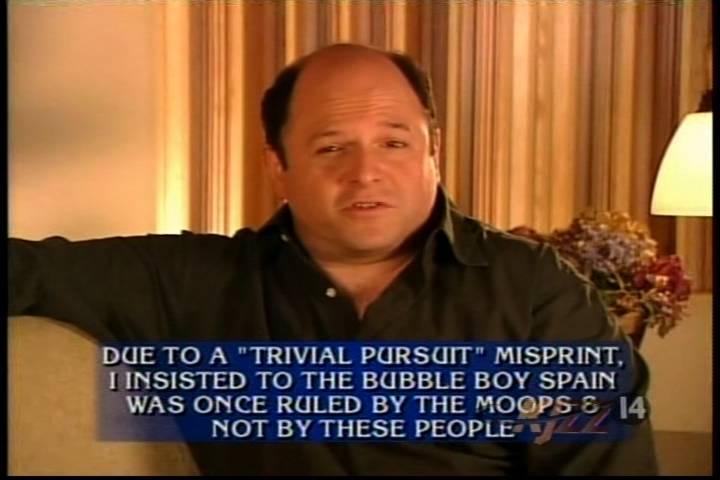
[THE 'CONSUMERS' REFERRED TO HERE ARE NONE OTHER THAN THE PERSONS WHO OPERATE THE EXTREMIST ENVIRONMENTAL, CONSUMER & HEALTH GROUPS THAT WANT US ALL TO LIVE IN A CLINICALLY PURE WORLD, FREE FROM RISK. THEY WANT US, IN OTHER WORDS, TO LIVE IN A BUBBLE. DON'T PEOPLE REMEMBER THE ABSURDITY OF SEINFELD'S 'BUBBLE-BOY'???]

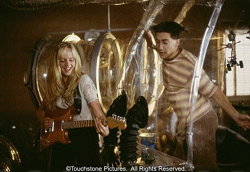
["'The Bubble Boy' is the 47th episode of the American sitcom Seinfeld, as well as the nickname of Donald Sanger, one of the characters in the episode...Jerry, George, George's girlfriend Susan, and Elaine plan to travel to Susan's family's lakeside cabin. Before then, Elaine meets with a kindly father who describes the sad life of his young son Donald who lives in a plastic 'bubble' (a germ-free quarantine). As Donald is a fan of Jerry's, Jerry is forced by Elaine to visit Donald on the way to the cabin to cheer him up. However, Jerry gets lost and George and Susan arrive before him. While waiting for Jerry to arrive, they play Trivial Pursuit with the "bubble boy," who is in fact actually an adult, and not a mere boy...The Trivial Pursuit game ends prematurely when George disputes the answer to the question "Who invaded Spain in the 8th century?" The boy answers with "the Moors", but the question card says "the Moops" due to a misprint, and George refuses to give Donald credit. Donald attacks George and the "bubble" is punctured and depressurized in the struggle. Although everyone blames George for popping the bubble, technically, Susan causes it as she tries to defend George from Donald's attack." See: The Bubble Boy (Seinfeld episode), Wikipedia, at: http://en.wikipedia.org/wiki/The_Bubble_Boy_(Seinfeld_episode) .]


Adamantly opposed by the U.S. chemical industry and the Bush administration, the E.U. laws will be phased in over the next decade. It is difficult to know exactly how the changes will affect products sold in the United States. But American manufacturers are already searching for safer alternatives to chemicals used to make thousands of consumer goods, from bike helmets to shower curtains.


[ACTUALLY, THE EU REACH REGULATORY REGIME HAS BEEN OPPOSED BY INDUSTRIES THROUGHOUT THE WORLD ON THE GROUNDS THAT IT IS A FALSE PRETENSE FOR HEALTH & ENVIRONMENTAL SAFETY-BASED PROTECTIONISM, MODELED AFTER THE EU'S FAMOUS GENETICALLY MODIFIED (GM) 'FRANKENFOOD' REGULATORY SCARE THAT PERSISTS TO THIS DAY.


See: Lawrence A. Kogan, Enlightened Environmentalism or Disguised Protectionism: Assessing the Impact of EU Precaution-Based Standards on Developing Countries, National Foreign Trade Council (April 2004) at pp. 65-86, at:
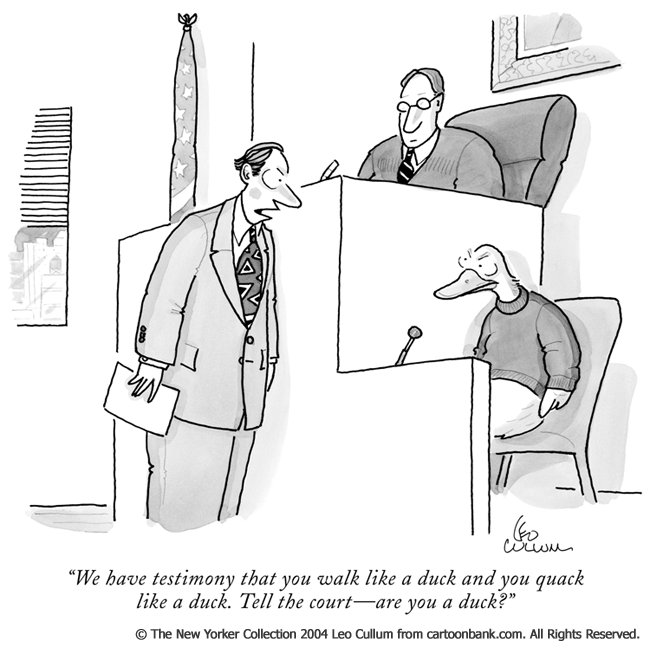
http://www.wto.org/english/forums_engo_eposp47_nftc_enlightened_e.pdf ; Lawrence A. Kogan, Trade protectionism : Ducking the Truth About Europe's GMO Policy, International Herald Tribune (Nov. 27, 2007), at: http://www.iht.com/articles/2004/11/27/edkogan_ed3_.php?page=1 ; Lawrence A. Kogan, Ducking The Truth About EU GM Policy -Looks Like a Duck, But is it a Decoy?, EU Reporter (Oct. 22, 2004) at p. 6, at: http://www.itssd.org/Publications/Ducking%20the%20Truth%20About%20EU%20GM%20Policy.pdf.]


The European Union's tough stance on chemical regulation is the latest area in which the Europeans are reshaping business practices with demands that American companies either comply or lose access to a market of 27 countries and nearly 500 million people.


[THE EU REACH REGULATION ARGUABLY VIOLATES WTO LAW. See: Lawrence A. Kogan, EU REACH Adoption Likely to Trigger WTO Action (Dec. 15, 2006) at: http://www.itssd.org/pdf/PressRelease-EUREACHAdoption.pdf ; Lawrence A. Kogan, REACHING For Your Wallets Or Your Lives, (Dec. 15, 2006) at: http://www.itssd.org/Publications/REACHing-for-Your-Wallets.pdf ; Lawrence A. Kogan, WTO ‘Fever’ Necessary to Stem Advance Of Precautionary Principle ‘Virus’, Says ITSSD (March 27, 2007) at: http://www.itssd.org/Press%20Release/WTOFeverNecessarytoStemAdvanceofPrecautionaryPrincipleVirusSaysITSSDII3.pdf ].

From its crackdown on antitrust practices in the computer industry to its rigorous protection of consumer privacy, the European Union has adopted a regulatory philosophy that emphasizes the consumer. Its approach to managing chemical risks, which started with a trickle of individual bans and has swelled into a wave, is part of a European focus on caution when it comes to health and the environment.


[THE EU CRACKDOWN ON ANTITRUST PRACTICES IS LARGELY ATTRIBUTABLE TO THE LACK OF DUE PROCESS REQUIREMENTS IN EUROPE. PERSONS, LEGAL OR OTHERWISE, ARE PRESUMED GUILTY UNTIL PROVEN INNOCENT. THERE IS NO COMMON LAW REQUIREMENT FOR LAW ENFORCEMENT AUTHORITIES TO OBTAIN A WARRANT PRIOR TO AN ARREST BASED ON THE NOTION OF 'PROBABLE CAUSE'. IS THIS THE TYPE OF LEGAL SYSTEM (BASED ON EUROPEAN CONTINENTAL LAW) THAT WE WANT IN AMERICA??? IS THIS THE TYPE OF 'CHANGE' THAT BARACK OBAMA IS SPEAKING OF??]


"There's a strong sense in Europe and the world at large that America is letting the market have a free ride," said Sheila Jasanoff, professor of science and technology studies at Harvard University's John F. Kennedy School of Government. "The Europeans believe . . . that being a good global citizen in an era of sustainability means you don't just charge ahead and destroy the planet without concern for what you're doing."


[THIS IS A SELF-SERVING, FALSE & MISREPRESENTATIVE POLITICAL STATEMENT THAT IS WITHOUT SCIENTIFIC FOUNDATION. JUST BECAUSE MS. JASANOFF HARKENS FROM HARVARD DOESN'T GIVE HER THE RIGHT TO CLAIM ACADEMIC CREDIBILITY. EUROPE IS UNDERTAKING A 'WITCH HUNT' TO FIND SOMETHING THAT LOOKS LIKE SCIENTIFIC EVIDENCE TO SUPPORT ITS SPURIOUS CLAIMS THAT CHEMICALS MANUFACTURERS, FORMULATORS AND USERS ARE HARMING PUBLIC HEALTH & ENVIRONMENT.]


Under the E.U. laws, manufacturers must study and report the risks posed by specific chemicals.

Through the Internet, the data will be available for the first time to consumers, regulators and potential litigants around the world. Until now, much of that information either did not exist or was closely held by companies.


[THE EXISTENCE OF INFORMATION BY ITSELF MEANS LITTLE. THE EU'S PROBLEM IS THAT IT HAS ACCUMULATED SO MUCH INFORMATION FOR ACCUMULATION SAKE - THAT IS, BECAUSE IT CAN, THAT IT DOESN'T KNOW WHAT IT ALL MEANS, AND THEREFORE, WHAT TO DO WITH IT!!]


"This is going to compel companies to be more responsible for their products than they have ever been," said Daryl Ditz, senior policy adviser at the Center for International Environmental Law. "They'll have to know more about the chemicals they make, what their products are and where they go."


[KNOWING THE HAZARDOUS CHARACTERISTICS OF CHEMICALS ALONE DOES NOT TRANSLATE INTO MAKING SAFER PRODUCTS. KNOWING HOW CHEMICALS ARE TO BE USED, WHO WILL USE THEM, & UNDER WHAT CONDITIONS, WILL PERMIT COMPANIES TO MAKE SAFER PRODUCTS. HOWEVER, IT SHOULD NOT BE THE BURDEN OF COMPANIES TO ANTICIPATE THE UNANTICIPATABLE, AS THESE ACADEMICS AND THE EUROPEAN UNION WOULD LIKE THEM TO DO - UNLESS THE U.S. WISHES TO ADOPT THE SOCIALIST STYLE OF EUROPEAN REGULATION, WHICH DETERMINES WHAT PEOPLE CAN & CANNOT DO.]


The laws also call for the European Union to create a list of "substances of very high concern" -- those suspected of causing cancer or other health problems. Any manufacturer wishing to produce or sell a chemical on that list must receive authorization.


In the United States, laws in place for three decades have made banning or restricting chemicals extremely difficult. The nation's chemical policy, the Toxic Substances Control Act of 1976, grandfathered in about 62,000 chemicals then in commercial use. Chemicals developed after the law's passage did not have to be tested for safety. Instead, companies were asked to report toxicity information to the government, which would decide if additional tests were needed.


In more than 30 years, the Environmental Protection Agency has required additional studies for about 200 chemicals, a fraction of the 80,000 chemicals that are part of the U.S. market. The government has had little or no information about the health hazards or risks of most of those chemicals.


The EPA has banned only five chemicals since 1976. The hurdles are so high for the agency that it has been unable to ban asbestos, which is widely acknowledged as a likely carcinogen and is barred in more than 30 countries. Instead, the EPA relies on industry to voluntarily cease production of suspect chemicals.


"If you ask people whether they think the drain cleaner they use in their homes has been tested for safety, they think, 'Of course, the government would have never allowed a product on the market without knowing it's safe,' " said Richard Denison, senior scientist at the Environmental Defense Fund. "When you tell them that's not the case, they can't believe it."


The changes in Europe follow eight years of vigorous opposition from the U.S. chemical industry and the Bush administration. Four U.S. agencies -- the EPA, the Commerce Department, the State Department and the Office of the Trade Representative -- argued that the system would burden manufacturers and offer little public benefit.


In 2002, then-Secretary of State Colin L. Powell directed the staffs of American Embassies in Europe to oppose the measure. He cited talking points developed in consultation with the American Chemistry Council, a manufacturers trade group.


Mike Walls, the chemistry council's managing director of government and regulatory affairs, said that 90 percent of its members are affected by the E.U. laws and that some cannot afford the cost of compliance. "We're talking about over 850 pages of regulation," he said.


The E.U. standards will force many manufacturers to reformulate their products for sale there as well as in the United States. "We're not looking at this as a European program -- we're buying and selling all over the globe," said Linda Fisher, vice president and chief sustainability officer for DuPont and a former EPA deputy administrator.


DuPont expects to spend "tens of millions" of dollars to register about 500 chemicals with the European Union, Fisher said. About 20 to 30 are expected to make the list of "substances of very high concern."


[THIS CORPORATE PHILOSOPHY MORE LIKELY REFLECTS THE COMPANY'S RETICENCE TO CHALLENGE EU GOVERNMENTAL AUTHORITY EVEN IF THE COMPANIES ARE 'IN THE RIGHT', GIVEN THAT THE EU COMMISSION & THE UNITED NATIONS FUNDS NON-GOVERNMENTAL GREEN EXTREMIST GROUPS THAT WAGE PUBLIC REPUTATION DISPARAGEMENT CAMPAIGNS AGAINST COMPANIES THAT DON'T GO ALONG WITH COMMISSION &/OR NGO CORPORATE SOCIAL RESPONSIBILITY MANDATES. OTHER 'MULTINATIONAL COMPANIES HAVE EMBRACED THIS PHILOSOPHY TO ESCAPE THE GRASP OF THE NGOs. See: Lawrence A. Kogan, Precautionary Preference: How Europe Employs Regulatory Protectionism to Weaken American Free Enterprise, International Journal of Economic Development, Vol. 7, Nos. 2-3 (2005) at: http://www.itssd.org/White%20Papers/ijed-7-2-3-kogan.pdf . ]


One such chemical is likely to be perfluorooctanoic acid (PFOA), used to make Teflon and other substances used in food packaging, carpet, clothing and electrical equipment. A suspected carcinogen, it accumulates in the environment and in human tissue.


DuPont reached a $16.5 million settlement with the EPA in 2005 on charges that it illegally withheld information about health risks posed by PFOA and about water pollution near a West Virginia plant. Dupont and other companies have agreed to cease production by 2015.


Once a chemical is included on the E.U. list, manufacturers are likely to feel pressure to abandon production, observers say. "It will be a market signal that says, 'These are best to avoid,' " said Joel Tickner, director of the Lowell Center for Sustainable Production at the University of Massachusetts.


[THIS IS CALLED CHARACTERIZING ENVIRONMENTAL & HEALTH HAZARDS THROUGH BUREAUCRATIC CREATION OF LISTS OF 'BAD' SUBSTANCES WITHOUT FIRST SUBJECTING THEM TO EMPIRICAL SCIENCE-BASED RISK ASSESSMENTS TO DETERMINE THE SPECIFIC HARMS CAUSED BY SPECIFIC USES TO SPECIFIC HUMAN SPECIMENS OR SUBGROUPS OR ENVIRONMENTAL ECOSYSTEMS. SUCH 'LISTINGS' ARE REMINISCENT OF MARXIST SOVIET-STYLE REGULATIONS THAT ARE INTENDED TO STIGMATIZE THE PRODUCERS, FORMULATORS OR USERS OF SUCH 'LISTED' SUBSTANCES' SO THAT THEY CURTAIL THEIR ACTIVITIES WITHOUT PROOF OF MORE. THIS IS ENVIRONMENTAL SOCIALISM, A SECULAR RELIGION, PLAIN & SIMPLE, DESPITE WHAT THE ACADEMIC DEMAGOGUES PREACH. See: Lawrence A. Kogan, Exporting Europe's Protectionism, National Interest, No. 77 (Fall 2004) at: http://www.itssd.org/Publications/Kogan%20TNI%2077FINAL.pdf .]


Linking the word "concern" to a chemical is enough to trigger a market reaction. Earlier this year, when government officials in Canada and the United States said they worried about health effects possibly caused by bisphenol A (BPA), a chemical used in plastics, major retailers pulled from their shelves baby bottles containing the chemical.


[THIS IS OTHERWISE KNOWN AS GOVERNMENT & NGO FEARMONGERING. AND, IT IS REFLECTED IN EUROPE'S OPERATIVE PHILOSOPHICAL & LEGAL TOUCHSTONE, KNOWN AS THE 'STANDARD-OF-PROOF DIMINISHING, BURDEN-OF-PROOF-REVERSING, GUILTY-UNTIL-PROVEN-INNOCENT, 'I-FEAR-THEREFORE-I-SHALL-BAN', 'HAZARD- NOT-RISK-BASED' PRECAUTIONARY PRINCIPLE. IT ENTITLES GOVERNMENTS TO REGULATE ANYTHING THEY ESSENTIALLY DESIRE.]


IMAGINERY DANGERS WITHOUT EVIDENCE OF PROBABLE HARM.]


"When we see lead in toys and BPA in baby bottles, all of these things arouse a kind of parental anxiety that overrides any counter-arguments based on science that industry might make," Jasanoff said.


[THIS IS ESPECIALLY TRUE WHEN WE HAVE GRANT-SEEKING ACADEMICS LIKE MS. JASANOFF WHO CRAVE PUBLIC ATTENTION & ADULATION.]


In the absence of strong federal regulations in the United States, a patchwork system is emerging. Individual states are banning specific chemicals, and half a dozen lawmakers on Capitol Hill have introduced bills aimed at shutting down production of various chemicals.


[THIS IS A MISNOMER. THE U.S. HAS AMONG THE STRONGEST FEDERAL REGULATIONS ON CHEMICALS IN THE WORLD. THIS IS NOT THE PROBLEM. THE PROBLEM CONCERNS EUROPE'S PENCHANT FOR REGULATORY PROTECTIONISM THAT ASSUMES THE FORM OF UNSCIENTIFIC ENVIRONMENTAL & HEALTH REGULATIONS JUSTIFIED THROUGH THE USE OF PUBLIC FEAR-PROMOTING CAMPAIGNS EMPLOYED BY EUROPEAN GOVERNMENT-FUNDED NONGOVERNMENTAL ORGANIZATIONS (NGOs).]


Sen. Frank Lautenberg (D-N.J.) introduced a measure last month that would overhaul U.S. chemical regulation along the lines of the new European approach. It would require the Centers for Disease Control and Prevention to use biomonitoring studies to identify industrial chemicals present in umbilical cord blood and decide whether those chemicals should be restricted or banned. A study by the nonprofit Environmental Working Group found an average of 200 industrial chemicals in the cord blood of newborns.


[THE RECENT LAUTENBERG/WAXMAN INITIATIVE REFLECTS THE SOCIALIST PROCLIVITIES OF THE DEMOCRATIC PARTY-DOMINATED NEW JERSEY & WASHINGTON, DC LEGISLATURES. APPARENTLY, HE AND OTHER DEMOCRATS HAVE BEEN WORKING BEHIND CLOSED DOORS FOR SEVERAL YEARS WITH THE EUROPEAN COMMISSION, MOST LIKELY WITH A FAVORABLE NOD FROM OBAMA. See: EU chemicals law REACH inspires US bill, Euractiv.com (July 18, 2005 Updated: May 21, 2007, at: http://www.euractiv.com/en/environment/eu-chemicals-law-reach-inspires-us-bill/article-142660 ; US Eyes REACH-style Law for Chemicals, Euractiv.com (June 3, 2008), at: http://www.euractiv.com/en/environment/us-eyes-reach-style-law-chemicals/article-172968 ; Senators Obama, Lautenberg Say Chemical Plant Security Legislation is Far too Weak, Fails to Protect Millions of Americans, Barack Obama, U.S. Senator From Illinois Website, Press Release (Sept. 27, 2006) at: http://obama.senate.gov/press/060927-senators_obama_1 ; Lautenberg, Solis, Waxman Introduce Legislation To Protect Americans From Hazardous Chemicals In Consumer Products, Frank R. Lautenberg, United States Senator for New Jersey, Press Release (May 20, 2008), at: http://lautenberg.senate.gov/newsroom/record.cfm?id=298072 ].


Said Denison: "We still have quite a ways to go in convincing the U.S. Congress this is a problem that needs fixing." But new policies in Europe and in Canada push the United States closer to change, he said. "They show it's feasible, it's being done elsewhere, and we're behind."


[OBAMA COULD NOT HAVE SAID IT BETTER!!]

-------------------------------------------------------------------------------------------------
http://firedoglake.com/2008/03/01/dems-eco-views-ii-frankenlabels-and-the-precautionary-principle


Obama Likely to Support U.S. Adoption of EU's REACH Regulatory Regime & the EU Precautionary Principle??


Dems’ Eco-Views II: Frankenlabels and the Precautionary Principle

By Kirk Murphy

Fire Dog Lake


Good news: both Sen. Clinton and Sen Obama support labelling Frankenfoods. Why care? Well, all of us in the US - and everyone in our families and communities - are human lab rats in a giant experiment. American adults and American children are the first test subjects in world history to be eating Frankenfoods.


Not so good news: both Senator Clinton and Sen. Obama have a long way to go on the Precautionary Principle, although Senator Obama has a small lead on the issue.


...Q: Despite years of debate and scientific effort, only a tiny fraction of the approximately 75,000 chemicals in commercial production have been subjected to even rudimentary toxicity testing. Children up to age six are most at risk because their vital organs and immune system are still developing and because they depend more heavily on their environments than adults do.

How will existing regulations be bolstered to limit children's exposures to industrial toxins in our environment? Do you support adopting Europe's REACH here in the U.S.?


A: First, I will ensure that current law is enforced to meet its original intent. The Bush administration has weakly interpreted too many laws, including the Clean Air Act, to provide protections to corporate interests, and that trend will end in my administration.


Second, I will build on my leadership in the U.S. Senate to ban lead in children's products and work to identify gaps in our regulatory process for other toxins that adversely affect children. I think that Europe's REACH program is innovative and I look forward to working with chemical safety experts in my administration to determine how well REACH is being implemented, and what aspects of the approach would be beneficial for the United States to adopt.