Chemical Law Has Global Impact: E.U.'s New Rules Forcing Changes By U.S. Firms


Washington Post
June 12, 2008
Europe this month rolled out new restrictions on makers of chemicals linked to cancer and other health problems, changes that are forcing U.S. industries to find new ways to produce a wide range of everyday products.


The new laws in the European Union require companies to demonstrate that a chemical is safe before it enters commerce -- the opposite of policies in the United States, where regulators must prove that a chemical is harmful before it can be restricted or removed from the market.
[THIS IS TANTAMOUNT TO REQUIRING INDUSTRY TO PROVE A 'NEGATIVE' - i.e., THAT SOMETHING IS TOTALLY SAFE WITH ZERO RISK - SOMETHING THAT IS NEITHER HUMANLY POSSIBLE NOR REALISTIC.]
Manufacturers say that complying with the European laws will add billions to their costs, possibly driving up prices of some products.
[THIS IS FACT, NOT FICTION. THE PROPONENTS ALMOST ALWAYS MINIMIZE THE COSTS WHILE EXTOLLING THE BENEFITS.]
The changes come at a time when consumers are increasingly worried about the long-term consequences of chemical exposure and are agitating for more aggressive regulation. In the United States, these pressures have spurred efforts in Congress and some state legislatures to pass laws that would circumvent the laborious federal regulatory process.
[THE CONGRESSIONAL PRESSURE REFERRED TO ABOVE HAS LONG PROCEEDED FROM POLICALLY MOTIVATED DEMOCRATIC CALIFORNIA CONGRESSMAN HENRY WAXMAN. See: Lawrence A. Kogan, Claims of Improper US Lobbying Quite a REACH, EU Reporter (May 2004 Plenary Issue at p. 18) at: http://www.itssd.org/Publications/1-20_EUR_04May04.pdf ].
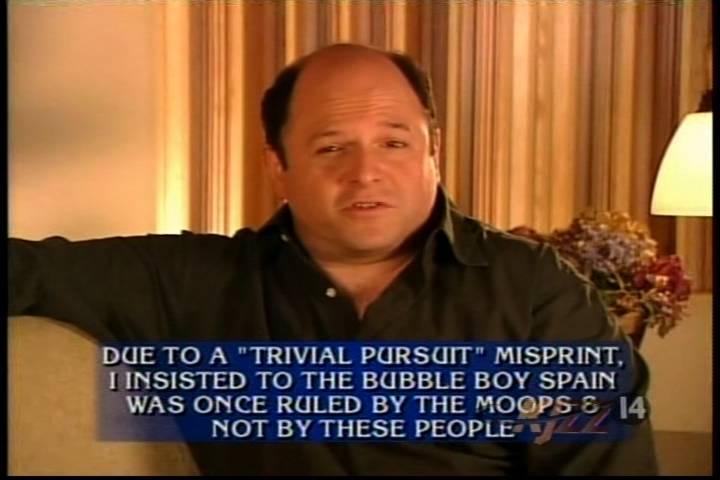
[THE 'CONSUMERS' REFERRED TO HERE ARE NONE OTHER THAN THE PERSONS WHO OPERATE THE EXTREMIST ENVIRONMENTAL, CONSUMER & HEALTH GROUPS THAT WANT US ALL TO LIVE IN A CLINICALLY PURE WORLD, FREE FROM RISK. THEY WANT US, IN OTHER WORDS, TO LIVE IN A BUBBLE. DON'T PEOPLE REMEMBER THE ABSURDITY OF SEINFELD'S 'BUBBLE-BOY'???]
 ["'The Bubble Boy' is the 47th episode of the American sitcom Seinfeld, as well as the nickname of Donald Sanger, one of the charact
 ers in the episode...Jerry, George, George's girlfriend Susan, and Elaine plan to travel to Susan's family's lakeside cabin. Before then, Elaine meets with a kindly father who describes the sad life of his young son Donald who lives in a plastic 'bubble' (a germ-free quarantine). As Donald is a fan of Jerry's, Jerry is forced by Elaine to visit Donald on the way to the cabin to cheer him up. However, Jerry gets lost and George and Susan arrive before him. While waiting for Jerry to arrive, they play Trivial Pursuit with the "bubble boy," who is in fact actually an adult, and not a mere boy...The Trivial Pursuit game ends prematurely when George disputes the answer to the question "Who invaded Spain in the 8th century?" The boy answers with "the Moors", but the question card says "the Moops" due to a misprint, and George refuses to give Donald credit. Donald attacks George and the "bubble" is punctured and depressurized in the struggle. Although everyone blames George for popping the bubble, technically, Susan causes it as she tries to defend George from Donald's attack." See: The Bubble Boy (Seinfeld episode), Wikipedia, at: http://en.wikipedia.org/wiki/The_Bubble_Boy_(Seinfeld_episode) .]
Adamantly opposed by the U.S. chemical industry and the Bush administration, the E.U. laws will be phased in over the next decade. It is difficult to know exactly how the changes will affect products sold in the United States. But American manufacturers are already searching for safer alternatives to chemicals used to make thousands of consumer goods, from bike helmets to shower curtains.

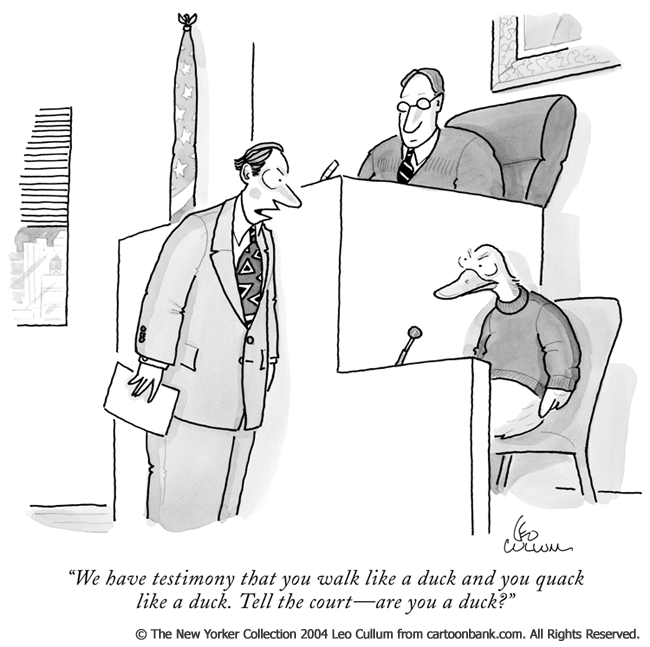 (GM) 'FRANKENFOOD' REGULATORY SCARE THAT PERSISTS TO THIS DAY.
 See: Lawrence A. Kogan, Enlightened Environmentalism or Disguised Protectionism: Assessing the Impact of EU Precaution-Based Standards on Developing Countries, National Foreign Trade Council (April 2004) at pp. 65-86, at: http://www.wto.org/english/forums_engo_eposp47_nftc_enlightened_e.pdf ; Lawrence A. Kogan, Trade protectionism : Ducking the Truth About Europe's GMO Policy, International Herald Tribune (Nov. 27, 2007), at: http://www.iht.com/articles/2004/11/27/edkogan_ed3_.php?page=1 ; Lawrence A. Kogan, Ducking The Truth About EU GM Policy -Looks Like a Duck, But is it a Decoy?, EU Reporter (Oct. 22, 2004) at p. 6, at: http://www.itssd.org/Publications/Ducking%20the%20Truth%20About%20EU%20GM%20Policy.pdf.]
The European Union's tough stance on chemical regulation is the latest area in which the Europeans are reshaping business practices with demands that American companies either comply or lose access to a market of 27 countries and nearly 500 million people.
[THE EU REACH REGULATION ARGUABLY VIOLATES WTO LAW. See: Lawrence A. Kogan, EU REACH Adoption Likely to Trigger WTO Action (Dec. 15, 2006) at: http://www.itssd.org/pdf/PressRelease-EUREACHAdoption.pdf ; Lawrence A. Kogan, REACHING For Your Wallets Or Your Lives, (Dec. 15, 2006) at: http://www.itssd.org/Publications/REACHing-for-Your-Wallets.pdf ; Lawrence A. Kogan, WTO ‘Fever’ Necessary to Stem Advance Of Precautionary Principle ‘Virus’, Says ITSSD (March 27, 2007) at: http://www.itssd.org/Press%20Release/WTOFeverNecessarytoStemAdvanceofPrecautionaryPrincipleVirusSaysITSSDII3.pdf ].
From its crackdown on antitrust practices in the computer industry to its rigorous protection of consumer privacy, the European Union has adopted a regulatory philosophy that emphasizes the consumer. Its approach to managing chemical risks, which started with a trickle of individual bans and has swelled into a wave, is part of a European focus on caution when it comes to health and the environment.
[THE EU CRACKDOWN ON ANTITRUST PRACTICES IS LARGELY ATTRIBUTABLE TO THE LACK OF DUE PROCESS REQUIREMENTS IN EUROPE. PERSONS, LEGAL OR OTHERWISE, ARE PRESUMED GUILTY UNTIL PROVEN INNOCENT. THERE IS NO COMMON LAW REQUIREMENT FOR LAW ENFORCEMENT AUTHORITIES TO OBTAIN A WARRANT PRIOR TO AN ARREST BASED ON THE NOTION OF 'PROBABLE CAUSE'. IS THIS THE TYPE OF LEGAL SYSTEM (BASED ON EUROPEAN CONTINENTAL LAW) THAT WE WANT IN AMERICA??? IS THIS THE TYPE OF 'CHANGE' THAT BARACK OBAMA IS SPEAKING OF??]
"There's a strong sense in Europe and the world at large that America is letting the market have a free ride," said Sheila Jasanoff, professor of science and technology studies at Harvard University's John F. Kennedy School of Government. "The Europeans believe . . . that being a good global citizen in an era of sustainability means you don't just charge ahead and destroy the planet without concern for what you're doing."
[THIS IS A SELF-SERVING, FALSE & MISREPRESENTATIVE POLITICAL STATEMENT THAT IS WITHOUT SCIENTIFIC FOUNDATION. JUST BECAUSE MS. JASANOFF HARKENS FROM HARVARD DOESN'T GIVE HER THE RIGHT TO CLAIM ACADEMIC CREDIBILITY. EUROPE IS UNDERTAKING A 'WITCH HUNT' TO FIND SOMETHING THAT LOOKS LIKE SCIENTIFIC EVIDENCE TO SUPPORT ITS SPURIOUS CLAIMS THAT CHEMICALS MANUFACTURERS, FORMULATORS AND USERS ARE HARMING PUBLIC HEALTH & ENVIRONMENT.]
Under the E.U. laws, manufacturers must study and report the risks posed by specific chemicals.
Through the Internet, the data will be available for the first time to consumers, regulators and potential litigants around the world. Until now, much of that information either did not exist or was closely held by companies.
[THE EXISTENCE OF INFORMATION BY ITSELF MEANS LITTLE. THE EU'S PROBLEM IS THAT IT HAS ACCUMULATED SO MUCH INFORMATION FOR ACCUMULATION SAKE - THAT IS, BECAUSE IT CAN, THAT IT DOESN'T KNOW WHAT IT ALL MEANS, AND THEREFORE, WHAT TO DO WITH IT!!]
"This is going to compel companies to be more responsible for their products than they have ever been," said Daryl Ditz, senior policy adviser at the Center for International Environmental Law. "They'll have to know more about the chemicals they make, what their products are and where they go."
[KNOWING THE HAZARDOUS CHARACTERISTICS OF CHEMICALS ALONE DOES NOT TRANSLATE INTO MAKING SAFER PRODUCTS. KNOWING HOW CHEMICALS ARE TO BE USED, WHO WILL USE THEM, & UNDER WHAT CONDITIONS, WILL PERMIT COMPANIES TO MAKE SAFER PRODUCTS. HOWEVER, IT SHOULD NOT BE THE BURDEN OF COMPANIES TO ANTICIPATE THE UNANTICIPATABLE, AS THESE ACADEMICS AND THE EUROPEAN UNION WOULD LIKE THEM TO DO - UNLESS THE U.S. WISHES TO ADOPT THE SOCIALIST STYLE OF EUROPEAN REGULATION, WHICH DETERMINES WHAT PEOPLE CAN & CANNOT DO.]
The laws also call for the European Union to create a list of "substances of very high concern" -- those suspected of causing cancer or other health problems. Any manufacturer wishing to produce or sell a chemical on that list must receive authorization.
In the United States, laws in place for three decades have made banning or restricting chemicals extremely difficult. The nation's chemical policy, the Toxic Substances Control Act of 1976, grandfathered in about 62,000 chemicals then in commercial use. Chemicals developed after the law's passage did not have to be tested for safety. Instead, companies were asked to report toxicity information to the government, which would decide if additional tests were needed.
In more than 30 years, the Environmental Protection Agency has required additional studies for about 200 chemicals, a fraction of the 80,000 chemicals that are part of the U.S. market. The government has had little or no information about the health hazards or risks of most of those chemicals.
The EPA has banned only five chemicals since 1976. The hurdles are so high for the agency that it has been unable to ban asbestos, which is widely acknowledged as a likely carcinogen and is barred in more than 30 countries. Instead, the EPA relies on industry to voluntarily cease production of suspect chemicals.
"If you ask people whether they think the drain cleaner they use in their homes has been tested for safety, they think, 'Of course, the government would have never allowed a product on the market without knowing it's safe,' " said Richard Denison, senior scientist at the Environmental Defense Fund. "When you tell them that's not the case, they can't believe it."
The changes in Europe follow eight years of vigorous opposition from the U.S. chemical industry and the Bush administration. Four U.S. agencies -- the EPA, the Commerce Department, the State Department and the Office of the Trade Representative -- argued that the system would burden manufacturers and offer little public benefit.
In 2002, then-Secretary of State Colin L. Powell directed the staffs of American Embassies in Europe to oppose the measure. He cited talking points developed in consultation with the American Chemistry Council, a manufacturers trade group.
Mike Walls, the chemistry council's managing director of government and regulatory affairs, said that 90 percent of its members are affected by the E.U. laws and that some cannot afford the cost of compliance. "We're talking about over 850 pages of regulation," he said.
The E.U. standards will force many manufacturers to reformulate their products for sale there as well as in the United States. "We're not looking at this as a European program -- we're buying and selling all over the globe," said Linda Fisher, vice president and chief sustainability officer for DuPont and a former EPA deputy administrator.
DuPont expects to spend "tens of millions" of dollars to register about 500 chemicals with the European Union, Fisher said. About 20 to 30 are expected to make the list of "substances of very high concern."
[THIS CORPORATE PHILOSOPHY MORE LIKELY REFLECTS THE COMPANY'S RETICENCE TO CHALLENGE EU GOVERNMENTAL AUTHORITY EVEN IF THE COMPANIES ARE 'IN THE RIGHT', GIVEN THAT THE EU COMMISSION & THE UNITED NATIONS FUNDS NON-GOVERNMENTAL GREEN EXTREMIST GROUPS THAT WAGE PUBLIC REPUTATION DISPARAGEMENT CAMPAIGNS AGAINST COMPANIES THAT DON'T GO ALONG WITH COMMISSION &/OR NGO CORPORATE SOCIAL RESPONSIBILITY MANDATES. OTHER 'MULTINATIONAL COMPANIES HAVE EMBRACED THIS PHILOSOPHY TO ESCAPE THE GRASP OF THE NGOs. See: Lawrence A. Kogan, Precautionary Preference: How Europe Employs Regulatory Protectionism to Weaken American Free Enterprise, International Journal of Economic Development, Vol. 7, Nos. 2-3 (2005) at: http://www.itssd.org/White%20Papers/ijed-7-2-3-kogan.pdf . ]
One such chemical is likely to be perfluorooctanoic acid (PFOA), used to make Teflon and other substances used in food packaging, carpet, clothing and electrical equipment. A suspected carcinogen, it accumulates in the environment and in human tissue.
DuPont reached a $16.5 million settlement with the EPA in 2005 on charges that it illegally withheld information about health risks posed by PFOA and about water pollution near a West Virginia plant. Dupont and other companies have agreed to cease production by 2015.
Once a chemical is included on the E.U. list, manufacturers are likely to feel pressure to abandon production, observers say. "It will be a market signal that says, 'These are best to avoid,' " said Joel Tickner, director of the Lowell Center for Sustainable Production at the University of Massachusetts.
[THIS IS CALLED CHARACTERIZING ENVIRONMENTAL & HEALTH HAZARDS THROUGH BUREAUCRATIC CREATION OF LISTS OF 'BAD' SUBSTANCES WITHOUT FIRST SUBJECTING THEM TO EMPIRICAL SCIENCE-BASED RISK ASSESSMENTS TO DETERMINE THE SPECIFIC HARMS CAUSED BY SPECIFIC USES TO SPECIFIC HUMAN SPECIMENS OR SUBGROUPS OR ENVIRONMENTAL ECOSYSTEMS. SUCH 'LISTINGS' ARE REMINISCENT OF MARXIST SOVIET-STYLE REGULATIONS THAT ARE INTENDED TO STIGMATIZE THE PRODUCERS, FORMULATORS OR USERS OF SUCH 'LISTED' SUBSTANCES' SO THAT THEY CURTAIL THEIR ACTIVITIES WITHOUT PROOF OF MORE. THIS IS ENVIRONMENTAL SOCIALISM, A SECULAR RELIGION, PLAIN & SIMPLE, DESPITE WHAT THE ACADEMIC DEMAGOGUES PREACH. See: Lawrence A. Kogan, Exporting Europe's Protectionism, National Interest, No. 77 (Fall 2004) at: http://www.itssd.org/Publications/Kogan%20TNI%2077FINAL.pdf .]
Linking the word "concern" to a chemical is enough to trigger a market reaction. Earlier this year, when government officials in Canada and the United States said they worried about health effects possibly caused by bisphenol A (BPA), a chemical used in plastics, major retailers pulled from their shelves baby bottles containing the chemical.
[THIS IS OTHERWISE KNOWN AS GOVERNMENT & NGO FEARMONGERING. AND, IT IS REFLECTED IN EUROPE'S OPERATIVE PHILOSOPHICAL & LEGAL TOUCHSTONE, KNOWN AS THE 'STANDARD-OF-PROOF DIMINISHING, BURDEN-OF-PROOF-REVERSING, GUILTY-UNTIL-PROVEN-INNOCENT, 'I-FEAR-THEREFORE-I-SHALL-BAN', 'HAZARD- NOT-RISK-BASED' PRECAUTIONARY PRINCIPLE. IT ENTITLES GOVERNMENTS TO REGULATE ANYTHING THEY ESSENTIALLY DESIRE.]
IMAGINERY DANGERS WITHOUT EVIDENCE OF PROBABLE HARM.]
"When we see lead in toys and BPA in baby bottles, all of these things arouse a kind of parental anxiety that overrides any counter-arguments based on science that industry might make," Jasanoff said.
[THIS IS ESPECIALLY TRUE WHEN WE HAVE GRANT-SEEKING ACADEMICS LIKE MS. JASANOFF WHO CRAVE PUBLIC ATTENTION & ADULATION.]
In the absence of strong federal regulations in the United States, a patchwork system is emerging. Individual states are banning specific chemicals, and half a dozen lawmakers on Capitol Hill have introduced bills aimed at shutting down production of various chemicals.
[THIS IS A MISNOMER. THE U.S. HAS AMONG THE STRONGEST FEDERAL REGULATIONS ON CHEMICALS IN THE WORLD. THIS IS NOT THE PROBLEM. THE PROBLEM CONCERNS EUROPE'S PENCHANT FOR REGULATORY PROTECTIONISM THAT ASSUMES THE FORM OF UNSCIENTIFIC ENVIRONMENTAL & HEALTH REGULATIONS JUSTIFIED THROUGH THE USE OF PUBLIC FEAR-PROMOTING CAMPAIGNS EMPLOYED BY EUROPEAN GOVERNMENT-FUNDED NONGOVERNMENTAL ORGANIZATIONS (NGOs).]
Sen. Frank Lautenberg (D-N.J.) introduced a measure last month that would overhaul U.S. chemical regulation along the lines of the new European approach. It would require the Centers for Disease Control and Prevention to use biomonitoring studies to identify industrial chemicals present in umbilical cord blood and decide whether those chemicals should be restricted or banned. A study by the nonprofit Environmental Working Group found an average of 200 industrial chemicals in the cord blood of newborns.
[THE RECENT LAUTENBERG/WAXMAN INITIATIVE REFLECTS THE SOCIALIST PROCLIVITIES OF THE DEMOCRATIC PARTY-DOMINATED NEW JERSEY & WASHINGTON, DC LEGISLATURES. APPARENTLY, HE AND OTHER DEMOCRATS HAVE BEEN WORKING BEHIND CLOSED DOORS FOR SEVERAL YEARS WITH THE EUROPEAN COMMISSION, MOST LIKELY WITH A FAVORABLE NOD FROM OBAMA. See: EU chemicals law REACH inspires US bill, Euractiv.com (July 18, 2005 Updated: May 21, 2007, at: http://www.euractiv.com/en/environment/eu-chemicals-law-reach-inspires-us-bill/article-142660 ; US Eyes REACH-style Law for Chemicals, Euractiv.com (June 3, 2008), at: http://www.euractiv.com/en/environment/us-eyes-reach-style-law-chemicals/article-172968 ; Senators Obama, Lautenberg Say Chemical Plant Security Legislation is Far too Weak, Fails to Protect Millions of Americans, Barack Obama, U.S. Senator From Illinois Website, Press Release (Sept. 27, 2006) at: http://obama.senate.gov/press/060927-senators_obama_1 ; Lautenberg, Solis, Waxman Introduce Legislation To Protect Americans From Hazardous Chemicals In Consumer Products, Frank R. Lautenberg, United States Senator for New Jersey, Press Release (May 20, 2008), at: http://lautenberg.senate.gov/newsroom/record.cfm?id=298072 ].
Said Denison: "We still have quite a ways to go in convincing the U.S. Congress this is a problem that needs fixing." But new policies in Europe and in Canada push the United States closer to change, he said. "They show it's feasible, it's being done elsewhere, and we're behind."
[OBAMA COULD NOT HAVE SAID IT BETTER!!]
-------------------------------------------------------------------------------------------------
http://firedoglake.com/2008/03/01/dems-eco-views-ii-frankenlabels-and-the-precautionary-principle
Obama Likely to Support U.S. Adoption of EU's REACH Regulatory Regime & the EU Precautionary Principle??
Dems’ Eco-Views II: Frankenlabels and the Precautionary Principle
Good news: both Sen. Clinton and Sen Obama support labelling Frankenfoods. Why care? Well, all of us in the US - and everyone in our families and communities - are human lab rats in a giant experiment. American adults and American children are the first test subjects in world history to be eating Frankenfoods.
Not so good news: both Senator Clinton and Sen. Obama have a long way to go on the Precautionary Principle, although Senator Obama has a small lead on the issue.
...Q: Despite years of debate and scientific effort, only a tiny fraction of the approximately 75,000 chemicals in commercial production have been subjected to even rudimentary toxicity testing. Children up to age six are most at risk because their vital organs and immune system are still developing and because they depend more heavily on their environments than adults do.
How will existing regulations be bolstered to limit children's exposures to industrial toxins in our environment? Do you support adopting Europe's REACH here in the U.S.?
A: First, I will ensure that current law is enforced to meet its original intent. The Bush administration has weakly interpreted too many laws, including the Clean Air Act, to provide protections to corporate interests, and that trend will end in my administration. Second, I will build on my leadership in the U.S. Senate to ban lead in children's products and work to identify gaps in our regulatory process for other toxins that adversely affect children. I think that Europe's REACH program is innovative and I look forward to working with chemical safety experts in my administration to determine how well REACH is being implemented, and what aspects of the approach would be beneficial for the United States to adopt.