Saturday, June 14, 2008

Princeton University Global Governance Advocate Calls for New Wave of American Regulatory Socialism in the Image of European Protectionism

http://www.nytimes.com/2008/06/13/opinion/13krugman.html?em&ex=1213502400&en=a52b0be721dfaf26&ei=5087


Bad Cow Disease


By PAUL KRUGMAN


NEW YORK TIMES


June 13, 2008


“Mary had a little lamb / And when she saw it sicken / She shipped it off to Packingtown / And now it’s labeled chicken.”

That little ditty famously summarized the message of “The Jungle,” Upton Sinclair’s 1906 exposé of conditions in America’s meat-packing industry. Sinclair’s muckraking helped Theodore Roosevelt pass the Pure Food and Drug Act and the Meat Inspection Act — and for most of the next century, Americans trusted government inspectors to keep their food safe.


[WE MIGHT SUGGEST ANOTHER MORE APPROPRIATE 'LITTLE DITTY' THAT REFLECTS THE ESSENCE OF WHAT MR. KRUGMAN IS CALLING FOR - A RETURN TO EARLY 20TH CENTURY SOCIALISM: “Democracy and socialism have nothing in common but one word, equality. But notice the difference: while democracy seeks equality in liberty, socialism seeks equality in restraint and servitude.” Alexis de Tocqueville].

[MIGHT WE REMIND READERS THAT UPTON SINCLAIR WAS A MEMBER OF THE SOCIALIST PARTY AND WAS INFLUENCED BY EUROPEAN MARXIST POLITICAL THINKING. "The Jungle is a classic work of socialist realism. Critic Christopher Hitchens has described it as ‘the most fully realized instance of the genre, more telling and more moving than even the works of Dickens and Zola’. Sinclair’s objective was to expose the ways in which the capitalist class, in pursuit of maximum profit, exploits and discards the working people. Jack London called the book ‘the Uncle Tom’s Cabin of wage-slavery’...The Jungle was a bestseller in the United States and Britain, and its translation into 17 languages made Sinclair an international literary figure. The Jungle inspired scores of other successful social protest writers, including Iceland’s Halldor Kiljan Laxness (1902–98)...Upton Sinclair was born in Baltimore, Maryland, United States, on 20 September 1878. His father, an alcoholic, moved the family to New York in 1888. His parents were extremely poor but his grandparents, with whom he spent extended periods, were wealthy. He claimed that experiencing these extremes pointed him in the socialist direction. His outlook was influenced by the books of English Fabian Robert Blatchford, Russian anarchist Peter Kropotkin, American radicals Jack London and Frank Norris, and the investigative journalism of proud ‘muckrakers’ Ida M. Tarbell, Lincoln Steffens and Ray Stannard Baker...In 1915, Sinclair moved to California with his wife, Mary Craig, and in 1934 he won the Democratic Party’s pre-selection to contest the state’s election [FOR GOVERNOR]. For most of his life Sinclair defended communists, but his socialism was in the social-democratic mould. He parted company with Marxists in his belief that socialism could be achieved through electoral processes in America, without the need for the revolutionary overthrow of capitalism." See: Aiming for the Heart - Barry York describes how Upton Sinclair’s novel, The Jungle, shocked the American public and forced changes in legislation, National Library of Australia News (Jan. 2006), at:
http://www.nla.gov.au/pub/nlanews/2006/jan06/article3.html . READERS SHOULD NOTE THAT THE EUROPEAN UNION NOW REFERS TO ITSELF AS BEING IN THE 'SOCIAL-DEMOCRATIC MOULD'.]


Lately, however, there always seems to be at least one food-safety crisis in the headlines — tainted spinach, poisonous peanut butter and, currently, the attack of the killer tomatoes.


[IT IS ALWAYS HELPFUL THAT PUBLICITY-SEEKING CONSUMER & ENVIRONMENTAL GROUPS PROVIDE MEDIA WITH THE SENSATIONAL HEADLINES THAT WORRY THE AMERICAN PUBLIC ABOUT PRACTICALLY EVERYTHING IN THEIR DAILY LIVES. MR. KRUGMAN, WHY NOT ADMIT THAT THIS IS WHAT OCCURS? PLEASE ALSO BE HONEST ABOUT HOW SENSATIONALIST FEAR CAMPAIGNS SERVE THE INTERESTS OF SUCH GROUPS - i.e. IT PERMITS THEM TO 'POSTURE' TO ATTRACT FUNDING. FUNDING FLOWS IF THEY ARE SEEN AS 'SERVING THE PUBLIC INTEREST' BY PROVIDING IT WITH INFORMATION. ALTHOUGH CONSUMERS OFTEN HAVE LEGITIMATE CONCERNS ABOUT WHERE THEIR FOOD COMES FROM & HOW ITS SAFETY IS ASSURED, HOWEVER, WE QUESTION WHETHER THESE GROUPS PROVIDE MORE INFORMATION THAN DISINFORMATION.]


The declining credibility of U.S. food regulation has even led to a foreign-policy crisis: there have been mass demonstrations in South Korea protesting the pro-American prime minister’s decision to allow imports of U.S. beef, banned after mad cow disease was detected in 2003.


[MR. KRUGMAN CONVENIENTLY LEAVES OUT SOME IMPORTANT FACTS HERE, NAMELY, THAT THE KOREAN BEEF INDUSTRY AND NGO COMMUNITY DO NOT HAVE 'CLEAN HANDS'. KOREA'S BEEF INDUSTRY WAS PREVIOUSLY FOUND BY THE WTO TRIBUNALS TO VIOLATE INTERNATIONAL TRADE LAW THROUGH IMPOSITION OF 'FOOD SAFETY' REGULATIONS DEEMED TO ACTUALLY CONSTITUTE 'DISGUISED REGULATORY TRADE BARRIERS'. IN ADDITION, KOREAN NGOs HAVE BEEN STEADILY INFLUENCED BY THE EUROPEAN SOCIALIST NGOs TO BLOCK ALL KINDS OF FOODS, EVEN WHEN SCIENTIFIC RISK ASSESSMENTS HAVE PROVEN THE FOOD is 'SAFE'. HORMONE-INJECTED BEEF, IS ONE EXAMPLE THAT TIES BACK TO THE EUROPEAN BAN ON U.S. BEEF, IN PLACE SINCE THE MID '90's, NOTWITHSTANDING THE WTO'S RULINGS AGAINST THE EU CITING THEIR BAN AS ILLEGAL 'TRADE PROTECTIONISM'. IN ADDITION, KOREAN NGOs, WITH THE HELP OF EUROPEAN SOCIALIST-GREEN GROUPS, HAVE WORKED TO BLOCK THE INTRODUCTION OF GENETICALLY MODIFIED FOODS, FEEDS & SEEDS, NOTWITHSTANDING THE SCIENTIFIC RISK ASSESSMENTS IN BOTH THE U.S. & THE EU SHOWING THE PRODUCTS TO BE 'SAFE', AND THE WTO TRIBUNAL RULING FINDING THAT THE EU MORATORIA ON 'GMOs' WAS AN ILLEGAL DISGUISED PROTECTIONIST BARRIER TO TRADE. See: Lawrence A. Kogan, Discerning the Forest From the Trees: How Governments Use Ostensibly Private and Voluntary Standards to Avoid WTO Culpability, Global Trade and Customs Journal (Sept. 2007), at: http://www.itssd.org/GTCJ_03-offprints%20KOGAN%20-%20Discerning%20the%20Forest%20from%20the%20Trees.pdf ; Lawrence A. Kogan, World Trade Organization Biotech Decision Clarifies Central Role of Science in Evaluating Health and Environmental Risks for Regulation Purposes, Global Trade and Customs Journal (March 2007) at: http://www.itssd.org/Publications/GTCJ_04-offprints_Kogan[2].pdf .]


How did America find itself back in The Jungle? It started with ideology. Hard-core American conservatives have long idealized the Gilded Age, regarding everything that followed — not just the New Deal, but even the Progressive Era — as a great diversion from the true path of capitalism.


Thus, when Grover Norquist, the anti-tax advocate, was asked about his ultimate goal, he replied that he wanted a restoration of the way America was “up until Teddy Roosevelt, when the socialists took over. The income tax, the death tax, regulation, all that.”


The late Milton Friedman agreed, calling for the abolition of the Food and Drug Administration. It was unnecessary, he argued: private companies would avoid taking risks with public health to safeguard their reputations and to avoid damaging class-action lawsuits. (Friedman, unlike almost every other conservative I can think of, viewed lawyers as the guardians of free-market capitalism.)


[MR. FRIEDMAN WAS CORRECT IN HIS ASSESSMENT OF THE ROLE THAT TRIAL LAWYERS CAN CONSTRUCTIVELY PLAY IN A SYSTEM SHAPED BY FREE MARKET CAPITALISM. WE DON'T AGREE, HOWEVER, THAT GOVERNMENTAL REGULATORY BODIES, SUCH AS THE FDA, SHOULD BE DISMEMBERED AND/OR ABOLISHED. BUT, REGULATORY BODIES SHOULD BE CONSTRAINED BY PRAGMATIC OBJECTIVE BENCHMARKS OF GOVERNMENTAL ACCOUNTABILITY & DUE PROCESS, INCLUDING ECONOMIC CONSIDERATIONS OF THEIR PROPOSED PROMULGATIONS. THE 'SOCIALIST' APPROACH ADVOCATED BY MR. KRUGMAN WOULD PROVIDE GOVERNMENTAL REGULATORY AGENCIES UNFETTERED DISCRETION TO EXERCISE THEIR 'GATEKEEPER' AUTHORITY ON BEHALF OF THE 'PUBLIC INTEREST' THEY ARE 'CHARGED TO PROTECT'. BUT, WHO WILL WATCH THE GATEKEEPERS & HOLD THEM ACCOUNTABLE??]


Such hard-core opponents of regulation were once part of the political fringe, but with the rise of modern movement conservatism they moved into the corridors of power. They never had enough votes to abolish the F.D.A. or eliminate meat inspections, but they could and did set about making the agencies charged with ensuring food safety ineffective.


[THIS DISTORTION-PRONE AD HOMINEM RHETORIC DOES NO ONE ANY GOOD. IT EXAGGERATES THINGS FOR THE PURPOSE OF PROMOTING 'PET' POLITICAL/POLICY GOALS & PERSUADING THOSE UNFAMILIAR WITH THE MECHANISMS OF THE 'WASHINGTON ESTABLISHMENT' THAT THOSE GOALS AND POLICIES ARE 'GOOD'. THIS SOUNDS SO MUCH LIKE PLATO PHILOSOPHER KING-'TALK'.]


They did this in part by simply denying these agencies enough resources to do the job. For example, the work of the F.D.A. has become vastly more complex over time thanks to the combination of scientific advances and globalization. Yet the agency has a substantially smaller work force now than it did in 1994, the year Republicans took over Congress.


[MR. KRUGMAN, ONCE AGAIN, YOU DISTORT THE TRUTH. IS 'BIGGER' ALWAYS 'BETTER', CONSIDERING ALL OF THE BUREAUCRATIC WASTE, MISAPPROPRIATION, INEFFICIENCY & CORRUPTION THAT COMES ALONG WITH BIGGER GOVERNMENT??]


Perhaps even more important, however, was the systematic appointment of foxes to guard henhouses. Thus, when mad cow disease was detected in the U.S. in 2003, the Department of Agriculture was headed by Ann M. Veneman, a former food-industry lobbyist. And the department’s response to the crisis — which amounted to consistently downplaying the threat and rejecting calls for more extensive testing — seemed driven by the industry’s agenda.


[MR. KRUGMAN, ONCE AGAIN, DISTORTS THE TRUTH BY LEAVING OUT PERTINENT FACTS. CALLS FOR MORE EXTENSIVE CASE-BY-CASE TESTING & ANALYSIS WILL DETERMINE WHETHER PARTICULAR FOODS PRESENT PROBABLE HEALTH 'RISKS' TO CONSUMERS. GOVERNMENT MUST UTILIZE TOOLS THAT PROVIDE IT WITH METRICS & USEFUL INFORMATION THAT CAN THEN TRANSLATE INTO PRACTICES & PROCEDURES FOR INDUSTRY THAT WILL ENSURE GREATER FOOD SAFETY WITHOUT CAUSING COMPANIES (THE FOOD PROVIDERS) TO GO BANKRUPT, TO PASS THE HIGHER COSTS OF REGULATION TO CONSUMERS THROUGH PRICE INCREASES, OR TO OTHERWISE DEMAND HIDDEN GOVERNMENT TAXPAYER -FUNDED SUBSIDIES. MR. KRUGMAN'S PREFERRED REGULATORY 'FIX' WOULD BE TO PERMIT A CHANGE IN REGULATION THAT DISPENSES WITH THE EXTRA TESTING AND REPLACES IT WITH A A GENERAL RULE BASED ON A REGULATORY PRESUMPTION OF POSSIBLE FOOD 'HAZARDS', EVEN WHERE NONE ARE SHOWN TO EXIST. THAT FUNDAMENTALLY TRANSLATES INTO MORE UNNECESSARY COSTS, DELAYS & A MUCH BIGGER GOVERNMENT, AS IN THE EUROPEAN UNION. FISCALLY CONSERVATIVE POLITICIANS ON BOTH SIDES OF THE AISLE ARE CORRECT ABOUT ONE THING THAT ESCAPES MR. KRUGMAN - BIGGER GOVERNMENT IS USUALLY NOT THE ANSWER.]


One amazing decision came in 2004, when a Kansas producer asked for permission to test its own cows, so that it could resume exports to Japan. You might have expected the Bush administration to applaud this example of self-regulation. But permission was denied, because other beef producers feared consumer demands that they follow suit.


[MR. KRUGMAN, YET AGAIN, LEAVES OUT IMPORTANT FACTS. THE U.S. GOVERNMENT WAS OPPOSED TO PERMITTING U.S. INDUSTRY TO 'SELF-REGULATE' (i.e., to BYPASS U.S. DEPARTMENT OF AGRICULTURE HEALTH & SAFETY REGULATIONS BY HAVING EACH HEAD OF CATTLE INSPECTED & LABELED AS 'SAFE' & MAD COW-FREE), BECAUSE IN MANY CASES THE CATTLEMEN DID NOT HAVE ADEQUATE SAFETY LABORATORIES TO UNDERTAKE THE NECESSARY SAFETY ASSESSMENT AND TO ENSURE THE ACCURACY OF THEIR DESIRED MARKETING CLAIM THAT THEIR BEEF PRESENTED ZERO RISK, AND THUS WAS 'SAFE'. IN ADDITION, IT IS THE REGULATORY PHILOSOPHY OF THE UNITED STATES NOT TO ADOPT THE EUROPEAN PRECAUTIONARY PRINCIPLE, WHICH WOULD REQUIRE THAT EACH HEAD OF CATTLE BE TESTED WITHOUT REFERENCE TO TELLTALE SIGNS OF DISEASE. THE IMPOSITION OF THIS EXTRA COST & BURDEN UPON EUROPEAN BEEF EXPORTERS HAS MADE THEM LARGELY NONCOMPETITIVE WITH EXPORTERS FROM OTHER COUNTRIES, WITHOUT MAKING THE BEEF ANY 'SAFER'. MR. KRUGMAN WOULD LIKE TO HAVE THE EXPENSIVE & INEFFICIENT FOOD SAFETY SYSTEM IMPORTED INTO THE U.S.]


When push comes to shove, it seems, the imperatives of crony capitalism trump professed faith in free markets. Eventually, the department did expand its testing, and at this point most countries that initially banned U.S. beef have allowed it back into their markets.


[THE U.S. DEPARTMENT OF AGRICULTURE, LIKE OTHER U.S. AGENCIES, CONTINUALLY UPDATES ITS SCIENTIFIC EVALUATIONS, PROCEDURES & PRACTICES, TO REFLECT MORE CURRENT KNOWLEDGE, JUST AS THEY SHOULD. THIS RESULTED IN MORE EXTENSIVE & EFFICIENT TESTING.]


But the South Koreans still don’t trust us. And while some of that distrust may be irrational — the beef issue has become entangled with questions of Korean national pride, which has been insulted by clumsy American diplomacy — it’s hard to blame them.


[MR. KRUGMAN, THE GLOBALIST, TAKES IT UPON HIMSELF TO APOLOGIZE TO THE KOREAN GOVERNMENT AND THE KOREAN PEOPLE FOR THE AMERICAN OFFENSE OF TRYING TO HOLD THE KOREAN GOVERNMENT TO THE WTO RULES WHICH THEY HAVE AGREED TO FOLLOW, AND OF NOT HONORING THEIR 'CULTURAL PREFERENCE' FOR 'PURE' KOREAN BEEF & DISGUISED PROTECTIONISM . APOLOGY UNNECESSARY & INAPPROPRIATE. See: Lawrence A. Kogan, Looking Behind the Curtain: The Growth of Foreign Trade Barriers that Ignore Sound Science, National Foreign Trade Council (May 2003), at pp. 8, 12-13, at: http://www.wto.org/english/forums_e/ngo_e/posp47_nftc_looking_behind_e.pdf .]

[MR. KRUGMAN PREVIOUSLY LAUDED THE SOCIALIST REGULATORY SYSTEM OF THE EUROPEAN UNION THAT SEEMS TO PROVIDE A MODEL FOR KOREA AND OTHER COUNTRIES FROM TIME TO TIME, IN HIS PREVIOUS NEW YORK TIMES ARTICLE ENTITLED, The Comeback Continent. See: Why Has an Avowed Multilateralist Princeton Academic Been Recruited as a 'Spin-Doctor' to Improve Europe's Image Among Americans???, ITSSD Journal on Economic Freedom (Jan. 12, 2008) at: http://itssdeconomicfreedom.blogspot.com/2008/01/why-has-avowed-multilateralist.html .]


The ironic thing is that the Agriculture Department’s deference to the beef industry actually ended up backfiring: because potential foreign buyers didn’t trust our safety measures, beef producers spent years excluded from their most important overseas markets.But then, the same thing can be said of other cases in which the administration stood in the way of effective regulation. Most notably, the administration’s refusal to countenance any restraints on predatory lending helped prepare the ground for the subprime crisis, which has cost the financial industry far more than it ever made on overpriced loans.


The moral of this story is that failure to regulate effectively isn’t just bad for consumers, it’s bad for business. And in the case of food, what we need to do now — for the sake of both our health and our export markets — is to go back to the way it was after Teddy Roosevelt, when the Socialists took over. It’s time to get back to the business of ensuring that American food is safe.


[MIGHT WE REMIND MR. KRUGMAN AND HIS FELLOW 'SOCIALISTS' ABOUT A FAMOUS QUOTE FROM NONE OTHER THAN SIR WINSTON CHURCHILL? “Socialism is a philosophy of failure, the creed of ignorance, and the gospel of envy, its inherent virtue is the equal sharing of misery.”]

Thursday, June 12, 2008

Has Barack Transformed Himself into EURObama Given His Interest in Adopting as US Law the Well-Known EU REACH Green Regulatory Trade Barrier??

http://www.washingtonpost.com/wp-dyn/content/article/2008/06/11/AR2008061103569_pf.html

Chemical Law Has Global Impact: E.U.'s New Rules Forcing Changes By U.S. Firms


By Lyndsey Layton


Washington Post


June 12, 2008


Europe this month rolled out new restrictions on makers of chemicals linked to cancer and other health problems, changes that are forcing U.S. industries to find new ways to produce a wide range of everyday products.

The new laws in the European Union require companies to demonstrate that a chemical is safe before it enters commerce -- the opposite of policies in the United States, where regulators must prove that a chemical is harmful before it can be restricted or removed from the market.


[THIS IS TANTAMOUNT TO REQUIRING INDUSTRY TO PROVE A 'NEGATIVE' - i.e., THAT SOMETHING IS TOTALLY SAFE WITH ZERO RISK - SOMETHING THAT IS NEITHER HUMANLY POSSIBLE NOR REALISTIC.]


Manufacturers say that complying with the European laws will add billions to their costs, possibly driving up prices of some products.


[THIS IS FACT, NOT FICTION. THE PROPONENTS ALMOST ALWAYS MINIMIZE THE COSTS WHILE EXTOLLING THE BENEFITS.]


The changes come at a time when consumers are increasingly worried about the long-term consequences of chemical exposure and are agitating for more aggressive regulation. In the United States, these pressures have spurred efforts in Congress and some state legislatures to pass laws that would circumvent the laborious federal regulatory process.


[THE CONGRESSIONAL PRESSURE REFERRED TO ABOVE HAS LONG PROCEEDED FROM POLICALLY MOTIVATED DEMOCRATIC CALIFORNIA CONGRESSMAN HENRY WAXMAN. See: Lawrence A. Kogan, Claims of Improper US Lobbying Quite a REACH, EU Reporter (May 2004 Plenary Issue at p. 18) at: http://www.itssd.org/Publications/1-20_EUR_04May04.pdf ].


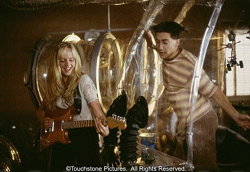
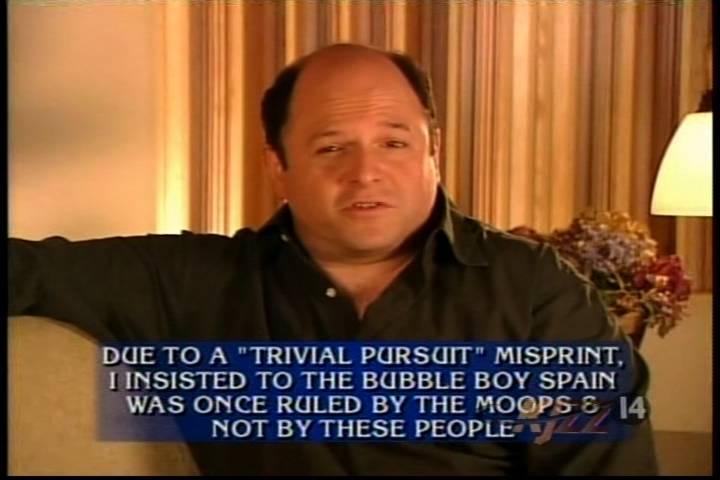
[THE 'CONSUMERS' REFERRED TO HERE ARE NONE OTHER THAN THE PERSONS WHO OPERATE THE EXTREMIST ENVIRONMENTAL, CONSUMER & HEALTH GROUPS THAT WANT US ALL TO LIVE IN A CLINICALLY PURE WORLD, FREE FROM RISK. THEY WANT US, IN OTHER WORDS, TO LIVE IN A BUBBLE. DON'T PEOPLE REMEMBER THE ABSURDITY OF SEINFELD'S 'BUBBLE-BOY'???]

["'The Bubble Boy' is the 47th episode of the American sitcom Seinfeld, as well as the nickname of Donald Sanger, one of the characters in the episode...Jerry, George, George's girlfriend Susan, and Elaine plan to travel to Susan's family's lakeside cabin. Before then, Elaine meets with a kindly father who describes the sad life of his young son Donald who lives in a plastic 'bubble' (a germ-free quarantine). As Donald is a fan of Jerry's, Jerry is forced by Elaine to visit Donald on the way to the cabin to cheer him up. However, Jerry gets lost and George and Susan arrive before him. While waiting for Jerry to arrive, they play Trivial Pursuit with the "bubble boy," who is in fact actually an adult, and not a mere boy...The Trivial Pursuit game ends prematurely when George disputes the answer to the question "Who invaded Spain in the 8th century?" The boy answers with "the Moors", but the question card says "the Moops" due to a misprint, and George refuses to give Donald credit. Donald attacks George and the "bubble" is punctured and depressurized in the struggle. Although everyone blames George for popping the bubble, technically, Susan causes it as she tries to defend George from Donald's attack." See: The Bubble Boy (Seinfeld episode), Wikipedia, at: http://en.wikipedia.org/wiki/The_Bubble_Boy_(Seinfeld_episode) .]


Adamantly opposed by the U.S. chemical industry and the Bush administration, the E.U. laws will be phased in over the next decade. It is difficult to know exactly how the changes will affect products sold in the United States. But American manufacturers are already searching for safer alternatives to chemicals used to make thousands of consumer goods, from bike helmets to shower curtains.


[ACTUALLY, THE EU REACH REGULATORY REGIME HAS BEEN OPPOSED BY INDUSTRIES THROUGHOUT THE WORLD ON THE GROUNDS THAT IT IS A FALSE PRETENSE FOR HEALTH & ENVIRONMENTAL SAFETY-BASED PROTECTIONISM, MODELED AFTER THE EU'S FAMOUS GENETICALLY MODIFIED (GM) 'FRANKENFOOD' REGULATORY SCARE THAT PERSISTS TO THIS DAY.


See: Lawrence A. Kogan, Enlightened Environmentalism or Disguised Protectionism: Assessing the Impact of EU Precaution-Based Standards on Developing Countries, National Foreign Trade Council (April 2004) at pp. 65-86, at:
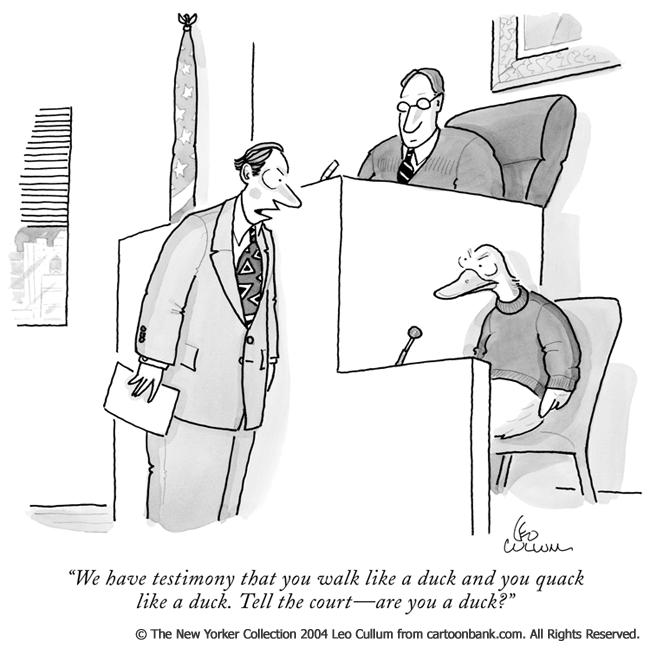
http://www.wto.org/english/forums_engo_eposp47_nftc_enlightened_e.pdf ; Lawrence A. Kogan, Trade protectionism : Ducking the Truth About Europe's GMO Policy, International Herald Tribune (Nov. 27, 2007), at: http://www.iht.com/articles/2004/11/27/edkogan_ed3_.php?page=1 ; Lawrence A. Kogan, Ducking The Truth About EU GM Policy -Looks Like a Duck, But is it a Decoy?, EU Reporter (Oct. 22, 2004) at p. 6, at: http://www.itssd.org/Publications/Ducking%20the%20Truth%20About%20EU%20GM%20Policy.pdf.]


The European Union's tough stance on chemical regulation is the latest area in which the Europeans are reshaping business practices with demands that American companies either comply or lose access to a market of 27 countries and nearly 500 million people.


[THE EU REACH REGULATION ARGUABLY VIOLATES WTO LAW. See: Lawrence A. Kogan, EU REACH Adoption Likely to Trigger WTO Action (Dec. 15, 2006) at: http://www.itssd.org/pdf/PressRelease-EUREACHAdoption.pdf ; Lawrence A. Kogan, REACHING For Your Wallets Or Your Lives, (Dec. 15, 2006) at: http://www.itssd.org/Publications/REACHing-for-Your-Wallets.pdf ; Lawrence A. Kogan, WTO ‘Fever’ Necessary to Stem Advance Of Precautionary Principle ‘Virus’, Says ITSSD (March 27, 2007) at: http://www.itssd.org/Press%20Release/WTOFeverNecessarytoStemAdvanceofPrecautionaryPrincipleVirusSaysITSSDII3.pdf ].

From its crackdown on antitrust practices in the computer industry to its rigorous protection of consumer privacy, the European Union has adopted a regulatory philosophy that emphasizes the consumer. Its approach to managing chemical risks, which started with a trickle of individual bans and has swelled into a wave, is part of a European focus on caution when it comes to health and the environment.


[THE EU CRACKDOWN ON ANTITRUST PRACTICES IS LARGELY ATTRIBUTABLE TO THE LACK OF DUE PROCESS REQUIREMENTS IN EUROPE. PERSONS, LEGAL OR OTHERWISE, ARE PRESUMED GUILTY UNTIL PROVEN INNOCENT. THERE IS NO COMMON LAW REQUIREMENT FOR LAW ENFORCEMENT AUTHORITIES TO OBTAIN A WARRANT PRIOR TO AN ARREST BASED ON THE NOTION OF 'PROBABLE CAUSE'. IS THIS THE TYPE OF LEGAL SYSTEM (BASED ON EUROPEAN CONTINENTAL LAW) THAT WE WANT IN AMERICA??? IS THIS THE TYPE OF 'CHANGE' THAT BARACK OBAMA IS SPEAKING OF??]


"There's a strong sense in Europe and the world at large that America is letting the market have a free ride," said Sheila Jasanoff, professor of science and technology studies at Harvard University's John F. Kennedy School of Government. "The Europeans believe . . . that being a good global citizen in an era of sustainability means you don't just charge ahead and destroy the planet without concern for what you're doing."


[THIS IS A SELF-SERVING, FALSE & MISREPRESENTATIVE POLITICAL STATEMENT THAT IS WITHOUT SCIENTIFIC FOUNDATION. JUST BECAUSE MS. JASANOFF HARKENS FROM HARVARD DOESN'T GIVE HER THE RIGHT TO CLAIM ACADEMIC CREDIBILITY. EUROPE IS UNDERTAKING A 'WITCH HUNT' TO FIND SOMETHING THAT LOOKS LIKE SCIENTIFIC EVIDENCE TO SUPPORT ITS SPURIOUS CLAIMS THAT CHEMICALS MANUFACTURERS, FORMULATORS AND USERS ARE HARMING PUBLIC HEALTH & ENVIRONMENT.]


Under the E.U. laws, manufacturers must study and report the risks posed by specific chemicals.

Through the Internet, the data will be available for the first time to consumers, regulators and potential litigants around the world. Until now, much of that information either did not exist or was closely held by companies.


[THE EXISTENCE OF INFORMATION BY ITSELF MEANS LITTLE. THE EU'S PROBLEM IS THAT IT HAS ACCUMULATED SO MUCH INFORMATION FOR ACCUMULATION SAKE - THAT IS, BECAUSE IT CAN, THAT IT DOESN'T KNOW WHAT IT ALL MEANS, AND THEREFORE, WHAT TO DO WITH IT!!]


"This is going to compel companies to be more responsible for their products than they have ever been," said Daryl Ditz, senior policy adviser at the Center for International Environmental Law. "They'll have to know more about the chemicals they make, what their products are and where they go."


[KNOWING THE HAZARDOUS CHARACTERISTICS OF CHEMICALS ALONE DOES NOT TRANSLATE INTO MAKING SAFER PRODUCTS. KNOWING HOW CHEMICALS ARE TO BE USED, WHO WILL USE THEM, & UNDER WHAT CONDITIONS, WILL PERMIT COMPANIES TO MAKE SAFER PRODUCTS. HOWEVER, IT SHOULD NOT BE THE BURDEN OF COMPANIES TO ANTICIPATE THE UNANTICIPATABLE, AS THESE ACADEMICS AND THE EUROPEAN UNION WOULD LIKE THEM TO DO - UNLESS THE U.S. WISHES TO ADOPT THE SOCIALIST STYLE OF EUROPEAN REGULATION, WHICH DETERMINES WHAT PEOPLE CAN & CANNOT DO.]


The laws also call for the European Union to create a list of "substances of very high concern" -- those suspected of causing cancer or other health problems. Any manufacturer wishing to produce or sell a chemical on that list must receive authorization.


In the United States, laws in place for three decades have made banning or restricting chemicals extremely difficult. The nation's chemical policy, the Toxic Substances Control Act of 1976, grandfathered in about 62,000 chemicals then in commercial use. Chemicals developed after the law's passage did not have to be tested for safety. Instead, companies were asked to report toxicity information to the government, which would decide if additional tests were needed.


In more than 30 years, the Environmental Protection Agency has required additional studies for about 200 chemicals, a fraction of the 80,000 chemicals that are part of the U.S. market. The government has had little or no information about the health hazards or risks of most of those chemicals.


The EPA has banned only five chemicals since 1976. The hurdles are so high for the agency that it has been unable to ban asbestos, which is widely acknowledged as a likely carcinogen and is barred in more than 30 countries. Instead, the EPA relies on industry to voluntarily cease production of suspect chemicals.


"If you ask people whether they think the drain cleaner they use in their homes has been tested for safety, they think, 'Of course, the government would have never allowed a product on the market without knowing it's safe,' " said Richard Denison, senior scientist at the Environmental Defense Fund. "When you tell them that's not the case, they can't believe it."


The changes in Europe follow eight years of vigorous opposition from the U.S. chemical industry and the Bush administration. Four U.S. agencies -- the EPA, the Commerce Department, the State Department and the Office of the Trade Representative -- argued that the system would burden manufacturers and offer little public benefit.


In 2002, then-Secretary of State Colin L. Powell directed the staffs of American Embassies in Europe to oppose the measure. He cited talking points developed in consultation with the American Chemistry Council, a manufacturers trade group.


Mike Walls, the chemistry council's managing director of government and regulatory affairs, said that 90 percent of its members are affected by the E.U. laws and that some cannot afford the cost of compliance. "We're talking about over 850 pages of regulation," he said.


The E.U. standards will force many manufacturers to reformulate their products for sale there as well as in the United States. "We're not looking at this as a European program -- we're buying and selling all over the globe," said Linda Fisher, vice president and chief sustainability officer for DuPont and a former EPA deputy administrator.


DuPont expects to spend "tens of millions" of dollars to register about 500 chemicals with the European Union, Fisher said. About 20 to 30 are expected to make the list of "substances of very high concern."


[THIS CORPORATE PHILOSOPHY MORE LIKELY REFLECTS THE COMPANY'S RETICENCE TO CHALLENGE EU GOVERNMENTAL AUTHORITY EVEN IF THE COMPANIES ARE 'IN THE RIGHT', GIVEN THAT THE EU COMMISSION & THE UNITED NATIONS FUNDS NON-GOVERNMENTAL GREEN EXTREMIST GROUPS THAT WAGE PUBLIC REPUTATION DISPARAGEMENT CAMPAIGNS AGAINST COMPANIES THAT DON'T GO ALONG WITH COMMISSION &/OR NGO CORPORATE SOCIAL RESPONSIBILITY MANDATES. OTHER 'MULTINATIONAL COMPANIES HAVE EMBRACED THIS PHILOSOPHY TO ESCAPE THE GRASP OF THE NGOs. See: Lawrence A. Kogan, Precautionary Preference: How Europe Employs Regulatory Protectionism to Weaken American Free Enterprise, International Journal of Economic Development, Vol. 7, Nos. 2-3 (2005) at: http://www.itssd.org/White%20Papers/ijed-7-2-3-kogan.pdf . ]


One such chemical is likely to be perfluorooctanoic acid (PFOA), used to make Teflon and other substances used in food packaging, carpet, clothing and electrical equipment. A suspected carcinogen, it accumulates in the environment and in human tissue.


DuPont reached a $16.5 million settlement with the EPA in 2005 on charges that it illegally withheld information about health risks posed by PFOA and about water pollution near a West Virginia plant. Dupont and other companies have agreed to cease production by 2015.


Once a chemical is included on the E.U. list, manufacturers are likely to feel pressure to abandon production, observers say. "It will be a market signal that says, 'These are best to avoid,' " said Joel Tickner, director of the Lowell Center for Sustainable Production at the University of Massachusetts.


[THIS IS CALLED CHARACTERIZING ENVIRONMENTAL & HEALTH HAZARDS THROUGH BUREAUCRATIC CREATION OF LISTS OF 'BAD' SUBSTANCES WITHOUT FIRST SUBJECTING THEM TO EMPIRICAL SCIENCE-BASED RISK ASSESSMENTS TO DETERMINE THE SPECIFIC HARMS CAUSED BY SPECIFIC USES TO SPECIFIC HUMAN SPECIMENS OR SUBGROUPS OR ENVIRONMENTAL ECOSYSTEMS. SUCH 'LISTINGS' ARE REMINISCENT OF MARXIST SOVIET-STYLE REGULATIONS THAT ARE INTENDED TO STIGMATIZE THE PRODUCERS, FORMULATORS OR USERS OF SUCH 'LISTED' SUBSTANCES' SO THAT THEY CURTAIL THEIR ACTIVITIES WITHOUT PROOF OF MORE. THIS IS ENVIRONMENTAL SOCIALISM, A SECULAR RELIGION, PLAIN & SIMPLE, DESPITE WHAT THE ACADEMIC DEMAGOGUES PREACH. See: Lawrence A. Kogan, Exporting Europe's Protectionism, National Interest, No. 77 (Fall 2004) at: http://www.itssd.org/Publications/Kogan%20TNI%2077FINAL.pdf .]


Linking the word "concern" to a chemical is enough to trigger a market reaction. Earlier this year, when government officials in Canada and the United States said they worried about health effects possibly caused by bisphenol A (BPA), a chemical used in plastics, major retailers pulled from their shelves baby bottles containing the chemical.


[THIS IS OTHERWISE KNOWN AS GOVERNMENT & NGO FEARMONGERING. AND, IT IS REFLECTED IN EUROPE'S OPERATIVE PHILOSOPHICAL & LEGAL TOUCHSTONE, KNOWN AS THE 'STANDARD-OF-PROOF DIMINISHING, BURDEN-OF-PROOF-REVERSING, GUILTY-UNTIL-PROVEN-INNOCENT, 'I-FEAR-THEREFORE-I-SHALL-BAN', 'HAZARD- NOT-RISK-BASED' PRECAUTIONARY PRINCIPLE. IT ENTITLES GOVERNMENTS TO REGULATE ANYTHING THEY ESSENTIALLY DESIRE.]


IMAGINERY DANGERS WITHOUT EVIDENCE OF PROBABLE HARM.]


"When we see lead in toys and BPA in baby bottles, all of these things arouse a kind of parental anxiety that overrides any counter-arguments based on science that industry might make," Jasanoff said.


[THIS IS ESPECIALLY TRUE WHEN WE HAVE GRANT-SEEKING ACADEMICS LIKE MS. JASANOFF WHO CRAVE PUBLIC ATTENTION & ADULATION.]


In the absence of strong federal regulations in the United States, a patchwork system is emerging. Individual states are banning specific chemicals, and half a dozen lawmakers on Capitol Hill have introduced bills aimed at shutting down production of various chemicals.


[THIS IS A MISNOMER. THE U.S. HAS AMONG THE STRONGEST FEDERAL REGULATIONS ON CHEMICALS IN THE WORLD. THIS IS NOT THE PROBLEM. THE PROBLEM CONCERNS EUROPE'S PENCHANT FOR REGULATORY PROTECTIONISM THAT ASSUMES THE FORM OF UNSCIENTIFIC ENVIRONMENTAL & HEALTH REGULATIONS JUSTIFIED THROUGH THE USE OF PUBLIC FEAR-PROMOTING CAMPAIGNS EMPLOYED BY EUROPEAN GOVERNMENT-FUNDED NONGOVERNMENTAL ORGANIZATIONS (NGOs).]


Sen. Frank Lautenberg (D-N.J.) introduced a measure last month that would overhaul U.S. chemical regulation along the lines of the new European approach. It would require the Centers for Disease Control and Prevention to use biomonitoring studies to identify industrial chemicals present in umbilical cord blood and decide whether those chemicals should be restricted or banned. A study by the nonprofit Environmental Working Group found an average of 200 industrial chemicals in the cord blood of newborns.


[THE RECENT LAUTENBERG/WAXMAN INITIATIVE REFLECTS THE SOCIALIST PROCLIVITIES OF THE DEMOCRATIC PARTY-DOMINATED NEW JERSEY & WASHINGTON, DC LEGISLATURES. APPARENTLY, HE AND OTHER DEMOCRATS HAVE BEEN WORKING BEHIND CLOSED DOORS FOR SEVERAL YEARS WITH THE EUROPEAN COMMISSION, MOST LIKELY WITH A FAVORABLE NOD FROM OBAMA. See: EU chemicals law REACH inspires US bill, Euractiv.com (July 18, 2005 Updated: May 21, 2007, at: http://www.euractiv.com/en/environment/eu-chemicals-law-reach-inspires-us-bill/article-142660 ; US Eyes REACH-style Law for Chemicals, Euractiv.com (June 3, 2008), at: http://www.euractiv.com/en/environment/us-eyes-reach-style-law-chemicals/article-172968 ; Senators Obama, Lautenberg Say Chemical Plant Security Legislation is Far too Weak, Fails to Protect Millions of Americans, Barack Obama, U.S. Senator From Illinois Website, Press Release (Sept. 27, 2006) at: http://obama.senate.gov/press/060927-senators_obama_1 ; Lautenberg, Solis, Waxman Introduce Legislation To Protect Americans From Hazardous Chemicals In Consumer Products, Frank R. Lautenberg, United States Senator for New Jersey, Press Release (May 20, 2008), at: http://lautenberg.senate.gov/newsroom/record.cfm?id=298072 ].


Said Denison: "We still have quite a ways to go in convincing the U.S. Congress this is a problem that needs fixing." But new policies in Europe and in Canada push the United States closer to change, he said. "They show it's feasible, it's being done elsewhere, and we're behind."


[OBAMA COULD NOT HAVE SAID IT BETTER!!]

-------------------------------------------------------------------------------------------------
http://firedoglake.com/2008/03/01/dems-eco-views-ii-frankenlabels-and-the-precautionary-principle


Obama Likely to Support U.S. Adoption of EU's REACH Regulatory Regime & the EU Precautionary Principle??


Dems’ Eco-Views II: Frankenlabels and the Precautionary Principle

By Kirk Murphy

Fire Dog Lake


Good news: both Sen. Clinton and Sen Obama support labelling Frankenfoods. Why care? Well, all of us in the US - and everyone in our families and communities - are human lab rats in a giant experiment. American adults and American children are the first test subjects in world history to be eating Frankenfoods.


Not so good news: both Senator Clinton and Sen. Obama have a long way to go on the Precautionary Principle, although Senator Obama has a small lead on the issue.


...Q: Despite years of debate and scientific effort, only a tiny fraction of the approximately 75,000 chemicals in commercial production have been subjected to even rudimentary toxicity testing. Children up to age six are most at risk because their vital organs and immune system are still developing and because they depend more heavily on their environments than adults do.

How will existing regulations be bolstered to limit children's exposures to industrial toxins in our environment? Do you support adopting Europe's REACH here in the U.S.?


A: First, I will ensure that current law is enforced to meet its original intent. The Bush administration has weakly interpreted too many laws, including the Clean Air Act, to provide protections to corporate interests, and that trend will end in my administration.


Second, I will build on my leadership in the U.S. Senate to ban lead in children's products and work to identify gaps in our regulatory process for other toxins that adversely affect children. I think that Europe's REACH program is innovative and I look forward to working with chemical safety experts in my administration to determine how well REACH is being implemented, and what aspects of the approach would be beneficial for the United States to adopt.

Monday, June 9, 2008

OBAMA-BROWN-MICHAUD Non-Tariff Trade Barrier Act Likely to Devastate US Economy, Trigger a Global Trade War & Endanger World Peace

http://thomas.loc.gov/cgi-bin/query/F?r110:1:./temp/~r110v6nddE:e17723:

http://frwebgate.access.gpo.gov/cgi-bin/getpage.cgi?dbname=2008_record&page=S5043&position=all

http://frwebgate.access.gpo.gov/cgi-bin/getpage.cgi?dbname=2008_record&page=S5044&position=all


OBAMA-BROWN-MICHAUD Non-Tariff Trade Barrier Act Likely to Devastate US Economy, Trigger a Global Trade War & Endanger World Peace

By ITSSD Staff

Two recently introduced (on June 4, 2008) bills authored by House and Senate Democratic Party members essentially shatter whatever remaining faith Americans might have in Congress' ability to formulate an intelligent, well thought out and responsible foreign trade policy that promotes rather than compromises U.S. national economic, technology and security interests.


S.3083 and H.R. 6180 can be honestly characterized as legislative abominations that, if adopted and signed into law by a Democratic president, would likely trigger a global trade war among nations based on reciprocal/retaliatory non-tariff-based regulatory protectionism that could potentially give rise to a world-wide depression that jeopardizes world peace.


These possibilities should not be taken lightly, as the Congressional majority has evidently NOT done its homework concerning the economic events that preceded World War II. These bills are troublesome insofar as they are reminiscent of the Smoot-Hawley Tariff Act of 1930, which many scholars believe significantly contributed to the events that laid the basis for World War II. Readers should not be 'thrown' by the distinction-in-name-only between tariff and non-tariff trade barriers. In fact, recent history reveals that other than transparent non-tariff barriers like those contained in S. 3093 and H.R. 6180 can cause much greater economic and political harm than can more transparent tariff rate barriers.


The American people certainly deserve better from their representatives, and are entitled to learn more about the economic history preceding WWII. For this reason, we have reproduced excerpts from one of the main international trade law textbooks used in law school and international relations programs: John H. Jackson, William J. Davey and Alan O. Sykes, Legal Problems of International Economic Relations - Cases, Materials and Text (4th Ed. West Publ. (c) 2002).


"Probably the most important foreign policy goal related to international economic policy is the prevention of war. Many statesmen and scholars believe that modern history establishes a clear relationship between implementation of certain international economic policies and war. The importance of this relationship was particularly evident in the case of World War II." (p. 38).


[The following is reproduced on page 38 of the text, and taken from Richard N. Cooper, Trade Policy and Foreign Policy, U.S. Trade Policies in a Changing World Economy, Robert M. Stern Ed., (MIT (c) 1987)]:


"The most disastrous single mistake any U.S. president has made in international relations was Herbert Hoover's signing of the Smoot-Hawley Tariff Act into law in June 1930. the sharp increase in tariffs, the apparent indifference of the U.S. authorities to the implications of their actions for foreigners, and the foreign retaliation that quickly followed, as threatened, helped convert what wuold have been otherwise a normal economic downturn into a major world depression. The sharp decline in foreign trade and economic activity in turn undermined the position of the moderates with respect to the nationalists in Japanese politics and paved the way for the electoral victory of the Nazis in Germany in 1932. Japan promptly invaded China in 1931, and the basis for World War II was laid."


"Valuable lessons were learned [??] from the Smoot-Hawley tariff experience by the foreign policy community: the threat of tariff rataliation is not always merely a bluff; tariffs do influence trade flows negatively; a decline in trade can depress national economies; economic depression provides fertile ground for politically radical nostrums; and political radicals often seek foreign (military) adventures to distract domestic attention away from their domestic economic failures. The seeds of World War II, in both the Far East and in Europe, were sown by Hoover's signing of the Smoot-Hawley Tariff Act." (Text, p. 38)


"Harry Hawkins, then Director of the Office of Economic Affairs of the [U.S.] Department of State, said in a 1944 speech:


'We've seen that when a country gets starved out economically, its people are all too ready to follow the first dictator who may rise up and promise them all jobs. Trade conflict breeds noncooperation, suspicion, bitterness. Nations which are economic enemies are not likely to remain political friends for long.

At the end of the war, the United States government, in suggesting a draft charter for an international trade organization, stated:

'The fundamental choice is whether countries will struggle against each other for wealth and power, or work together for security and mutual advantage...The experience of cooperation in the task of earning a living promotes both the habit and the techniques of common effort and helps make permanent the mutual confidence on which the peace depends.'" (Text p. 39).

------------------------------------------------------------------------------------------------

PRELIMINARY REVIEW OF KEY PROVISIONS OF
S. 3083 / H.R. 6180
“Trade Reform, Accountability, Development, and Employment Act of 2008”
“TRADE Act of 2008”


GENERAL CONCLUSIONS:

1. These bills use language reminiscent of European protectionist trade, environment, health and safety regulations, which justifies stricter NON-scientific scrutiny of and imposition of economically onerous compliance burdens upon U.S. and foreign economic actors. As in the case of Europe, these bills allege numerous market failures which current and prior governments are alleged to have exacerbated by incorporating them within U.S. regional and bilateral free trade and investment agreements which are characterized as ‘FLAWED’ and due for ‘RENEGOTIATION’ and REVISION’.


2. These bills make reference to spurious public and consumer group polls. These bills also use language that can be linked to presidential aspirant, Senator Barack Obama, judging from the statements made by U.S. Senator Sherrod Brown during his colloquy introducing S. 3083. His statements specifically utilize 'Obama language': “It is time for a change. The Trade Reform, Accountability, Development and Employment, TRADE, Act, which Senator DORGAN, Senator FEINGOLD, Senator CASEY, Senator WHITEHOUSE and I are introducing today, is a step towards that change.”

3. These bills appear concerned more with harmonizing U.S. regulatory standards and laws with lofty and abstract United Nations, global governance-based ‘sustainable development’ treaty standards and EU regulatory laws than with U.S.-specific economic, technological and national security interests. In particular, the bills aim to reduce protection of U.S.-owned private property and investment rights, tangible as well as intangible IP and contract rights, by subjecting them to undefined United Nations global governance/ sustainable development restrictions and conditions.

4. In addition to unilaterally calling for the renegotiation and revision of U.S. regional regional trade agreements including NAFTA (North American Free Trade Agreement), CAFTA (Central American Free Trade Act) and bilateral free trade agreements (FTAs) including US-Jordan, US-Oman, US-Bahrain, US-Morocco, US-Israel, plus proposed FTAs with Panama, Peru, Colombia and South Korea, and a host of bilateral investment treaties (BITS), these bills also call for the renegotiation and revision of the provisions of at least three and probably more multilateral WTO Agreements, including: the General Agreement on Tariffs and Trade (GATT) 1994; the World Trade Organization (WTO) Sanitary and Phytosanitary Agreement (SPS); the WTO Technical Barriers to Trade (TBT) Agreement; the WTO Agreement on Trade-Related Aspects of Intellectual Property Rights (TRIPS); General Agreement on Trade in Services (GATS); WTO Agreement on Government Procurement, etc. THIS CERTAINLY WOULD GO A LONG WAY TOWARD PROMOTING BETTER U.S. RELATIONS WITH THESE COUNTRIES!! ESPECIALLY WITH THE MUSLIM COUNTRIES OF THE MIDDLE EAST!!;


5. These bills raise constitutional separation of powers and federalism issues.


6. These bills, track the language of developing country declarations made at intergovernmental fora such as the United Nations World Health Organization (WHO), World Intellectual Property Organization (WIPO), United Nations Environment Program (UNEP - specifically, the UN Convention on Biological Diversity)), the United Nations Educational, Scientific and Cultural Organization (UNESCO), the United Nations Commission on Human Rights (UNCHR), the United Nations General Assembly's Economic and Social Commission (ECOSOC), etc., which create a hierarchy of fundamental universal human social, environmental and labor rights. This United Nations hierarchy of fundamental rights, embraced by S. 3083 and H.R. 6181, places U.S. constitutionally protected private property rights essentially at the base of that hierarchy. These bills would effectively cede more U.S. legal /economic sovereignty to United Nations organizations.


7. These bills would effectively sanction the ‘giving away’ of U.S. private property rights in sensitive technologies that are at the foundation of America's 21st century knowledge economy to the developing world, for less than fair market value, both tangible and intangible, in violation of the U.S. Constitution. The U.S. Supreme Court ruled in the case of Reid v. Covert, 354 U.S. 1, 5-9 (1957) that it is the constitutional obligation of the President and the Congress to ensure protection and enforcement of U.S. constitutionally protected private property rights both here and abroad, against the arbitrary inclinations of both the U.S. government AND foreign governments. These bills, in other words, would effectively permit the direct (nationalization/expropriation) and indirect (regulatory) ‘taking’ of U.S. private property rights by the U.S. and foreign governments for an ostensible public use, in violation of the Fifth Amendment of the Bill of Rights, without payment of ‘just compensation’.


8. These bills would effectively increase the size of the U.S. government to administer all of the new protectionist laws, regulations and taxes that are called for. For this reason, alone, it is accurate to say that it will push the United States closer to the European model of governance. Recent OECD reports reflect that approximately 50% of European Union GDP is attributable to revenues and expenditures made by European governments. In other words, one of Europe's main industries is GOVERNMENT, which is contrary to one of the most profound of the founding principles of the United States - namely, LIMITED GOVERNMENT.


SPECIFIC OBSERVATIONS

STATEMENTS ON INTRODUCED BILLS AND JOINT RESOLUTIONS -- (Senate - June 04, 2008)


[Page: S5043]


...By Mr. BROWN (for himself, Mr. DORGAN, Mr. FEINGOLD, Mr. CASEY, and Mr. WHITEHOUSE):


S. 3083. A bill to require a review of existing trade agreements and renegotiation of existing trade agreements based on the review, to set terms for future trade agreements, to express the sense of the Senate that the role of Congress in trade policymaking should be strengthened, and for other purposes; to the Committee on Finance.


Mr. BROWN. Mr. President, the goal of our trade policy should be to promote fair competition and lift up workers at home and abroad.


[THIS SOCIALIST-SOUNDING TRADE POLICY IS SYNONOMOUS WITH THE PROTECTIONIST TRADE POLICY OF THE EUROPEAN UNION].


Americans support trade that allows responsible businesses to thrive, fueling good-paying jobs and a strong, resilient economy.


But wrong-headed trade pacts following the failed NAFTA-model have betrayed middle class families across the country, destabilizing our economy and destroying communities in rural and urban areas alike.

[THE NAFTA TRADE AGREEMENT MODEL ISN'T FLAWED. RATHER, THE POLICY FAILURE IS THE ABSENCE OF A SEPARATE TAX-DEDUCTIBLE RETRAINING PROGRAM OFFERED BY COMPANIES TO DISLOCATED WORKERS . WHERE WAS THE DEMOCRATIC PARTY & THEIR IDEAS WHEN THEY WERE NEEDED MOST DURING THE 1990's??? ISN'T IT A LOT EASIER FOR THE DEMOCRATS TO NOW COMPLAIN AND SEEK RADICAL 'CHANGE' IN ORDER TO COVER-UP THEIR PAST POLICY FAILURES? WHY HAVE DEMOCRATS FAILED TO UPDATE THE POSSIBLE REEDUCATION OPPORTUNITIES THAT COULD HAVE BEEN PROVIDED TO 'OUTSOURCED' WORKERS?]


In my state of Ohio, more than 200,000 manufacturing jobs have been eliminated since 2001. Across the country, more than 3 million manufacturing jobs have been eliminated in that time.


Our failures to modernize our Nation's trade policy, to learn from our mistakes, and to respond to changing dynamics in the global arena, hurt communities like Toledo and Steubenville and Dayton.


That is why voters in my state of Ohio and across the country have sent a message loud and clear demanding a new direction, a very different direction, for our nation's trade policy.


Over the last 8 years, our approach to trade has been haphazard at best.


In the last 2 years, since voters elected candidates who support fair trade, Congress has reasserted itself in trade policy-making, with some improvements to proposed deals with Peru, Panama, Colombia, and South Korea.

We also have chosen not to grant President Bush a renewal of Fast Track.


But our approach to trade has not evolved from reactive to proactive. We have not forged a new approach to trade that is results-oriented, an approach focused squarely on the goals of economic strength, job creation, and U.S. self-sufficiency.


Not surprisingly, polls show that Americans reject current trade policy as misguided.

[THESE POLLS ARE LIKELY FICTITIOUS, CONTAINING LEADING QUESTIONS FRAMED BY PARTISAN-MINDED NONGOVERNMENTAL ENVIRONMENTAL, LABOR & CONSUMER EXTREMIST GROUPS WORKING WITH THE DEMOCRATIC PARTY, & NOT BY ORDINARY AMERICANS.]


That is because it is.


It is time to learn from our mistakes.


It is time for a change. The Trade Reform, Accountability, Development and Employment, TRADE, Act, which Senator DORGAN, Senator FEINGOLD, Senator CASEY, Senator WHITEHOUSE and I are introducing today, is a step towards that change.


This legislation will serve as a template for how to craft a trade agreement that works for workers, for business owners, for our country.


[THE OBAMA-BROWN-MICHAUD BILL'S APPROACH FOR PROTECTING U.S. COMPANIES & WORKERS FROM GLOBALIZED TRADE CLEARLY FOLLOWS THE SAME PRESCRIPTION THAT THEIR PARTY RECOMMENDS TO PROTECT U.S. COMPANIES THAT EMPLOY ALIENS IN VIOLATION OF U.S. IMMIGRATION LAWS. IN BOTH CASES, U.S. COMPANIES ARE GIVEN A PROTECTIONIST 'PASS' BY THE U.S. CONGRESS. THIS SOUNDS LIKE INTERVENTIONIST SOCIAL & ECONOMIC 'ENGINEERING'/MARKET-MAKING.]


This legislation will mandate a review of all existing trade agreements and will require the President to submit renegotiation plans for those agreements before pursuing new trade agreements.


The TRADE Act will create a committee comprised of House and Senate leaders who will review the President's plan for renegotiation.


This bill spells out standards for future trade agreements, standards based on fostering fair competition, promoting good-paying jobs, and addressing unethical behavior by multinational corporations, including the exploitation of people and natural resources in developing nations.


Trade is an exchange that relies on the integrity of its participants. We must not trade away our fundamental belief in basic human rights and our responsibility to fight the kind of exploitation that threatens vulnerable peoples and vulnerable nations.


[Page: S5044]


That is why our trade policy must not sidestep the impact of lax trade agreements and unethical corporations on developing nations.


[INSTEAD OF WORRYING SO MUCH ABOUT OTHER COUNTRIES AND THE ETHICS OF U.S. & FOREIGN COMPANIES, THE OBAMA-BROWN-MICHAUD BILL SHOULD BE CONCERNED MORE ABOUT U.S. COMPANIES, U.S.-OWNED PROPERTY RIGHTS & THE ETHICS OF U.S. CONGRESSIONAL REPRESENTATIVES & SENATORS.]


The TRADE Act also sets out criteria for a new negotiating process--one that would do away with the fundamentally-flawed Fast Track process and return power to Congress when considering our nation's trade pacts.
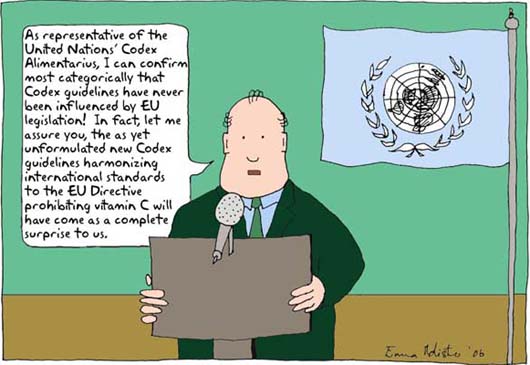
We take for granted our clean air, safe food, and safe drinking water. But these blessings are not by chance: they result from laws and rules that foster fair wages, protect the public health, and promote environmental stewardship.


Flawed trade policy accelerates the import of toxic toys, contaminated toothpaste, and poisonous pet food into this country.


It does not have to be this way.

We have a choice.

We can continue a race to the bottom in wages, worker safety, environmental protection, and health standards.


Or, we can use trade agreements to lift standards abroad--not threaten workers and consumers.


We can continue down the path of the failed NAFTA model, or we can write trade agreements that sustain and grow our Nation's manufacturing self-sufficiency, create good-paying jobs and reduce the trade deficit by providing fair and transparent market access.


[WHAT DO THE OBAMA-BROWN-MICHAUD BILL'S SPONSORS MEAN TO SAY? IS IT THEIR INTENTION TO REARRANGE INTERNATIONAL ECONOMIC AFFAIRS SO THAT U.S. COMPANIES AND FOREIGN COMPANIES WILL BE FORCED TO CHARGE U.S. CONSUMERS HIGHER PRICES FOR THEIR PRODUCTS IN ORDER TO COMPENSATE FOR THE HIGHER ENVIRONMENTAL & LABOR COSTS THEY WILL INCUR HERE & ABROAD IN ORDER TO SATISFY MORE COSTLY STRINGENT STANDARDS?]

We can forsake U.S. standards and U.S. values and ignore trade abuses in order to mass produce trade agreements, or we can write trade agreements that fulfill their promises, that hold our trading partners accountable for abiding by the rules, and that build on the hard-fought battles waged to build a strong middle class, reward good corporate citizens, preserve our natural resources, and ensure that the food and products Americans purchase are safe.


[THE EUROPEAN UNION HAS BEEN MAKING THIS ARGUMENT FOR APPROXIMATELY ONE DECADE. HOWEVER, SIGNIFICANT RESEARCH FINDINGS HAVE SHOWN THAT SUCH RHETORIC IS MERELY A COVER-UP FOR A NEW GENRE OF DISGUISED NON-TARIFF TRADE PROTECTIONISM THAT DIMINISHES INDIVIDUAL WELFARE, INDIVIDUAL LIBERTY AND INDIVIDUAL ECONOMIC & SOCIAL OPPORTUNITIES, WHILE REDUCING THE STANDARD OF LIVING AND INCREASING ITS COST FOR MOST CITIZENS. APPARENTLY, THE OBAMA-BROWN-MICHAUD BILL SPONSORS SEEK TO IMPORT INTO THE U.S. & 'RUBBER-STAMP' AS U.S. LAW, THE VERY EXPENSIVE & INEFFICIENT EUROPEAN REGULATORY LAW, STANDARDS & TRADE SYSTEMS].


We can continue to use trade deals to lock in protections for Wall Street, the drug companies, and oil companies, or we can create a predictable structure for international trade without providing corporations with overreaching privileges and rights of private enforcement that undermine our laws.


[ARE THE OBAMA-BROWN-MICHAUD BILL SPONSORS SERIOUS?? THE CONGRESSIONAL MAJORITY'S RECENT PROMOTION OF THE 'BOXER'-MODIFIED CARBON CAP & TRADE LEGISLATION (S.2191) REVEALED THEIR EFFORTS TO 'LOCK-IN' MARKET PROTECTIONS AS WELL AS OBSCENE PROFIT MARGINS FOR WALL STREET CARBON TRADERS & INSURANCE BROKERAGES. AND THROUGH PROMOTION OF THE UN LAW OF THE SEA CONVENTION, THE CONGRESSIONAL MAJORITY HAS SOUGHT TO 'LOCK-IN' PROFITS FOR OIL & GAS COMPANIES IN THE ARCTIC REGION AS A QUID PRO QUO FOR PROMOTING THE TREATY'S RATIFICATION. DOESN'T THE CONGRESSIONAL MAJORITY, INCLUDING THE OBAMA-BROWN-MICHAUD BILL SPONSORS, SEE THE HYPOCRISY HERE?]


[ARE THE OBAMA-BROWN-MICHAUD BILL SPONSORS & CONGRESSIONAL MAJORITY NOW SEEKING TO REVERSE GLOBALIZATION? EVEN THOUGH THEIR PARTY PREVIOUSLY SUPPORTED IT?? IS IT BECAUSE THEY REALLY DON'T KNOW HOW TO ADDRESS IT??]


[DON'T THE SPONSORS OF THE OBAMA-BROWN-MICHAUD BILL BEAR THE BURDEN OF PROVING/SHOWING WHY 'A CHANGE' IN U.S. TRADE POLICY IS NECESSARY? IT DOESN'T APPEAR THAT THEY HAVE SATISFIED THEIR BURDEN OF PROOF BY MERELY CLAIMING THAT A NEW 'CHANGED' TRADE POLICY IS NECESSARY. WHAT METRICS HAVE THEY PRODUCED?? HOW INCLUSIVE AND BROAD WAS THEIR SURVEY?? APPARENTLY, NOT VERY, GIVEN THAT THE OBAMA-BROWN-MICHAUD BILL REQUIRES COLLECTION OF DATA ON THE IMPACT OF TRADE. SO, IN EFFECT, THE SPONSORS OF THE OBAMA-BROWN-MICHAUD BILL CANNOT NOW MEET THIS BURDEN BECAUSE THEY LACK THE DATA.]


[IS IT THE TEXT OF THE CURRENT U.S. TRADE AGREEMENTS THAT IS TO BLAME? OR, RATHER, IS IT NOT MORE LIKELY THAT THE TEXT OF THESE AGREEMENTS IS ACCEPTABLE, BUT THAT ENFORCEMENT OF ITS TERMS HAS BEEN LESS THAN SATISFACTORY? THIS IS MORE LIKELY WHY WHY THE U.S. HAS NOT FULLY REALIZED THE PROMISED BENEFITS FROM INTERNATIONAL TRADE. THEREFORE, THE PRUDENT CHOICE WOULD NOT BE TO REWRITE THE CURRENT TRADE AGREEMENTS. THE PRUDENT CHOICE, INSTEAD, WOULD BE TO MORE VIGILANTLY ENFORCE THE TERMS OF THE CURRENT TRADE AGREEMENTS THROUGH WTO and/or ARBITRAL DISPUTE SETTLEMENT PROCEDURES. AMONG THE TRADE AGREEMENT TERMS TO BE ENFORCED ARE THOSE PROHIBITING FOREIGN COUNTRY GOVERNMENTS FROM ADOPTING & IMPLEMENTING HEALTH, ENVIRONMENT & SAFETY REGULATIONS & PRODUCT STANDARDS AS DISGUISED PROTECTIONIST TRADE BARRIERS THAT DENY MARKET ACCESS TO U.S. GOODS. THE USTR MUST ENSURE THAT FOREIGN LAWS & STANDARDS ARE BASED ON EMPIRICAL RISK ASSESSMENT, ECONOMIC COST-BENEFIT ANALYSIS & TRANSPARENCY & ACCOUNTABILITY. OTHER TRADE AGREEMENT TERMS THAT REQUIRE MORE VIGILANT ENFORCEMENT BY USTR INCLUDE THOSE RELATING TO PRIVATELY OWNED TANGIBLE & INTANGIBLE (e.g., INTELLECTUAL PROPERTY RIGHTS). U.S. FOREIGN TRADING PARTNERS SHOULD BE WARNED THAT THERE WILL NO LONGER BE A 'FREE RIDE', AND THAT U.S. PRIVATE PROPERTY RIGHTS, ESPECIALLY PATENTS, COPYRIGHTS, & TRADE SECRETS, WILL BE ENFORCED GOING FORWARD.]


Middle class families, American manufacturers and farmers, and community leaders across the country all know that we need a new direction for trade.


I am going to ask my leadership, and my caucus, to work with me on this legislation. And I look forward to working with my allies on the other side of the aisle to modernize U.S. trade policy.


[MR. BROWN REALLY MEANS TO 'PROTECTIONIZE' U.S. TRADE POLICY].


Mr. President, I ask unanimous consent that the text of the bill be printed in the RECORD.


There being no objection, the text of the bill was ordered to be printed in the Record, as follows:


S. 3083


Be it enacted by the Senate and House of Representatives of the United States of America in Congress assembled,


SECTION 1. SHORT TITLE.

This Act may be cited as the ``Trade Reform, Accountability, Development, and Employment Act of 2008'' or the ``TRADE Act of 2008''.


SEC. 2. DEFINITIONS.

In this Act:

(1) CORE LABOR STANDARDS.--The term ``core labor standards'' means the core labor rights as stated in the International Labour Organization conventions dealing with--

(A) freedom of association and the effective recognition of the right to collective bargaining;

(B) the elimination of all forms of forced or compulsory labor;

(C) the effective abolition of child labor; and

(D) the elimination of discrimination with respect to employment and occupation.


(2) MULTILATERAL ENVIRONMENTAL AGREEMENTS.--The term ``multilateral environmental agreements'' means any international agreement or provision thereof to which the United States is a party and which is intended to protect, or has the effect of protecting, the environment or human health.


(3) TRADE AGREEMENTS.--

(A) IN GENERAL.--The term ``trade agreement'' includes the following:

(i) The United States-Australia Free Trade Agreement.

(ii) The United States-Morocco Free Trade Agreement.

(iii) The United States-Singapore Free Trade Agreement.

(iv) The United States-Chile Free Trade Agreement Implementation Act.

(v) The North American Free Trade Agreement.

(vi) The Agreement between the United States of America and the Hashemite Kingdom of Jordan on the Establishment of a Free Trade Area.

(vii) The Dominican Republic-Central America-United States Free Trade Agreement Implementation Act.

(viii) The United States-Bahrain Free Trade Agreement Implementation Act.

(ix) The United States-Oman Free Trade Agreement Implementation Act.

(x) The Agreement on the Establishment of a Free Trade Area between the Government of the United States of America and the Government of Israel.

(xi) The United States-Peru Trade Promotion Agreement.


(B) URUGUAY ROUND AGREEMENTS.--The term ``trade agreement'' includes the following Uruguay Round Agreements:

(i) The General Agreement on Tariffs and Trade (GATT 1994) annexed to the WTO Agreement.
(ii) The WTO Agreement described in section 2(9) of the Uruguay Round Agreements Act (19 U.S.C. 3501(9)).

(iii) The agreements described in section 101(d) of the Uruguay Round Agreements Act (19 U.S.C. 3511(d)).

(iv) Any multilateral agreement entered into by the United States under the auspices of the World Trade Organization dealing with information technology, telecommunications, or financial services....

------------------------------------------------------------------------------------------------

http://brown.senate.gov/imo/media/doc/TRADE%20Act.pdf

http://www.govtrack.us/data/us/bills.text/110/s/s3083.pdf

http://www.citizen.org/documents/HouseTRADEActFinal.pdf


‘‘Trade Reform, Accountability, Development, and Employment Act of 2008’’ / ‘‘TRADE Act of 2008’’


...SEC. 3. REVIEW AND REPORT ON EXISTING TRADE AGREEMENTS.


(a) REVIEW AND REPORT.—

(1) IN GENERAL.—Not later than June 30, 2010, the Comptroller General of the United States shall conduct a review of all trade agreements described in section 2(3) and submit to the Congressional Trade Agreement Review Committee established under section 6 a report that includes the information described under subsections (b) and (c) and the recommendations required under subsection (d). The review shall concentrate on the effective operation of the United States trade agreements program generally.


(2) COOPERATION OF AGENCIES.—The Department of State, the Department of Agriculture, the Department of Commerce, the Department of Labor, the Department of the Treasury, the United States Trade Representative, and other executive departments and agencies shall cooperate with the Comptroller General and the Government Accountability Office in providing access to United States Government officials and documents to facilitate preparation of the report.


(b) INFORMATION WITH RESPECT TO TRADE AGREEMENTS.—
The report required by subsection (a) shall, with respect to each trade agreement described in section 2(3), to the extent practical, include the following information covering the period between the date on which the agreement entered into force with respect to the United States and the date on which the Comptroller General completes the review:


(1) An analysis of indicators of the economic impact of each trade agreement, such as—

(A) the dollar value of goods exported from the United States and imported into the United States by sector and year;

(B) the employment effects of the agreement on job gains and losses in the United States by sector and changes in wage levels in the United States in dollars by sector and year; and

(C) the rate of production, number of employees, and competitive position of industries in the United States significantly affected by the agreement.

[PRESUMABLY TO ASSESS THE POTENTIAL NEED TO INVOKE WTO ‘SAFEGUARDS’.]


(2) A trend analysis of wage levels on a year-to-year basis in—

(A) each country with which the United States has a trade agreement described in section 2(3)(A);

(B) each country that is a major United States trading partner, including Belgium, Brazil, China, France, Germany, Hong Kong, India, Ireland, Italy, Japan, South Korea, Malaysia, Netherlands, Taiwan, and the United Kingdom


[WHAT HAPPENED TO THE OTHER 20 EU MEMBER STATES?? ARE THEY GETTING A 'PASS'??];


(C) each country with which the United States has considered establishing a free trade agreement, including South Africa and Thailand;

(D) each country with respect to which the United States has extended preferential trade treatment under the Caribbean Basin Economic Recovery Act (19 U.S.C. 2701 et seq.) and the Andean Trade Preference Act (19 U.S.C. 3201 et seq.).


H.R. 6180 requires:

(1) An analysis of the economic impact of each trade agreement, including—

(A) the dollar value in inflation-controlled terms of goods exported from the United States and imported into the United States by sector, State, and year delineated by trade partner country;

(B) job gains and losses in the United States by sector and State;

(C) median wage levels in the United States in inflation controlled dollar terms by sector, State, and year; and

(D) an analysis of production outsourcing decisions made by U.S. companies before and after the implementation of each trade agreement and the rate of value-added production, number of employees, and competitive position of industries in the United States significantly affected by the agreement;

and

(E) Income distribution in the United States showing distribution by quintile and poverty rates for the United States.

(2) A trend analysis of wage levels...in

(B) countries who comprise the top U.S. WTO trade partners including Belgium, Brazil, China, France, Germany, Hong Kong, India, Ireland, Italy, Japan, South Korea, Malaysia, Netherlands, Taiwan, and the United Kingdom;

H.R. 6180 adds Section E:

(E) Cambodia and Vietnam.

S. 3083

(3) The effect on agriculture, including—

(A) the trend of prices in the United States for agricultural commodities and food products that are imported into the United States from a country that is a party to an
18 agreement described in section 2(3);

(B) an analysis of the effects, if any, on the cost of farm programs in the United States; and

(C) the number of farms operating in the United States and the number of acres under production for agricultural commodities that are exported from the United States to a country that is a party to such an agreement on a year-by-year basis.


H.R. 6180 adds the following analysis:

(B) An analysis of the effects, if any, on price transparency, price discovery, market concentration, and fair competition in the markets for agricultural commodities and food products that are subject to significant volumes of trade between the United States and each other country that is a party to the agreements described in Section 2(3);

S. 3083


(4) An analysis of the progress in implementing trade agreement commitments and the record of compliance with the terms of each agreement in effect between the United States and a country listed in paragraph (2).


(5) A description of any outstanding disputes between the United States and any country that is a party to an agreement listed in section 2(3), including a description of laws, regulations, or policies of the United States or any State that any country that is a party to such an agreement has challenged, or threatened to challenge, under such agreement.


(6) An analysis of the ability of the United States to ensure that any country with which the United States has a trade agreement described in section 2(3) complies with United States laws and regulations, including—

(A) complying with the customs laws of the United States;

(B) making timely payment of duties owed on goods imported into the United States;

(C) meeting safety and inspection requirements with respect to food and other products
imported into the United States; and

(D) complying with prohibitions on the transshipment of goods that are ultimately imported into the United States.


(7) A analysis of any privatization of public sector services in the United States or in any country that is a party to the an agreement listed in section 2(3), including any effect such privatization has on the access of consumers to essential services, such as health care, electricity, gas, water, telephone service, or other utilities.


(8) An assessment of the impact of the intellectual property provisions of the trade agreements listed in section 2(3) on access to medicines [TO ENSURE THAT U.S. IPRs ARE GIVEN AWAY IN THE NAME OF ALLOWING FOREIGN GOVERNMENTS TO GUARANTEE UNIVERSAL ACCESS TO MEDICINES, CONSISTENT WITH THE UNITED NATIONS WORLD HEALTH ORGANIZATION INTERGOVERNMENTAL WORKING GROUP'S COMMITTEE ON INTELLECTUAL PROPERTY & HEALTH'S DRAFT AGENDA].

H.R. 6180 adds the following:

(7) An analysis of the price of pharmaceuticals and any effect that changes in the price of pharmaceuticals has had on the access of consumers to affordable medicines in the United States or any country that is a party to the agreements listed in Section 2(3).

[TO ENSURE THAT U.S. IPRs ARE GIVEN AWAY IN THE NAME OF ALLOWING FOREIGN GOVERNMENTS TO GUARANTEE UNIVERSAL ACCESS TO MEDICINES, CONSISTENT WITH THE UNITED NATIONS WORLD HEALTH ORGANIZATION INTERGOVERNMENTAL WORKING GROUP'S COMMITTEE ON INTELLECTUAL PROPERTY & HEALTH'S DRAFT AGENDA].


H.R. 6180 adds another item of inquiry:

(8) A list of any potential concerns posed by any country that is a party to the agreements listed in Section 2(3) to the national security of the United States, including—

(A) any potential effect on the efforts of the United States to increase the energy self-sufficiency of the United States;

(B) any increase in narco-trafficking as a result of economic pressures on farmers in any such country to grow illegal crops; and

(C) any increase in poverty in any such country as a result of the displacement of workers in sectors impacted by the agreement.

[THIS SEEMS POINTED AT COLOMBIA]


(9) An analysis of contracts for the procurement of goods or services by Federal or State government agencies from persons operating in any country that is a party to an agreement listed in section 2(3).


(10) An assessment of the consequences of significant currency movements and a determination of whether the currency of a country that is a party to an agreement is misaligned deliberately to promote a competitive advantage in international trade for that country.


3 (c) INFORMATION ON COUNTRIES THAT ARE PARTIES TO TRADE AGREEMENTS.—With respect to each country with respect to which the United States has a trade agreement in effect, the report required under subsection (a) shall include information regarding whether that country—

[THERE ARE REFERENCES TO INT’L LABOR, ENVIRONMENTAL TREATY & HUMAN RIGHTS STANDARDS OF THE UNITED NATIONS, THAT MANY COUNTRIES DECLARE AS UNIVERSAL BUT DO NOT IMPLEMENT]

(1) has a democratic form of government;

(2) respects core labor standards, as defined by the Committee of Experts on the Application of Conventions and Recommendations and the Conference Committee on the Application of Standards of the [UNITED NATIONS] International Labour Organization;

(3) respects fundamental human rights, as determined by the Secretary of State in the annual country reports on human rights of the Department of State;

(4) is designated as a country of particular concern with respect to religious freedom under section 402(b)(1) of the International Religious Freedom Act of 1998 (22 U.S.C. 6442(b)(1));

(5) is on a list described in subparagraph (B) or (C) of section 110(b)(1) of the Trafficking Victims Protection Act of 2000 (22 U.S.C. 7107(b)(1)) (commonly known as tier 2 or tier 3 of the Trafficking in Persons List of the Department of State);

(6) has taken effective measures to combat and prevent public and private corruption, including measures with respect to tax evasion and money laundering;

(7) complies with the multilateral environmental agreements to which the country is a party;

(8) has in force adequate labor and environmental laws and regulations, has devoted sufficient resources to implementing such laws and regulations, and has an adequate record of enforcement of such law and regulations;

(9) adequately [NOT STRONGLY] protects intellectual property rights;

(10) provides for governmental transparency, due process of law, and respect for international agreements;

(11) provides procedures to promote basic democratic rights, including the right to hold clear title to property and the right to a free press; and

(12) poses potential concerns to the national security of the United States, including an assessment of transfer of technology, production, and services from one country to another.


SEC. 4. INCLUSION OF CERTAIN PROVISIONS IN TRADE AGREEMENTS.

(a) IN GENERAL.—Notwithstanding section 151 of the Trade Act of 1974 (19 U.S.C. 2191) or any other provision of law, any bill implementing a trade agreement between the United States and another country that is introduced in Congress after the date of the enactment of this Act shall be subject to a point of order pursuant to subsection
(c) unless the trade agreement meets the requirements described in subsection (b).


(b) REQUIREMENTS.—Each trade agreement negotiated between the United States and another country shall meet the following requirements:

(1) LABOR STANDARDS.—The labor provisions shall—

(A) be included in the text of the agreement;

(B) require that a country that is party to the agreement adopt and maintain as part of its domestic law and regulations (including in any designated zone in that country), the core labor standards and effectively enforce laws directly related to those standards and to acceptable conditions of work with respect to minimum wages, hours of work, and occupational safety and health;

(C) prohibit a country that is a party to the agreement from waiving or otherwise derogating from its laws and regulations relating to the core labor standards and acceptable conditions of work with respect to minimum wages, hours of work, and occupational safety and health;

(D) require each country that is a party to the agreement to adopt into domestic law and enforce effectively core labor standards;

(E) provide that failures to meet the labor standards required by the agreement shall be subject to dispute resolution and enforcement mechanisms and penalties that are at least as effective as the mechanisms and penalties that apply to the commercial provisions of the agreement;

(F) strengthen the capacity of each country that is a party to the agreement to promote and enforce core labor standards; and

(G) establish a commission of independent experts who shall receive, review, and adjudicate any complaint filed under the labor provisions of the trade agreement, and vest the commission with the authority to establish objective indicators to determine compliance with the obligations set forth in subparagraphs (B), (C), (D), (E), and (F).


(2) ENVIRONMENTAL AND PUBLIC SAFETY STANDARDS.—The environmental provisions shall—

(A) be included in the text of the agreement;

(B) prohibit each country that is a party to the agreement from weakening, eliminating, or failing to enforce domestic environmental or other public safety standards to promote trade or attract investment;

(C) require each such country to implement and enforce fully and effectively, including through domestic law, the country’s obligations under multilateral environmental agreements and provide for the enforcement of such obligations under the agreement;

(D) prohibit the trade of products that are illegally harvested or extracted and the trade of goods derived from illegally harvested or extracted natural resources, including timber and timber products, fish, wildlife, and associated products, mineral resources, or other environmentally sensitive goods;

(E) provide that the failure to meet the environmental standards required by the agreement be subject to dispute resolution and enforcement mechanisms and penalties that are at least as effective as the mechanisms and penalties that apply to the commercial provisions of the agreement; and

(F) allow each country that is a party to the agreement to adopt and implement environmental, health, and safety standards, recognizing the legitimate right of governments to protect the environment and public health and safety.


[THIS REQUIREMENT WOULD EFFECTIVELY WEAKEN GATT ARTICLE XX & TBT AGREEMENT REQUIREMENTS, NAMELY THAT ENVIRONMENTAL REGULATIONS & STANDARDS CANNOT BE ARBITRARY OR DISCRIMINATORY IN DESIGN OR IMPLEMENTATION, THAT THEY CAN NOT BE MORE RESTRICTIVE THAN NECESSARY TO ACHIEVE A LEGITIMATE STATE OBJECTIVE, THAT REGULATIONS & STANDARDS SHOULD, WHEREVER POSSIBLE, BE BASED ON OBJECTIVE PERFORMANCE RATHER THAN SUBJECTIVE PROCESSING CRITERIA, and THAT SUCH REGULATIONS & STANDARDS SHOULD BE BASED ON RELEVANT INTERNATIONAL STANDARDS WHEREVER POSSIBLE.]


(3) FOOD AND PRODUCT HEALTH AND SAFETY STANDARDS.—If the agreement contains health and safety standards for food and other products, the agreement shall—

(A) establish that food, feed, food ingredients, and other related food products may be imported into the United States from a country that is a party to the agreement only if such products meet or exceed United States standards with respect to food safety, pesticides, inspections, packaging, and labeling;

(B) establish that nonfood products may be imported into the United States from a country that is a party to the agreement only if such products meet or exceed United States health and safety standards with respect to health and safety, inspection, packaging and labeling;

(C) allow each country that is a party to the agreement to impose standards designed to protect public health and safety unless it can be clearly demonstrated that such standards do not protect the public health or safety;


[THIS REQUIREMENT WOULD EFFECTIVELY WEAKEN GATT ARTICLE XX & WTO SPS AGREEMENT REQUIREMENTS, NAMELY THAT HEALTH & SAFTEY REGULATIONS & STANDARDS CANNOT BE ARBITRARY OR DISCRIMINATORY IN DESIGN OR IMPLEMENTATION, ARE BASED ON 'SCIENTIFIC RISK ASSESSMENT' AND ARE ECONOMICALLY COST-EFFECTIVE, and ARE NOT MORE TRADE RESTRICTIVE THAN NECESSARY TO FULFILL A LEGITIMATE STATE OBJECTIVE ("not more trade-restrictive than required to achieve their appropriate level of…protection, taking into account technical and economic feasibility.")]


(D) authorize the Commissioner of the Food and Drug Administration (in this Act, referred to as the ‘‘Commissioner’’) and the Consumer Product Safety Commission (in this Act, referred to as the ‘‘Commission’’) to assess the regulatory system of each country that is a party to the agreement to determine whether the system provides the same or better protection of health and safety for food and other products as provided under the regulatory system of the United States;

(E) if the Commissioner or the Commission determines that the regulatory system of
such a country does not provide the same or better protection of health and safety for food and other products as provided under the regulatory system of the United States, prohibit the importation into the United States of food and other products from that country;

(F) provide a process by which producers from countries whose standards are not found by the Commissioner or the Commission to meet United States standards may have their facilities inspected and certified in order to allow products from approved facilities to be imported into the United States;

(G) if harmonization of food or product health or safety standards is necessary to facilitate trade, such harmonization shall be based on standards that are no less stringent than United States standards; and


[THIS IS NOT NECESSARILY A BAD POLICY IF U.S. STANDARDS EITHER CAN BE ESTABLISHED AS ‘RELEVANT INTERNATIONAL STANDARDS’ AT CODEX/FAO or THE U.S. COULD OTHERWISE JUSTIFY THROUGH RISK ASSESSMENT & ECONOMIC COST-BENEFIT ANALYSIS THAT ITS MORE STRINGENT STANDARDS ARE SCIENTIFICALLY & ECONOMICALLY JUSTIFIED – i.e., NO PRECAUTIONARY PRINCIPLE].

(H) establish mandatory end-use labeling of imports of milk protein concentrates.


(4) SERVICES PROVISIONS.—If the agreement contains provisions related to the provision of services, such provisions shall—

(A) preserve the right of Federal, State, and local governments to maintain essential public services and to regulate, for the benefit of the public, services provided consumers in the United States by establishing a general exception to the national treatment commitments in the agreement that allows distinctions between United States and foreign service providers and qualifications or limitations on the provision of services;


[THIS PROVISION WILL OPEN UP THE DOOR TO FOREIGN GOVERNMENTS IMPOSING ARBITRARY and DISCRIMINATORY RESTRICTIVE TRADE BARRIERS THAT DENY U.S. SERVICE PROVIDERS ACCESS TO FOREIGN MARKETS.]


(B)(i) require each country that is a party to the agreement to establish a list of each service sector that will be subject to the obligations of the country under the agreement; and

(ii) apply the agreement only to the service sectors that are on the list described in clause 15 (i);

(C) establish a general exception to market access obligations that allows a country that is a party to the agreement to maintain or establish a ban on services the country considers harmful, if the ban is applied to domestic and foreign services and service providers alike;


[THIS PROVISION WILL ENCOURAGE FOREIGN GOVERNMENTS TO FUNNEL ALL SECTORS THEY WISH TO PROTECT UNDER THE 'HARMFUL' GENERAL EXCEPTION, THUS SUBJECTING U.S. SERVICES PROVIDERS TO ANOTHER NEW BROAD MARKET ACCESS BARRIER.]


(D) require service providers in any country that is a party to the agreement that provide services to consumers in the United States to comply with United States privacy, transparency, professional qualification, and consumer access laws and regulations;

(E) require that services provided to consumers in the United States that are subject to privacy laws and regulations in the United States may only be provided by service providers in other countries that provide privacy protections and protections for confidential information that are equal to or exceed the protections provided by United States privacy laws and regulations;


[ SUBPARAGRAPHS (D) & (E) APPEAR VERY SIMILAR TO THE PRIVACY RULES IN THE EUROPEAN UNION WHICH ARGUABLY GO OVERBOARD IN CERTAIN CASES].


(F) require that financial and medical services be subject to United States privacy laws and be performed only in countries that provide protections for confidential information that are equal to or exceed the protections for such information under United States privacy laws;

(G) not require the privatization of public services in any country that is a party to the agreement, including services related to national security, social security, health, public safety, education, water, sanitation, other utilities, ports, or transportation; and

(H) provide for local governments to operate without being subject to market access obligations under the agreement.


(5) INVESTMENT PROVISIONS.—If the agreement contains provisions related to investment, such provisions shall

(A) preserve the ability of each country that is a party to the agreement to regulate foreign investment in a manner consistent with the needs and priorities of the country;

(B) allow each such country to place reasonable restrictions on speculative capital to reduce global financial instability and trade volatility;

(C) not be subject to an investor-state dispute settlement mechanism under the agreement;


(D) ensure that foreign investors operating in the United States have rights no greater than the rights provided to domestic investors by the Constitution of the United States;

(E) provide for government-to-government dispute resolution relating to a government action that destroys all value of the real property of a foreign investor rather than dispute resolution between the government that took the action and the foreign investor;


[SUBPARAGRAPHS (C) and (E) OF THIS PROVISION WOULD EFFECTIVELY REMOVE NAFTA CHAPTER 11, WHICH PROVIDES INVESTORS WITH A PRIVATE CAUSE OF ACTION AGAINST GOVERNMENTS FOR DIRECTLY OR INDIRECTLY ILLEGALLY EXPROPRIATING THEIR INVESTMENT ASSETS & INCOME.]


(F) define the term ‘‘investment’’ to mean not more than a commitment of capital or acquisition of real property and not to include assumption of risk or expectation of gain or profit;


[THIS DEFINITION WOULD SUBSTANTIALLY LIMIT THE BROAD DEFINITION OF 'INVESTMENT' CONTAINED WITHIN NAFTA ARTICLE 1139 & OTHER U.S. BILATERAL INVESTMENT TREATIES, WHICH INCLUDES "AN ENTERPRISE, AN EQUITY SECURITY OF AN ENTERPRISE, A DEBT SECURITY OF AN ENTERPRISE, A LOAN TO AN ENTERPRISE, AN INCOME OR PROFIT SHARE INTEREST IN AN ENTERPRISE, AN INTEREST IN ENTERPRISE ASSETS UPON DISSOLUTION, REAL ESTATE OR OTHER PROPERTY, TANGIBLE & INTANGIBLE, ACQUIRED FOR BUSINESS PURPOSES OR SPECULATION, FOR THE PURPOSE OF DERIVING AN ECONOMIC BENEFIT, AND COMMITMENT OF CAPITAL OR OTHER RESOURCES TO AN ECONOMIC ACTIVITY IN A TERRITORY.]


(G) define the term ‘‘investor’’ to mean only a person who makes a commitment or acquisition described in subparagraph (F);


[THIS DEFINITION OF 'INVESTOR', AS WELL, LIMITS THE PARTIES WHO MAY CLAIM THE PROTECTIONS AFFORDED BY U.S. INVESTMENT TREATIES. NAFTA ARTICLE 1139 DEFINES 'INVESTOR' AS "A PARTY OR STATE ENTERPRISE THEREOF, OR A NATIONAL OR AN ENTERPRISE OF SUCH PARTY, THAT SEEKS TO MAKE, IS MAKING OR HAS MADE AN INVESTMENT."]


(H) define the term ‘‘direct expropriation’’ as government action that does not merely diminish the value of property but destroys all value of the property permanently;


[THE SPONSORS OF THE OBAMA-BROWN-MICHAUD BILL CONSPICUOUSLY OMITTED ANY REFERENCE TO 'INDIRECT / CREEPING EXPROPRIATION' VIA REGULATION - i.e., 'REGULATORY TAKINGS', WHICH AFFECTS FOR MORE FOREIGN & U.S. INVESTORS & PROPERTY OWNERS THAT DO 'DIRECT' EXPROPRIATIONS. THIS IS CONTRARY TO NAFTA CHAPTER 11 AND THE EXPROPRIATION PROVISIONS OF ALL U.S. BILATERAL TRADE AGREEMENTS EXECUTED SINCE. THIS SIGNIFIES HOW THE DEMOCRATS ARE IN FAVOR OF GOVERNMENTAL 'TAKINGS' OF PRIVATE PROPERTY FOR AN OSTENSIBLE 'PUBLIC USE' WITHOUT BEING REQUIRED TO MAKE PAYMENT, AS CAN BE GLEANED FROM THE U.S. SUPREME COURT DECISION IN THE KELO EMINENT DOMAIN CASE, AND FROM THE CONGRESSIONAL MAJORITY'S SUPPORT FOR BRAZIL'S & THAILAND'S 'TAKING' OF (ISSUANCE OF COMPULSORY LICENSES AGAINST) PRIVATE U.S. PATENTS TO GENEROUS FUND BRAZILIAN & THAI GOVERNMENTAL PUBLIC HEALTH PROGRAMS, WITHOUT PAYING FULL VALUE FOR SUCH PROPERTY.]


(I) not provide a dispute resolution system under the agreement for the enforcement of contracts between foreign investors and the government of a country that is a party to the agreement relating to natural resources, public works, or other activities under government control; and


[THIS SUBPARAGRAPH ESSENTIALLY OFFERS GOVERNMENTS THE OPPORTUNITY TO VOID GOVERNMENTAL CONTRACTS, OR AT LEAST SUBJECTS THEM TO UNILATERAL GOVERNMENTAL OVERRIDE

/NATIONALIZATION / 'TAKINGS' WITHOUT INVESTOR RECOURSE. WHAT IS TO DISTINGUISH UNILATERAL U.S. & VENEZUELAN GOVERNMENTAL ACTIONS, IF SUCH A PROVISION WERE ENACTED?? ]


(J) define the standard of minimum treatment to provide no greater legal rights than United States citizens possess under the due process clause of section 1 of the 14th amendment to the Constitution of the United States.


[IF MINIMUM TREATMENT IS 'NO GREATER THAN A UNITED STATES CITIZEN'S RIGHT TO PROCEDURAL DUE PROCESS OF LAW & EQUAL PROTECTION UNDER THE LAW, CONSISTENT WITH THE 14TH AMENDMENT TO THE BILL OF RIGHTS ACCOMPANYING THE U.S. CONSTITUTION, ARE NOT THE DEMOCRATS ESSENTIALLY DENYING FOREIGN AS WELL AS U.S. INVESTORS THE SUBSTANTIVE DUE PROCESS PROTECTIONS AGAINST ILLEGAL 'TAKINGS' OF PRIVATE PROPERTY WITHIN & OUTSIDE THE U.S., WITHOUT PAYMENT OF 'DUE COMPENSATION', CONSISTENT WITH THE 5TH AMENDMENT TO THE BILL OF RIGHTS?]


(6) PROCUREMENT STANDARDS.—If the agreement contains government procurement provisions, such provisions shall—

(A) require each country that is a party to the agreement to establish a list of industry sectors, goods, or services that will be subject to the national treatment and other obligations of the country under the agreement;

(B) with respect to the United States, apply only to State and local governments that specifically agree to the agreement and only to the industry sectors, goods, or services specifically identified by the State government and not apply to local governments; and


[THIS LANGUAGE HAS 'FEDERALISM'/ 10TH AMENDMENT (BILL OF RIGHTS) IMPLICATIONS INSOFAR AS STATES ARE PERMITTED TO VETO/OPT-OUT OF, & PERHAPS EVEN NEGOTIATE THEIR OWN FOREIGN COMMERCE AGREEMENTS & /OR UNILATERALLY CONDUCT/AFFECT FOREIGN AFFAIRS WHICH ART. I, SEC. 8, CL. 3 & SEC. 10; and ART. II, SEC 2., CLS. 1 & 2, OF THE U.S. CONSTITUTION EMPOWER ONLY THE PRESIDENT & CONGRESS TO DO.]


(C) include only technical specifications for goods or services, or supplier qualifications or other conditions for receiving government contracts that do not undermine—

(i) prevailing wage policies;

(ii) recycled content policies;

(iii) sustainable harvest policies;

(iv) renewable energy policies;

(v) human rights; or

(vi) labor project agreements.


[HOW ARE THESE POLICIES TO BE DETERMINED - BY WHAT SET OF INTERNATIONAL STANDARDS?? UNITED NATIONS AGENDA 21 STANDARDS, WHICH TREAT ECONOMIC MARKET ACTIVITIES AS CRIMINAL ACTIVITIES??]


(7) INTELLECTUAL PROPERTY REQUIREMENTS.—If the agreement contains provisions related to the protection of intellectual property rights, such provisions shall—

(A) promote adequate and effective [NOT STRONG] protection of intellectual property rights;

(B) include only terms relating to patents that do not, overtly or in application, limit the flexibilities and rights established in the Declaration on the TRIPS Agreement and Public Health, adopted by the World Trade Organization at the Fourth Ministerial Conference at Doha, Qatar on November 14, 2001; and

(C) require that any provisions relating to the patenting of traditional knowledge be consistent with the Convention on Biological Diversity, concluded at Rio de Janeiro June 5, 1992.


[THE OBAMA-BROWN-MICHAUD BILL'S INTELLECTUAL PROPERTY PROVISIONS WOULD ESSENTIALLY LIMIT THE AMOUNT OF COMPENSATION OWED & PAID BY A FOREIGN GOVERNMENT INVOKING THE DOHA DECLARATION ON PUBLIC HEALTH, IN THE EVENT OF THAT GOVERNMENT'S 'TAKING' OF U.S. PRIVATELY HELD PATENTS/TRADE SECRETS, TO WHAT IS SUBJECTIVELY CONSIDERED 'ADEQUATE' COMPENSATION RATHER THAN FULL, COMPLETE AND/OR FAIR MARKET VALUE-BASED COMPENSATION, AS SET FORTH IN THE WTO TRIPS & U.S. BILATERAL TRADE & INVESTMENT AGREEMENTS, CONSISTENT WITH THE PROTECTIONS AFFORDED BY THE 5TH AMENDMENT TO THE BILL OF RIGHTS; THUS IT WOULD EFFECTIVELY DENY U.S. OWNERS THEIR CONSTITUTIONAL RIGHT TO PROTECTION OF THEIR PRIVATE PROPERTY. THE BILL WOULD ALSO SUBJECT THE TREATMENT OF U.S.-OWNED PRIVATE PROPERTY TO THE MORE RESTRICTIVE RULES OF A UNITED NATIONS MULTILATERAL ENVIRONMENTAL TREATY TO WHICH THE U.S. IS NOT YET A PARTY.]


H.R. 6180 adds subparagraph D:

(D) ensure that the access of the public to essential medicines and to technologies critical to preventing climate change is not obstructed by any provision of the agreement relating to the protection of intellectual property rights.


[THIS ADDITION EFFECTIVELY IMPLEMENTS THE EXTREMIST ANTI-MARKET ENVIRONMENTAL MANDATES CALLED FOR BY THE UNITED NATIONS AGENDA 21 & THE EXTREMIST ANTI-INTELLECTUAL PROPERTY HEALTHCARE POLICIES CALLED FOR BY THE DOHA DECLARATION ON HEALTH. COLLECTIVELY, THESE EUROPEAN UNION/UNITED NATIONS-INSPIRED INITIATIVES DEMAND LESS THAN FAIR MARKET VALUE DEVELOPED WORLD TECHNOLOGY TRANSFERS TO THE DEVELOPING WORLD VIA THE SUSPENSION OF WTO TRIPS INTELLECTUAL PROPERTY RIGHT PROTECTIONS].


(8) AGRICULTURAL STANDARDS.—If the agreement contains provisions related to agriculture, such provisions shall—

(A) protect the right of each such country to establish policies with respect to food and agriculture that require farmers to receive fair remuneration for management and labor that occurs on farms and that allow for inventory management and strategic food and renewable energy reserves, to the extent that such policies do not contribute to or allow the dumping of agricultural commodities in world markets at prices lower than the cost of production;

(B) protect the right of each country that is a party to the agreement to prevent dumping of agricultural commodities at below the cost of production through border regulations or other mechanisms and policies;

(C) ensure that all laws relating to antitrust and anti-competitive business practices remain fully in effect, and that their enforceability is neither pre-empted nor compromised in any manner;

(D) ensure adequate supplies of safe food for consumers;

(E) protect the right of each country that is a party to the agreement to encourage conservation through the use of best practices with respect to the management and production of crops; and

(F) ensure fair treatment of farm laborers in each such country.


(9) TRADE REMEDIES AND SAFEGUARDS.—If the agreement contains trade remedy provisions, such provisions shall—

(A) preserve fully the ability of the United States to enforce its trade laws, including anti-dumping and countervailing duty laws and safe guard laws;


[CERTAIN U.S. ANTI-DUMPING & COUNTERVAILING DUTY RULES ARE SUPERCEDED BY THE WTO AGREEMENTS ON ANTI-DUMPING and ON SUBSIDIES & COUNTERVAILING MEASURES.]


(B) ensure the continued effectiveness of domestic and international prohibitions on unfair trade, especially prohibitions on dumping and subsidies, and domestic and international safeguard provisions;

(C) allow the United States to maintain adequate safeguards to ensure that surges of imported goods do not result in economic burdens on workers, firms, or farmers in the United States, including providing that such safeguards go into effect automatically based on certain criteria; and

(D) if the currency of a country that is a party to the agreement is deliberately misaligned, establish safeguard remedies that apply automatically to offset substantial and sustained currency movements.


(10) RULES OF ORIGIN PROVISIONS.—If the agreement contains provisions related to rules of origin, such provisions shall—

(A) ensure, to the fullest extent practicable, that goods receiving preferential treatment under the agreement are produced using inputs from a country that is a party to the agreement; and

(B) ensure the effective enforcement of such provisions.


(11) DISPUTE RESOLUTION AND ENFORCEMENT PROVISIONS.—If the agreement contains provisions related to dispute resolution, such provisions shall—

(A) incorporate the basic due process guarantees protected by the Constitution of the United States, including access to documents, open hearings, and conflict of interest rules for judges;


[THIS IS PERHAPS ONE OF THE ONLY BENEFICIAL PROVISIONS OF THIS BILL].


(B) require that any dispute settlement panel, including an appellate panel, dealing with intellectual property rights or environmental, health, labor, and other public law issues include panelists with expertise in such issues;

(C) provide that dispute resolution proceedings are open to the public and provide timely public access to information regarding enforcement, disputes, and ongoing negotiations related to disputes.


[THIS MAY RESULT IN A 'PUBLIC CIRCUS' ATMOSPHERE. PERHAPS, IT WOULD BE BETTER TO AGREE ON RELEASE OF THE INTERIM DECISION MUCH EARLIER THAN AT PRESENT, COUPLED WITH A PERIOD FOR PUBLIC INTERNET COMMENTS. ALTERNATIVELY, THERE COULD BE A 'BROADENING' OF THE 'STANDING' REQUIREMENT TO ENTERTAIN MORE AMICUS CURIAE BRIEFS.]


H.R. 6180 imposes an additional requirement:

... (C) require an expedited process for all dispute settlement panels and processes related to violations of an agreement’s labor and environmental obligations, recognizing that environmental and labor rights and the health, safety, and freedom of people and possibly irreversible damage to the physical environment are fundamentally different than property rights and thus require establishment of more expeditious timelines, together with the necessary resources for oversight and enforcement.


[THIS PROVISION WOULD ESSENTIALLY RELEGATE PRIVATE PROPERTY RIGHTS TO A LESSER STATUS THAN GOVERNMENTAL ENVIROMENT, HEALTH & SAFETY OBJECTIVES, & THUS SUBJUGATE PRIVATE PROPERTY RIGHTS TO ARBITRARY & CAPRICIOUS GOVERNMENTAL EXERCISE OF ITS POLICE POWERS. THIS COULD RESULT IN INCREASED ‘TAKINGS’ OF PRIVATE PROPERTY WITHOUT PAYMENT OF DUE COMPENSATION.]


S. 3083

(12) TECHNICAL ASSISTANCE.—If the agreement contains technical assistance provisions, such provisions shall—

(A) be designed to raise standards in developing countries by providing assistance that ensures respect for diversity of development paths;

(B) be designed to empower civil society and democratic governments to create sustainable, vibrant economies and respect basic rights;

(C) provide that technical assistance shall not supplant economic assistance; and

(D) promote the exportation of goods produced with methods that support sustainable natural resources.


H.R. 6180 adds:

(D) not promote the exportation of goods produced with the exploitation of labor or unsustainable environmental practises.


[IT IS INTERESTING HOW THE WORD ‘PRACTICES’ IS SPELLED AS ‘PRACTISES’, AN UK/ ENGLISH/ EUROPEAN SPELLING. HOW INVOLVED HAVE EUROPEAN GOVERNMENTS BEEN IN HELPING TO SHAPE THE FORMULATION AND/OR DRAFTING OF THESE BILLS?? (See p. 25, H.R. 6180). CURIOUSLY, NEITHER THE SENATE NOR HOUSE BILLS DEFINE THE TERMS ‘SUSTAINABLE NATURAL RESOURCES’ AND/OR ‘UNSUSTAINABLE ENVIRONMENTAL PRACTICES’. ARE THEY OBLIQUELY SUBJECTING U.S. LAW & PRACTICES TO THE UNITED NATIONS ENVIRONMENT-CENTRIC DEFINITION OF SUSTAINABLE DEVELOPMENT USED BY THE EUROPEAN UNION AS A FALSE PRETENSE FOR DISGUISED REGULATORY PROTECTIONISM???]


(13) EXCEPTIONS FOR NATIONAL SECURITY AND OTHER REASONS.—Each agreement shall—

(A) include an essential security exception that permits a country that is a party to the agreement to apply measures that the country considers necessary for the maintenance or restoration of international peace or security, or the protection of its own essential security interests, including regarding infrastructure, services, manufacturing, and other sectors; and

(B) include in its list of general exceptions the following language: ‘‘Notwithstanding any other provision of this agreement, a provision of law that is nondiscriminatory on its face and relates to domestic health, consumer safety, the environment, labor rights, worker health and safety, economic equity, consumer access, the provision of goods or services, or investment, shall not be subject to challenge under the dispute resolution mechanism established under this agreement, unless the primary purpose of the law is to discriminate with respect to market access.’’

[*THESE PROVISIONS, ESPECIALLY THE 'CATCH-ALL'LAST PROVISION, WOULD EFFECTIVELY EVISCERATE THE REQUIREMENTS CONTAINED IN GATT ARTICLE XX & THE WTO SPS/TBT AGREEMENTS INTENDED TO PREVENT THE USE OF REGULATIONS AND STANDARDS AS DISGUISED FORMS OF TRADE PROTECTIONISM - NON-TARIFF BARRIERS.]


H.R. 6180 ups the ante with the following additions:

(B) explicitly state that if a country invokes the essential security exception in a dispute settlement proceeding, the dispute settlement body hearing the matter shall find that the exception applies;


[THIS WOULD ESTABLISH AN IRREBUTABLE PRESUMPTION THAT U.S. & FOREIGN GOVERNMENTAL NATIONAL SECURITY CONCERNS ABSOLUTELY, AND IN ALL INSTANCES, OVERRIDE TRADE & PRIVATE PROPERTY RULES, WITHOUT PROOF OF MORE, AS REQUIRED BY GATT ARTICLE XX.]


(14) FEDERALISM.—The agreement may only require a State government to comply with procurement, investment, or services provisions contained in the agreement if the State government has been consulted in full and has given explicit consent to be bound by such provisions.


[THIS PROVISION'S VETO/OPT-OUT/ TREATY NEGOTIATION CLAUSE ARGUABLY VIOLATES ART. I, SEC. 8, CL. 3 & SEC. 10; and ART. II, SEC 2., CLS. 1 & 2, OF THE U.S. CONSTITUTION, WHICH EMPOWERS ONLY THE PRESIDENT & CONGRESS TO CONDUCT FOREIGN COMMERCE & FOREIGN POLICY.]


(c) POINT OF ORDER IN SENATE.—The Senate shall cease consideration of a bill to implement a trade agreement if—

(1) a point of order is made by any Senator against the bill based on the noncompliance of the trade agreement with the requirements of subsection (b); and

(2) the point of order is sustained by the Presiding Officer.


[THIS EFFECTIVELY ELEVATES A FOREIGN GOVERNMENT'S NONCOMPLIANCE WITH A TRADE AGREEMENT TO THE LEVEL OF A VIOLATED RULE OF THE SENATE, WHICH MAKES LITTLE SENSE. See: "point of order - A claim made by a Senator from the floor that a rule of the Senate is being violated. If the Chair sustains the point of order, the action in violation of the rule is not permitted", at: http://www.senate.gov/reference/glossary_term/point_of_order.htm ; See also: "Standing Rules of the Senate RULE XXVIII
CONFERENCE COMMITTEES; REPORTS; OPEN MEETINGS", at: http://rules.senate.gov/senaterules/rule28.php ].


(d) WAIVERS AND APPEALS.—

(1) WAIVERS.—Before the Presiding Officer rules on a point of order described in subsection (c), any Senator may move to waive the point of order and the motion to waive shall not be subject to amendment. A point of order described in subsection (c) is waived only by the affirmative vote of 60 Members of the Senate, duly chosen and sworn.


(2) APPEALS.—After the Presiding Officer rules on a point of order described in subsection (c), any Senator may appeal the ruling of the Presiding Officer on the point of order as it applies to some or all of the provisions on which the Presiding Officer ruled. A ruling of the Presiding Officer on a point of order described in subsection (c) is sustained unless 60 Members of the Senate, duly chosen and sworn, vote not to sustain the ruling.

(3) DEBATE.—Debate on the motion to waive under paragraph (1) or on an appeal of the ruling of the Presiding Officer under paragraph (2) shall be limited to 1 hour. The time shall be equally divided between, and controlled by, the majority leader and the minority leader of the Senate, or their designees.


SEC. 5. RENEGOTIATION PLAN FOR EXISTING TRADE AGREEMENTS.

The President shall submit to Congress a plan to bring trade agreements in effect on the date of the enactment of this Act into compliance with the requirements of section 4(b) not later than 90 days before the earlier of the day on which the President—

(1) initiates negotiations with a foreign country with respect to a new trade agreement; or

(2) submits a bill to Congress to implement a trade agreement.


SEC. 6. ESTABLISHMENT OF CONGRESSIONAL TRADE AGREEMENT REVIEW COMMITTEE.

(a) ESTABLISHMENT.—There is established a Congressional Trade Agreement Review Committee.

(b) FUNCTIONS.—The Committee—

(1) shall receive the report of the Comptroller General of the United States required under section 3;

(2) shall review the plan for bringing trade agreements into compliance with the requirements of 6 section 4(b); and

(3) may, not later than 60 days after receiving the plan described in paragraph (2), add items for renegotiation to the plan, reject recommendations in the plan, or otherwise amend the plan by a vote of 2⁄3 of the members of the Committee.

(c) APPOINTMENT AND MEMBERSHIP.—The Committee shall be composed of the chairman and ranking members of the following:

(1) The Committee on Agriculture, Nutrition, and Forestry of the Senate.

(2) The Committee on Banking, Housing, and Urban Affairs of the Senate.

(3) The Committee on Commerce, Science, and Transportation of the Senate.

(4) The Committee on Energy and Natural Resources of the Senate.

(5) The Committee on Environment and Public Works of the Senate.

(6) The Committee on Finance of the Senate.

(7) The Committee on Foreign Relations of the Senate.

(8) The Committee on Health, Education, Labor, and Pensions of the Senate.

(9) The Committee on the Judiciary of the Senate.

(10) The Committee on Small Business and Entrepreneurship of the Senate.

(11) The Committee on Agriculture of the House of Representatives.

(12) The Committee on Education and Labor of the House of Representatives.

(13) The Committee on Energy and Commerce of the House of Representatives.

(14) The Committee on Financial Services of the House of Representatives.

(15) The Committee on Foreign Affairs of the House of Representatives.

(16) The Committee on the Judiciary of the House of Representatives.

(17) The Committee on Natural Resources of the House of Representatives.

(18) The Committee on Small Business of the House of Representatives.

(19) The Committee on Transportation and Infrastructure of the House of Representatives.

(20) The Committee on Ways and Means of the House of Representatives.


[IT IS NICE TO SEE HOW CONGRESSIONAL COMMITTEES POSSESSING OVERSIGHT JURISDICTION WISH TO PUBLICLY INVESTIGATE CURRENT & PROPOSED U.S. TRADE AGREEMENTS; WHY DO THESE SAME COMMITTEES RESIST CALLING FOR OPEN PUBLIC HEARINGS TO INVESTIGATE THE COMPLEX ENVIRONMENTAL REGULATORY PROVISIONS OF THE UNITED NATIONS CONVENTION ON THE LAW OF THE SEA WHICH THE CONGRESSIONAL MAJORITY SEEK THE U.S. ADMINISTRATION TO RATIFY???]


SEC. 7. SENSE OF CONGRESS REGARDING READINESS CRITERIA AND IMPROVING THE PROCESS FOR UNITED STATES TRADE NEGOTIATIONS.

It is the sense of Congress that if Congress considers legislation to provide for special procedures for the consideration of bills to implement trade agreements, that legislation shall include—

(1) criteria for the President to use in determining whether a country—

(A) is able to meet its obligations under a trade agreement;

(B) meets the requirements described in section 3(c); and

(C) is an appropriate country with which to enter into a trade agreement;


(2) a process by which the Committee on Finance of the Senate and the Committee on Ways and Means of the House of Representatives review the determination of the President described in paragraph (1) to verify that the country meets the criteria;

(3) requirements for consultation with Congress during trade negotiations that require more frequent consultations than required by the Bipartisan Trade Promotion Authority Act of 2002 (19 U.S.C. 3801 et seq.), including a process for consultation with any committee of Congress with jurisdiction over any area covered by the negotiations;

(4) binding negotiating objectives and requirements outlining what must and must not be included in a trade agreement, including the requirements described in section 4(b);

(5) a process for review and certification by Congress to ensure that the negotiating objectives described in paragraph (4) have been met during the negotiations;

(6) a process—

(A) by which a State may give informed consent to be bound by nontariff provisions in
a trade agreement that relate to investment, the service sector, and procurement; and

(B) that prevents a State from being bound by the provisions described in subparagraph (A) if the State has not consented; and

(7) a requirement that a trade agreement be approved by a majority vote in both Houses of Congress before the President may sign the agreement.


[OVERALL, THE OBAMA-BROWN-MICHAUD BILL SEEMS MORE LIKE AN ATTEMPT BY THE CONGRESSIONAL MAJORITY TO UNILATERALLY REALLOCATE THE CONSTITUTIONAL POWERS VESTED IN THE EXECUTIVE & LEGISLATIVE BRANCHES, AS CONCERNS 'TREATY-MAKING' and THE REGULATION OF 'FOREIGN COMMERCE'. THIS REFLECTS AN ONGOING 'BALANCE OF POWERS' STRUGGLE FOR AUTHORITY BETWEEN THE EXECUTIVE & LEGISLATIVE BRANCHES. WE WONDER WHETHER THE NEXT PRESIDENT WILL CHOOSE TO SIGN THIS BILL OR RATHER VETO IT, GIVEN THAT THE THE OBAMA-BROWN-MICHAUD BILL WOULD EFFECTIVELY WEAKEN THE HAND OF ANY FUTURE PRESIDENT TO EXECUTE HIS/HER TREATY POWER.]


[ALTERNATIVELY, THE OBAMA-BROWN-MICHAUD Non-Tariff Trade Barrier Act SERVES AS THE QUINTESSENTIAL TOOL FOR ENGAGING IN POLITICAL POSTURING & MISINFORMATION, IN ORDER TO INFLUENCE PUBLIC OPINION AND SECURE VOTES IN NOVEMBER 2008.]


Tuesday, June 3, 2008

Do EU Governments' State-Aid Environmental Clean Energy-Promoting 'Subsidies' Comply With WTO Law??

http://ec.europa.eu/comm/competition/state_aid/studies_reports/vademecum_on_rules_2007_en.pdf
EU State Aid Programs to Improve the Environment


VADEMECUM [MANUAL] COMMUNITY RULES ON STATE AID


This version of the Vademecum was updated on 15/02/2007.


“The European Commission has launched in June 2005 a comprehensive reform of state aid rules and procedures under the title of State Aid Action Plan (hereinafter only the “Plan”). [See: COM(2005) 107 final June 7, 2005) at: http://ec.europa.eu/comm/competition/state_aid/reform/saap_en.pdf ]. The Commission announced that it would aim in particular to ensure that EC Treaty’s state aid rules are better suited to encourage Member States to contribute to the Lisbon Strategy by focussing aid on improving the competitiveness of EU industry and creating sustainable jobs (for example aid for R & D, innovation and risk capital for small firms), on ensuring social and regional cohesion and improving public services. Since the adoption of the Plan, a number of new regulatory texts have been adopted (such as the new regional aid guidelines) and others are currently under revision. The process should largely be completed by 2009.


...Article 87(1) of the Treaty establishing the European Community Treaty provides that State aid is, in principle, incompatible with the common market. Under Article 88 of the Treaty, the Commission is given the task to control State aid. This article also requires Member States to inform the Commission in advance of any plan to grant State aid (“notification requirement”).


State aid rules apply only to measures that satisfy all of the criteria listed in Article 87(1) of the Treaty, and more in particular:


(a) Transfer of State resources:
State aid rules cover only measures involving a transfer of State resources (including national, regional or local authorities, public banks and foundations, etc.). Furthermore, the aid does not necessarily need to be granted by the State itself. It may also be granted by a private or public intermediate body appointed by the State. The latter could apply in cases where a private bank is given the responsibility to manage a state funded SME aid scheme. Financial transfers that constitute aid can take many forms: not just grants or interest rate rebates, but also loan guarantees, accelerated depreciation allowances, capital injections etc.


(b) Economic advantage:
The aid should constitute an economic advantage that the undertaking would not have received in the normal course of business. Less obvious examples of transactions satisfying this condition are given below:

• A firm buys/rents publicly owned land at less than the market price;
• A company sells land to the State at higher than market price;
• A company enjoys privileged access to infrastructure without paying a fee;
• An enterprise obtains risk capital from the State on terms, which are more favourable
than it would obtain from a private investor.


(c) Selectivity:
State aid must be selective and thus affect the balance between certain firms and their competitors. “Selectivity” is what differentiates State aid from so-called “general measures"
(namely measures which apply without distinction across the board to all firms in all economic sectors in a Member State (e.g. most nation-wide fiscal measures)). A scheme is considered “selective”, if the authorities administering the scheme enjoy a degree of discretionary power. The selectivity criterion is also satisfied if the scheme applies to only part of the territory of a Member State (this is the case for all regional and sectoral aid schemes).


(d) Effect on competition and trade:

Aid must have a potential effect on competition and trade between Member States. It is sufficient if it can be shown that the beneficiary is involved in an) economic activity and that he operates in a market in which there is trade between Member States. The nature of the beneficiary is not relevant in this context (even a non-profit organisation can engage in economic activities).


...According to Article 87(1) of the Treaty, aid measures that satisfy all the criteria outlined above are, in principle, incompatible with the common market. However, the principle of incompatibility does not amount to a full-scale prohibition. Articles 87(2) and 87(3) of the Treaty specify a number of cases in which State aid could be considered acceptable (the so called “exemptions”).


In the context of Structural Funds operations, the most relevant exemption clauses are those of Article 87(3)(a) and 87(3)(c) of the Treaty:

• Article 87(3)(a) covers “aid to promote the economic development of areas where the standard of living is abnormally low or where there is serious underemployment”;
• Article 87(3)(c) refers to “aid to facilitate the development of certain economic activities or certain economic areas, where such aid does not adversely affect trading conditions contrary to the common interest”.


...(b) Other Horizontal rules:
Cross-industry or “horizontal” rules set out the Commission’s position on particular categories of aid which are aimed at tackling problems which may arise in any industry and region. To date, the Commission has adopted “frameworks”, “guidelines” or “block exemption regulations” setting out the criteria that are to be applied to the following categories of aid:

• Aid for small and medium-sized enterprises;
Aid for research and development and innovation;
Aid for environmental protection;
• Aid for risk capital;
• Aid for services of general economic interest;
• Aid for the rescue and restructuring of firms in difficulty;
• Aid to employment; and
• Training aid.


...[T] the “Community Guidelines on State aid for Environmental Protection” (Official Journal No C 37, 3.2.2001, p.3) cover aid for actions designed to remedy or prevent damage to our physical surroundings or natural resources or to encourage the efficient use of these resources.


...INVESTMENT AID & AID FOR ADVISORY SERVICES
Eligible activities & costs


Aid for investment to adapt to new compulsory EU environmental standards or to improve on such standards


- Eligible costs: Strictly limited to the extra costs of the investments in land, buildings, equipment and intangible assets necessary to achieve the compulsory standards and/or to meet the environmental objectives. In all cases, the eligible costs must be calculated net of the benefits accruing from any increase in capacity, cost savings engendered during the first five years of the life of the investment and additional ancillary production during that five-year period.


- Aid for investment to adapt to new compulsory EU standards can be granted to SMEs only and can be made available only during a period of three years from the adoption of these new standards.


Aid for investment in energy saving, in renewable sources of energy and in combined heat and power installations (CHP)


- Eligible costs: Strictly limited to the extra costs of the investments in land, buildings, equipment and intangible assets necessary to achieve the environmental objectives. In all cases, the eligible costs must be calculated net of the benefits accruing from any increase in capacity, cost savings engendered during the first five years of the life of the investment and additional ancillary production during that five-year period.


- In the case of renewables or CHP, the extra costs are defined as the extra cost compared to the cost of a comparable conventional power plant.

------------------------------------------------------------------------------------------------

http://ec.europa.eu/comm/competition/state_aid/studies_reports/2008_spring_en.pdf

COMMISSION OF THE EUROPEAN COMMUNITIES
Brussels, 21.5.2008
COM(2008) 304 final

REPORT FROM THE COMMISSION
State Aid Scoreboard
- Spring 2008 Update –

(at pp. 3-5)


... EXECUTIVE SUMMARY


Environmental and energy aid 1) Environmental aid measures need to be examined by the Commission to ensure that the benefits they bring about outweigh any distortion of competition.


The EU is at the forefront of international efforts to combat climate change - one of the greatest environmental, social and economic threats facing the planet. The EU has played a key role in the development of the two major treaties addressing the issue, the 1992 UN Framework Convention on Climate Change and its Kyoto Protocol, agreed in 1997.


Moreover, the EU has been taking serious steps to address its own greenhouse gas emissions since the early 1990s. An integrated EU energy policy that gives substantial weight to energy efficiency and renewable energy is the EU's response to volatile oil and gas prices, the fear of energy supply disruption and the impact on climate change of the high use of fossil energies.

Within this broad context, the Commission has recently revised the role that State aid plays in supporting the EU environmental and energy policy objectives, by adopting a new set of guidelines as part of the climate change package that the European Commission adopted in January 2008.


Member States resort to a wide range of national environmental policy measures to protect their environment: to limit pollution of air, water and soil, to protect natural resources, to promote renewable energy sources and energy savings, to manage waste, etc. Many of these objectives are targeted through general measures, i.e. applied throughout a particular country without regional or sectoral selectivity, or are addressed through market-based instruments, such as the Emission Trading Scheme and the Energy Taxation Directive, which don't entail State aid.


[SINCE WHEN ARE REGULATIONS MARKET-BASED INSTRUMENTS??]


However, there are also environmental measures or exemptions from general measures (e.g. environmental tax relief) which favour certain companies or the production of certain goods. Such measures may distort competition between companies and it is therefore important that the benefits they bring about are carefully balanced against the distortion of competition they cause. The adoption of the new Guidelines on State aid for environmental protection, in the context of the energy and climate change package, opens up new opportunities for Member States in this field that are worth exploring.


2) Over the last 7 years, 98 % of the 350 environmental aid measures examined by the Commission were found to be compatible with the internal market.


[THIS LEVEL OF COMPATIBILITY WITH THE EU TREATY IS UNLIKELY TO BE THE SAME FOR PURPOSES OF THE WTO 'SUBSIDY' RULES]


In the seven years that these guidelines have been in force, the Commission has taken around 350 decisions. Drawing on these decisions, the Scoreboard provides clear examples of when environmental targeted measures constitute State aid and when this aid can be considered as compatible with the common market. The majority of examples are chosen among cases recently approved by the Commission and constitute either typical or innovative cases in the different sub-areas where environmental aid can be granted (i.e. renewable energy, energy saving, waste management, etc.). In the vast majority of environmental aid cases (98 %), the Commission found them to be compatible. It is however worth noting that this high figure includes cases in which the Commission may have identified certain issues related to the compatibility. Such issues can often be resolved within the scope of the notification procedure through a change in the measure.

3) Increasing use of environmental aid guidelines but considerable variations from one Member State to another.

As the case studies in section 1.6 show, environmental aid encompasses a wide range of objectives, including support measures for renewable energy, energy-saving, waste management, rehabilitation of polluted industrial sites and improvement of production processes. For these types of measures, aid granted by Member States pursues a direct benefit to the environment. State aid expenditure data for such cases can therefore be taken as a proxy measure for the intended environmental benefit, regardless of the form in which the aid may be awarded (grant, tax exemption, guarantee, etc.). This represented approximately 47 % of total environmental aid expenditure in 2006 (around €6.7 billion).


A second category of State aid measures assessed under the environmental aid guidelines are reductions or exemptions from environmental taxes. Here, the environmental objective of the measure is pursued by the tax itself. Any reduction or exemption from environmental taxes, i.e., the part of the measure constituting aid, has an indirect environmental objective by facilitating the introduction or modification of such taxes (going beyond the minima imposed by European Directives for example). Expenditure data currently available for this category of aid schemes indicate the amount of tax revenue foregone and can therefore not serve as a proxy measure for the environmental benefit the taxes themselves have brought. In 2006, some 53 % of total expenditure (around €7.5 billion) fell under this category.


Any analysis of State aid expenditure for environmental purposes must therefore take account of the fact that a large proportion of aid comprises tax exemptions from environmental taxes, usually benefiting energy intensive industries including sometimes big polluters, that had to be accepted in order to allow for certain types of environmental taxes to be introduced.


Although the tax exemptions from environmental taxes do not by themselves aim directly at reaching higher environmental standards, such exemptions are only allowed where the taxes themselves are intended to make a significant contribution to protecting the environment and where the exemptions do not undermine the general objectives pursued.


For this reason, the new State aid guidelines for environmental protection require that where companies do not pay at least the Community minimum or where the tax in question is not subject to Community-wide harmonisation,, long term derogations from environmental taxes remain only possible when Member States can demonstrate that they are necessary and proportionate. Although the number of new environmental aid measures has remained relatively stable for the majority of Member States since 2001, total expenditure for environmental purposes doubled between 2001 and 2006 from € 7 to € 14 billion. In relative terms, environmental aid amounted to 0,12 %.of EU-27 GDP in the period 2004 - 2006 compared with 0.08 % in the period 2001 – 2003.


This average hides significant disparities between Member States. The largest aid grantors in 2004 - 2006 were Sweden (0.77 % of GDP), Denmark (0.35 %), Germany (0,32 %.) followed by Austria, the Netherlands and Finland each of which granted aid above the EU average. Environmental aid expenditure in the United Kingdom stood at half the EU-27 average, while all other Member States, including Spain, France and Italy, granted aid amounting to less than one quarter of the EU-27 average in terms of GDP.


The overall level of expenditure in environmental aid measures in the EU is strongly influenced by the largest aid grantors, Germany and Sweden, in which tax exemptions account for over 90 % of total environmental aid in each country. A CO2 tax reduction for industry and a tax exemption from the energy tax on electricity led to a remarkable rise in aid expenditure for Sweden from 2003 onwards. In Germany, expenditure has risen steadily following the approval in 2002 of a measure that prolonged several tax exemptions from the German energy taxation on electricity and mineral oils. Data show that, leaving aside aid in the form of tax exemptions, the trend in the level of environmental aid remains stable.

--------------------------------------------------------------

pp. 8-23

... Sustainable development, security of supply and competitiveness are precisely the objectives of the Green Paper on a European Energy Strategy which was adopted by the Commission early 2006. By October the same year, the Commission proposed an Action Plan to reduce energy use, followed in early 2007 by a Commission proposal for an integrated energy and climate change package with significant reduction targets in greenhouse gas emissions by 2020. Most of these proposals were endorsed by the 2007 Spring European Council. Agreement was reached on an integrated climate and energy policy, including a number of headline political targets and a detailed action plan on how to realise them...


...In response to the above-mentioned Council conclusions the Commission presented, on 23 January 2008, its proposal for an energy and climate change package which included...


... New guidelines on State aid for environmental protection (hereinafter Environmental Aid Guidelines). The revised Environmental aid Guidelines are an important part of the Energy and Climate Change package aiming to provide the right incentives for Member States and for industry to increase their efforts for the environment. They aim to strike the right balance between generous support mechanisms for well targeted environmental aid and the preservation of competition which is necessary for the well-functioning of the market based instruments introduced by the package. The guidelines are the only part of the package that will immediately enter into force.


... 1.7. State aid expenditure on environmental protection
...[E]nvironmental aid encompasses a wide range of objectives, including support measures for renewable energy, energy-saving, waste management, rehabilitation of polluted industrial sites and improvement of production processes. For these types of measures, aid granted by Member States pursues a direct benefit to the environment.


State aid expenditure data for such cases can therefore be taken as a proxy measure for the intended environmental benefit, regardless of the form in which the aid may be awarded (grant, tax exemption, guarantee, etc.). This represented approximately 47 % of total environmental aid expenditure in 2006 (around €6.7 billion).


A second category of State aid measures assessed under the environmental aid guidelines are reductions or exemptions from environmental taxes. Here, the environmental objective of the measure is pursued by the tax itself.
Any reduction or exemption from environmental taxes, i.e., the part of the measure constituting aid, has an indirect environmental objective by facilitating the introduction or modification of such taxes. Expenditure data currently available for this category of aid schemes indicate the amount of tax revenue foregone and can therefore not serve as a proxy measure of the environmental benefit the taxes themselves have brought. In 2006, some 53 % of total expenditure (around €7.5 billion) fell under this category.


Any analysis of State aid expenditure for environmental purposes must therefore take account of the fact that a large proportion of aid comprises tax exemptions from environmental taxes, usually benefiting energy intensive industries including sometimes big polluters, that had to be accepted in order to allow for certain types of environmental taxes (going beyond the minima imposed by European Directives for example) to be introduced. That share of tax exemptions is strongly influenced by the largest environmental aid grantors, Germany and Sweden.


Such exemptions are only allowed where the taxes themselves are intended to make a significant contribution to protecting the environment and where the exemptions do not undermine the general objectives pursued. For this reason, the new State aid guidelines for environmental protection require that where companies do not pay at least the Community minimum or where the tax in question is not subject to Community-wide harmonisation, long-term derogations from environmental taxes remain only possible when Member States can demonstrate that they are necessary and proportionate.


EU-wide, aid in the form of grants represents around 17 % of total environmental aid although the proportion is higher, for example, in the Netherlands which awards a significant proportion of its aid in the form of subsidies for the production of energy from renewable energy sources and combined heat and power production (CHP).


Looking at the share of each aid instrument in terms of number of measures paints a rather different picture: aid in the form of grants account for 70 % of the total number of environmental aid measures while tax exemptions make up less than 20 % of the total (Figure 2).


The amount of environmental aid doubled between 2001 and 2006
In 2006, the EU-27 Member States awarded 14 billion of State aid under the environmental aid guidelines compared with € 7 billion in 2001. The largest environmental aid grantors in absolute terms, which together granted more than 90 % of total environmental aid, were Germany (€ 8 billion), Sweden (€ 2.5 billion), the United Kingdom (€ 1 billion), the Netherlands (€ 860 million) and Denmark (€ 600 million). In more than half the Member States, expenditure did not exceed € 20 million in 2006.


Large disparities between Member States in the share of environmental aid as a percentage of GDP


In relative terms, environmental aid amounted to 0.12 % of EU-27 Gross Domestic Product (GDP) in the period 2004-2006. This average hides significant disparities between Member States. The largest aid grantors in relative terms were Sweden (0.77 % of GDP), Denmark (0.35 %) and Germany (0.32 %), followed by Austria, the Netherlands and Finland each of which granted aid above the EU average. Environmental aid expenditure in the United Kingdom stood at half the EU-27 average, while all other Member States, including Spain, France and Italy, granted aid amounting to less than one quarter of the EU-27 average in terms of GDP (see Table 1). It is worth noting that even if tax exemptions are excluded from the figures, the ranking of Member States is broadly similar.


Leaving aside aid in the form of tax exemptions, the trend in the level of environmental aid is stable.
EU-wide, total environmental aid as a percentage of GDP has increased from 0.08 % in the period 2002 - 2004 to 0.12 % in the period 2004 - 2006. However, this upward trend is largely the result of significant increases in the use of tax exemptions: their share in total environmental aid has increased from 69 % in 2001 to 83 % in 2006. As regards aid in the form of grants or other State aid instruments with a direct impact on the environment, there has been no significant increase in the overall expenditure.


Box: Environmental taxation

... Data on the share of environmental taxes to total taxation indicate that roughly one Euro out of every fifteen in revenue derives from environmental taxes. Environmental tax revenues in the last five years have been on the decline, at least in the EU-15. In contrast, in the EU-12 Member States, which originally levied low environmental taxes, revenues from this kind of taxes have shown a strong progression over time, so that by now there is practically no difference vis-à-vis the EU-15 in this respect.


Looking at the ratio of environmental tax-to-GDP most Member States tend to fall in a band ranging from 2 % to 3 % of GDP, or slightly higher. At 5.8 % in 2005, Denmark displayed by far the highest level of "green" taxes followed by the Netherlands (4 %).


A high share of environmental tax revenue as such does not necessarily represent an indication of a high priority being attributed to environmental protection. Energy taxes were originally used purely as revenue raising instruments, without environmental purposes. Furthermore, the level of this indicator also says nothing about the achievement of environmental policy goals, as revenue increases could conceivably result from changes in the economy towards production and consumption patterns that are resource intensive and lead to even higher pollution...


Vast majority of environmental aid awarded through schemes
Over the period 2001-2007, around 12 % of environmental aid decisions involved individual awards of aid to companies as opposed to aid schemes
. However, in terms of expenditure, individual aid amounted to only 2 % of total environmental aid.


...1.8. The new guidelines on State aid for environmental protection


...The main idea behind the revised guidelines is that Member States should not use State aid as the main tool to address environmental concerns. As shown in section 1.2 above, Member States have several other means at hand (such as regulatory measures, market-based mechanism, etc.) that should be used for this purpose in the first place. State aid should remain a fallback option to be used only when it can be proved that the targeted objective cannot be reached by other means.


But, in certain cases, granting State aid may be justified to give private firms an incentive to invest more in environmental protection or to relieve some firms from a relatively high financial burden in order to enforce a stricter environmental policy overall. However, it should not be possible to grant badly targeted or excessive State aid which not only distorts competition but is also counterproductive for meeting environmental objectives. The new Environmental aid Guidelines make sure that competition is not unduly distorted by support mechanisms – e.g. subsidies, tax exemptions – that Member States develop for the environment. They ensure that State aid measures are better targeted and that the positive effects outweigh the negative effects in terms of distortions of competition. Furthermore, they guarantee that, at the same time, businesses receive sufficient – but not more – incentive to make more environmentally friendly investments or to use, for example, more renewable energy. These new rules introduce more economic analysis, focus on the most distortive measures and define clear rules for tax exemptions and ETS.


Compared to the previous guidelines, the revised version brings about improvements in the following areas.


Introduction of a clearer and more user-friendly definition of eligible costs based on the concept of "extra investment costs" (see box below). Indeed, the allowable aid amount is calculated in relation to the extra investment cost that is necessary to achieve the level of environmental protection compared to either an installation fulfilling the mandatory standard or, in the absence of standards, a method of production which is less environmentally friendly. This is so because only State aid which has an additional effect
on the environment should be authorised.


Increased aid intensities which, in certain cases, can go up to 100 % of the eligible costs. This is allowed, for example, when State aid is linked to a bidding (thus, competitive) process or to support the production of renewable energy and cogeneration where operating aid maybe granted in addition to investment aid in order to cover the full difference between the cost of producing the energy and the market price for the energy concerned.


Clarification of the treatment of tax reductions/exemptions. The possibility for long term derogations from environmental taxes is maintained by the new guidelines provided that, after the reduction, the companies concerned still have to pay, at least, the Community minimum. In all other cases, including non-harmonised taxes, Member States must demonstrate that such derogations are both necessary and proportionate.


New provisions on aid for early adaptation to standards, aid for environmental studies, aid for district heating, aid for waste management, including recycling, and aid involved in tradable permit schemes.


Introduction of a detailed assessment method for cases involving large aid amounts to individual beneficiaries, which have greater potential to distort competition and trade. All other cases will be subject to a standard assessment and, most likely, some of them will be even block-exempted once the Commission adopts the future General Block Exemption Regulation (hereinafter, GBER). As a consequence, Member States would be relieved from the notification obligation and would be able to use a simplified method to calculate the aid amount involved in measures falling under the scope of the GBER. The result would be a considerable reduction of the administrative burden in the field of environmental aid.


...[I]n cases where the PPP [Polluters Pay Principle] cannot be properly implemented and the production costs are not properly accounted for by industry...[i.e.,] [i]n such market failure situations, State aid can be an appropriate tool. It may also enable individual undertakings to change their behaviour and adopt more environmentally friendly processes or invest in greener technologies. Finally, it may encourage Member States to move beyond Community standards and to efficiently support the production of renewable energy and energy cogeneration.


...Concept of Extra Costs
When it comes to investment aid, extra costs are calculated either by clearly identifying the part of the investment improving the environmental protection...or by comparing the total investment costs with a reference investment that does not achieve the same higher level of environmental protection. The appropriate reference investment has to be decided on a case by case basis and must be an investment which would be a credible alternative without the aid. For example, for an investment in renewable energy, the reference investment is normally a conventional power plant, while for an investment in co-generation of heat and power, the reference investment is normally an investment in separate production of heat or power.


For operating aid, extra costs are defined as the difference between production costs (including investment costs and a normal return on capital) and the market price. Only investment costs which have actually been borne by the undertaking can be included in the extra costs.

-------------------------------------------------------------------------------------------------

http://europa.eu/rapid/pressReleasesAction.do?reference=MEMO/08/31&format=HTML&aged=0&language=EN&guiLanguage=en


State aid: guidelines on state aid for the environment – frequently asked questions


MEMO/08/31


Brussels, 23 January 2008


"...Environmental protection is an important objective of the European Union. The level of environmental protection is not considered to be sufficiently high and there is a need to do more. This is due notably to the fact that companies do not fully account for the costs of pollution for societies. To address this market failure and promote a higher level of environmental protection, governments may use regulation to ensure that companies pay for their pollution (e.g. through taxes or emission trading systems) or meet certain environmental standards.


In some cases, state aid may also be justified to give private firms an incentive to invest more in environmental protection or to relieve some firms from a relatively high financial burden in order to enforce a stricter environmental policy overall. At the same time, the guidelines serve as a safeguard that it will not be possible to grant badly targeted or excessive state aid which not only distorts competition but also frustrates the very objective of meeting environmental targets.


...If the aid is well targeted, the Guidelines are very generous. For instance, for the production of renewable energy, Member States have the possibility to cover 100% of extra-costs supported by the companies.


...2. The aid intensities have increased considerably. The intensities for large enterprises have gone from a range of 30%-40% to 50%-60%. For small enterprises the intensities have gone from 50%-60% to 70%-80%. Furthermore, where an investment to improve on Community Standards or improve the level of environmental protection in the absence of standards involves eco-innovation, a further 10% aid bonus may be granted. In addition, a possibility to grant 100% following a competitive procedure has been introduced.


...3. As far as tax reductions are concerned, the guidelines maintain the possibility of long term derogations from environmental taxes without conditions as long as after reduction, the companies concerned pay at least the Community minimum. Where the companies do not pay at least the Community minimum, long term derogations remain possible but Member State must demonstrate that these derogations are necessary and proportionate. The beneficiaries of very important reductions of even full exemptions are sometimes big polluters. The Commission considers that under certain conditions, such derogations may be justified, but Member States should justify their necessity.


...The aid amount is based on the extra investment costs necessary to achieve the level of environmental protection compared to e.g. an installation fulfilling the mandatory standard or a method of production which is less environmentally friendly in the absence of standards...Only State aid which has an additional effect on the environment should be authorised and the likelihood that the aid is necessary to increase the level of environmental protection is higher if the aid is granted on the basis of the extra cost approach.


...The aid intensities for investments are normally not 100% of the extra investment costs because, first the calculation of extra cost is not accurate, e.g. operating benefits are not taken into account over the whole life time of the installation. Second, a more environmentally friendly image may have a commercial value for the enterprise or may even be indispensable for the future survival of the company...However, if the State aid is linked to a bidding process, the aid intensity can go up to 100%. Furthermore, for the production of renewable energy and cogeneration operating aid may be granted in addition to investment aid to cover the full difference between the cost of producing the energy and the market price for the energy concerned. The aid may even cover a normal return on capital. Thus, 100% of extra costs are covered.


...High aid amounts have a greater risk of distorting competition and trade, and will therefore be subject to a detailed assessment. Thus, high aid amounts to individual beneficiaries must be notified individually to the Commission, even if they are granted under a scheme already approved by the Commission. For operating aid for energy production capacity thresholds are used as an indication of high aid amounts."

-------------------------------------------------------------------------------------------

http://www.umweltdaten.de/publikationen/fpdf-k/k2549.pdf


The Polluter Pays Principle under WTO Law: The Case of National Energy Policy Instruments


By Frank Biermann, Frédéric Böhm, Rainer Brohm, Susanne Dröge and Harald Trabold


ENVIRONMENTAL RESEARCH OF THE FEDERAL MINISTRY OF THE ENVIRONMENT, NATURE CONSERVATION AND NUCLEAR SAFETY
Research Report 201 19 107
UBA-FB 000555/e

TEXTE 76/2003


"[I]nstruments of German domestic and international energy policy...[include] The Polluter Pays Principle. The PPP is an environmental policy guideline stipulating that the costs of pollution prevention and control should be borne by the polluter. The OECD has included the PPP in its environmental policy guidelines and it can also be found in European Law and in the UNCED Rio Declaration (1992). The PPP is applied to differing degrees by various countries around the world.


...The PPP is not part of the WTO rules, which are concerned with facilitating international trade. This does, however, not hinder PPP-application per se, but has some implications for national policy instruments which require that polluters should bear the environmental costs of their activities.


... Only the application of non-product related standards on imports, i.e. standards prescribing production methods which do not determine the physical characteristics of a product, are not compatible with current interpretation of WTO law. Electricity from different sources (e.g. nuclear and solar power) is regarded as a “like product” and imported electricity must not be discriminated against based on its production method. Currently, such discrimination is not part of any German command and control policy.


... Environmental taxes are levied in order to charge a polluter for the damages caused by his activities. In theory, they help to fully internalise the environmental costs of consumption and production. However, national taxation of energy consumption – like the German Ecological Tax Reform - faces difficulties in open economies, as non-taxed imports are available as substitutes for domestic products. As long as international tax harmonisation is not possible, border tax adjustments could help to offset competitive disadvantages without watering down the environmental objectives of taxation, e.g. the reduction of carbon dioxide emissions.


Whether or not border tax adjustments for energy taxes are permitted under world trade law is not entirely clear given the lack of precise legal provisions and case law.


... A subsidy can be defined in a broad sense as an economic benefit received by a private agent from public funds. Subsidies are in general not compatible with the PPP. They are, however, often applied as a temporary measure to enable producers to avoid emissions in the long run. The WTO definition of a subsidy is regulated in the GATT and in the Agreement on Subsidies and Countervailing Measures (ASCM). It comprises direct subsidisation (financial contribution) and income or price support by a government. Prohibited are all subsidies that are based on export performance or contingent upon the use of domestic over imported goods.


We have shown that the German price guarantees for renewable energy in the EEG and KWK cannot be considered as subsidies under WTO law. Even if this were the case, they would be regarded as non-actionable, unless a WTO member could prove serious adverse effects to the domestic industry which are difficult to repair. Furthermore, it is also unlikely that the direct German price supports for electricity from renewable energy sources will be challenged in a WTO dispute, because currently, trade in this electricity is low and such subsidies were considered to be non-actionable under Article VIII (2) ASCM up until 1999."

-------------------------------------------------------------------------------------------


Are the EU Subsidies for Renewable Energy Legal for WTO Purposes??

There is a need to distinguish between ‘legitimate’ government activities and trade-distorting subsidies.


- Domestic subsidy
o Granted to an industry on all of its production of a product, regardless of whether that production is exported. It can have effects similar to a protectionist tariff.
§ It can enable domestic industry to reduce its price to a level below that of foreign imports, and effectively drive out import competition.
§ It is favorable to consumers b/c it lowers the overall price of products.


WTO rules - impose significant constraints upon the ability of WTO Member governments to use domestic subsidies.


o Unbridled and competing national subsidies can undermine world prosperity, and quickly spread from nation to nation.
o A major purpose of the GATT is to discipline protective import policies.
o Subsidies can undermine market access commitments by importing nations. Promises to reduce or eliminate the use of traditional instruments of protection like tariffs and quotas can prove worthless if other instruments of import protection are substituted for them, and new subsidy programs are one such instrument.
o Subsidies are said by many observers to "tilt the playing field" in a way that is unfair or otherwise objectionable, quite independently of whether they frustrate the market access expectations associated with WTO/GATT commitments on particular products or services.
§ Subsidies can distort resource allocation by diverting resources from higher valued to lower valued uses. Put slightly differently, they can distort comparative advantage and produce a less efficient global division of labor, leading to lower economic welfare. In the view of some observers, additional disciplines are required to thwart the use of subsidies that result in unfair or economically inefficient distortions of international trade.
· See: Alan O. Sykes, THE ECONOMICS OF WTO RULES ON SUBSIDIES AND COUNTERVAILING MEASURES at: http://www.law.uchicago.edu/Lawecon/workshop-papers/sykes.pdf


The GATT – treats subsidies as a ‘distortion’ of international trade that creates a disparity between the actual costs incurred in producing a particular good and those which must be borne by the firm undertaking its production.


- It is often said that much government support is more of a ‘correction’ of ‘market failure’ (i.e., enhancement of economic welfare) than a ‘distortion’ of market dynamics (and thus a reduction of economic welfare).
o The issue then becomes one of identifying whether a particular measure on balance ‘corrects’ or ‘distorts’ the market process.
§ i.e., whether it increases or decreases the efficiency with which resources are allocated.
§ This depends on theoretical and empirical judgments about how well the domestic political system performs the tasks of deciding what intervention should be undertaken and implementing the program adopted.

- GATT Article XVI – contains original obligations on subidies.
o Introduction of a new domestic subsidy on a product which is bound in a country’s GATT schedule has been termed a ‘prima facie nullification or impairment’ on GATT Article XXIII.


WTO Subsidies Agreement –

- Defines ‘subsidy’
o SPECIFIC SUBSIDY – a subsidy available only to an enterprise or industry or group of enterprises or industries within the jurisdiction of the authority granting the subsidy.
§ ONLY specific subsidies are subject to discipline under this agreement.

§ Although the agreement set out THREE categories of subsidies, only two remain, with the third having been phased out:
· SCM Article 3.1 - Prohibited ‘Red’
o Those contingent, whether solely or as one of several other conditions, upon the use of domestic over imported goods. Subject to expedited timetable for action by DSB. If found prohibited, it must be immediately withdrawn, or be subject to COUNTERMEASURES.

· SCM Article 5Actionable‘Amber’
o No member should cause through the use of subsidies, adverse effects to the interests of other signatories – injury to domestic industry of another signatory, nullification or impairment of benefits accruing directly or indirectly to other signatories, and ‘serious prejudice’ to the interests of another member

o Must rely on SCM Articles 6.2 and 6.3: requiring DEMONSTRATION OF ‘SERIOUS PREJUDICE’
· Burden of proof on complaining member.


· SCM Article 8Non-Actionable‘Green’PHASED-OUT ** (See SCM Article 31)
o This window for non-actionable subsidies existed for five years, ending on December 31, 1999, and was not extended;
o Non-specific subsidies;
o Specific subsidies involving assistance to:
§ industrial research & pre-competitive development activity -
· Research and Development: “assistance for research activities conducted by firms or by higher education or research establishments on a contract basis with firms.” These subsidies were limited to the cost of personnel, equipment and overhead activity employed exclusively for a research activity. Moreover, government subsidy for research was only permitted up to the point of development of the first non-commercial prototype;

§ adapting existing facilities to new environmental requirements imposed by law and/or regulations ****
· Environmental Protection: “assistance to promote adaptation of existing facilities to new environmental requirements imposed by law and/or regulations which result in greater constraints and financial burden on firms.” These subsides were allowed only if they promoted the adaptation of facilities in operation for at least two years to new environmental requirements that were imposed by laws or regulations. In addition, they were limited to 20 per cent of the cost of adaptation, and could not cover the cost of replacing and operating the assisted investment, which had to be fully borne by the firm.

o Developing countries refused to sign the Doha Declaration unless the use of these subsidies was revisited. Thus, Article 8 revisitation is specifically mentioned in the Implementation-Related Issues and Concerns decision of November 14, 2001. The text is as follows: Proposal to allow certain subsidies for development: Some countries have proposed that some subsidies in developing countries should not have to face countervailing measures or other actions from other governments. These are described as subsidies with “legitimate development goals,” and include support for regional growth, technology research and development, production diversification, and development and implementation of environmentally sound methods of production.

§ The ministers agree that this is an implementation issue to be handled under section 13, which in turn simply refers to Paragraph 12 of the main Doha Declaration. The ministers also agree that during the negotiations their governments will exercise due restraint in challenging these subsidies. See: Francisco Aguayo, Ayala “Preserving Policy Space for Sustainable Development: The Subsidies Agreement at the WTO”, International Institute for Sustainable Development (Dec. 2005) at: http://www.tradeknowledgenetwork.net/pdf/tkn_policy_space_commentary.pdf
§ See DOHA WTO MINISTERIAL 2001: MINISTERIAL DECLARATION WT/MIN(01)/DEC/1 (Nov. 20, 2001) at: http://www.wto.org/english/thewto_e/minist_e/min01_e/mindecl_e.htm


o SCM Article 1.1(a):
§ A “subsidy” shall be deemed to exist if:

· There is a financial contribution by a government or public body, involving:

o A direct transfer of funds (grants, loans, equity infusion, etc.)
o Foregone government revenue otherwise due; OR
o Government payment to a funding mechanism or entrusts or directs a private body to carry out certain specified functions; AND

· Thereby a ‘benefit’ is conferred.

o SCM Article 1.1(b):
§ ‘Benefit’ clearly encompasses some form of ‘advantage’ -
· Need to determine whether the financial contribution places the recipient in a more advantageous position than would have been the case but for the financial contribution
o Need to look at the ‘market’ – a financial contribution will only confer a ‘benefit’ if it is provided on terms that are more advantageous than those that would have been available to the recipient on the market.
o ‘Cost’ to government is NOT relevant for purposes of making this determination.
o Panel found contextual support for its ‘reading’ of the term ‘benefit’ in SCM Article 14 (a)-(d).

· focus on the recipient of the benefit rather than the granting authority
o Therefore the cost to government is inconsistent with the ordinary meaning of the term ‘benefit’.
· SCM Article 14 sets forth guidelines for calculating the amount of a subsidy in terms of “the benefit to the recipient”. ****
o These guidelines apply to the calculation of the “benefit to the recipient conferred pursuant to par. 1 of Article 1”.
· SCM Article 1.1, itself, confirms the view that the focus is on the benefit to the recipient and NOT the cost to gov’t.
· The term ‘benefit’ implies some kind of comparison:
o The marketplace provides an appropriate basis for comparison in determining whether a ‘benefit’ has been ‘conferred’.
§ The trade distorting potential of a ‘financial contribution’ can be identified by determining whether the recipient has received a ‘financial contribution’ on terms more favorable than those available to the recipient in the market.
§ SCM Article 14 Guidelines – relate to: equity investments; loans, loan guarantees; the provision of goods by gov’t.
· See: Canada-Measures Affecting the Export of Civilian Aircraft (AB 1999 – Adopted)

§ A ‘benefit’ must be received and enjoyed by a beneficiary or a recipient – a person, natural or legal, or a group of persons.
· See: United States – Imposition of Countervailing Duties on Certain Hot-Rolled Lead and Bismuth Carbon Steel Products Originating in the UK (WT AB adopted 2000)

Does the EU Directive on Renewable Energy Create Another Regulatory Platform for Disguised Trade Barriers in Violation of the WTO Agreements??

http://www.herbertsmith.com/NR/rdonlyres/BB3B7762-0AAB-4FA6-A93B-C9A1DDD528CE/7120/Draft_EU_directive_on_renewable_energy_are_the_pro.html

Draft EU directive on renewable energy: are the provisions on biofuels compatible with WTO law?


Herbert Smith International Trade and Investment e-bulletin


On 23 January 2008, the European Commission published a package of climate action and renewable energy measures that are designed to reduce greenhouse gas ("GHG") emissions. This package includes a draft Directive on renewable energy that would introduce environmental requirements for biofuels. This bulletin focuses on one of the main questions raised in relation to the Commission's proposal on biofuels, namely its compatibility with the law of the World Trade Organisation (WTO).


It is important to note that the Commission's climate change package contains proposals that still need to be approved by the EU Council of Ministers and the European Parliament and that the proposals are likely to undergo alterations. The Commission hopes that the proposed measures will be adopted by the end of 2008.


Binding target for biofuels


The draft directive lays down a 10% binding minimum target for the market share of biofuels in 2020 to be observed by all Member States. This 10% target has been set at the same level for each Member State in order to ensure consistency in transport fuel specifications and availability. To achieve this target, a combination of domestic EU production and imports from non-EU countries will be necessary.


Sustainability requirements


The Commission contends that biofuels – alongside vehicle fuel efficiency – are one of the few measures realistically capable of making a significant impact on GHG emissions from transport. However, the Commission also takes the view that biofuels should only be promoted if they are produced sustainably and do not lead to an overall worsening of GHG emissions.


Therefore, the Directive sets out stringent environmental sustainability criteria: biofuels must achieve at least a minimum level of 35% GHG emission savings and respect a number of requirements related to land use (designed to prevent land with high biodiversity value, such as natural forests and protected areas, being used for the production of raw materials for biofuels).


These environmental criteria are important because only biofuels that fulfil the criteria will be taken into account for (i) measuring compliance with Member States' 10% target for biofuels; and (ii) eligibility for consumption subsidies. In practice, this is likely to substantially hinder the marketing of biofuels that do not meet the environmental criteria.


1) 35% GHG emission savings
The GHG emission savings from the use of biofuels must be at least 35% compared to fossil fuels (although there is an exemption until 2013 for biofuels that are produced by installations that were operational in January 2008). This requirement applies equally to both domestic and imported biofuels and there are two ways in which this 35% target can be met.

Default GHG emission savings: The Directive allocates a series of default GHG emission savings values that specific crops are on average expected to meet (e.g. rape seed biodiesel has a GHG emission saving of 36%). These default values can be used without further verification and producers of biofuel in this category will be able to demonstrate fulfilment of the 35% criterion with minimal effort (in most cases they will merely need to document the nature of the biofuel and the type of feedstock used).

Specific GHG emission savings: Alternatively, a producer of biofuels from a crop not automatically meeting the 35% requirement, (or a biofuel that is not currently listed in the Directive as having a default value e.g. soy) can prove to a Member State that in his specific case the 35% requirement is met. Biofuel producers of this category will need to provide detailed evidence of their production practices (including any carbon stock changes caused by land use change) and operators may have to change these practices in order the meet the environmental criteria.


2) Land use impact
Requirements for biofuel raw material produced in the EU or imported from outside the EU
A) Minimum biodiversity requirements: biofuels must not be produced from:
raw materials obtained from land classified, in or after January 2008 (whether or not the land still has this status), as:

undisturbed forests or biodiverse grassland; or

areas designated for nature protection purposes (designated as such by the states themselves), unless it can be shown that the production of raw material does not interfere with those purposes.

[R]aw materials obtained from land that had the status of wetlands or continuously forested areas in January 2008 but no longer has this status (since these lands have "high carbon stock" and therefore it is doubtful whether converting them would have an overall positive effect of reducing GHG emissions).

B) Additional requirements for biofuel raw material produced only in the EU
Biofuel raw material must meet "cross-compliance" environmental and agricultural rules and principles laid down in other EU Environmental Directives.


There exists a specific disincentive for crops from EU land that is prone to high nitrous oxide emissions from cultivation.


Demonstrating compliance


Member States will need to put measures in place to verify that the target of 10% biofuels is reached and that these biofuels meet the sustainability requirements. Since Member States already require reporting of fuel-related information by fuel suppliers through the fuel excise duty system, the Commission proposes extending this arrangement to cover biofuel aspects, rather than establish a separate stand-alone administrative structure.


In order to demonstrate compliance with the environmental criteria, fuel suppliers will have to make claims about matters including: (i) geographical location of the land on which the raw materials for biofuel production are cultivated, (ii) the nature of the raw material used, and (iii) the energy source used in the biofuel production process. The draft directive proposes putting into place a procedure for the mutual acceptance by Member States of verification schemes that meet adequate standards of accuracy, reliability and fraud resistance. Once such a verification scheme is in place in a Member State, all other Member States would be required to accept evidence from it as conclusive proof of compliance with the environmental criteria.


The draft Directive also allows the use of a so-called "Mass balance system" which allows consignments of raw material or biofuel with different environmental characteristics to be mixed, provided that:

The environmental characteristics of each consignment of raw material or biofuel that is added to the physical pool are described in associated documentation; it is ensured that the withdrawn quantity of raw material or biofuel – with which this documentation is associated – does not exceed the added quantity.


Compliance schemes in non-EU countriesIn order to reduce the administrative burden on biofuels from non-EU countries, the Commission can decide that other certification schemes give reliable proof of compliance with the environmental criteria. In particular, the Commission may, provided that the scheme in question meets adequate standards of reliability, transparency and independent auditing, determine that:


bilateral and multilateral agreements between the EU and non-EU countries demonstrate that biofuels produced from raw materials cultivated in those countries comply with the land use criteria;

voluntary national or international schemes setting standards for the production of biomass products contain accurate data for a GHG emission savings of at least 35% or demonstrate that consignments of biofuel comply with the land use criteria; and
national, multinational or international schemes to measure GHG emission savings contain accurate data for GHG emission savings of 35%.


If the Commission gives its approval to these schemes, the Member States will have to accept certification by these schemes as proof of compliance with the environmental criteria of the biofuels directive (in stead of requiring each supplier to provide evidence of compliance with the environmental criteria).


Questions raised about the compatibility of the environmental criteria with WTO law


Questions have been raised as to whether the Commission's attempt to distinguish between sustainable and unsustainable biofuels is contrary to the principles of free trade laid down in the WTO rules, and in particular those of the General Agreement on Trade and Tariffs (GATT) and the Agreement on Technical Barriers to Trade (TBT).


Malaysia and Indonesia have already raised concerns that environmental criteria for biofuels may force them to change their production practices in order to continue exporting to the EU. Brazil is also concerned that environmental criteria may have an impact on its exports of soy-based biofuel to the EU.


The key points of WTO law that will arise in relation to the proposed rules on biofuels are:


Whether making a distinction between biofuels on the basis of the production process, as opposed to the inherent characteristics of the product violates Article XI of GATT, which prohibits quantitative restrictions on imports. According to the GATT panel report in the Tuna-Dolphin dispute, Article XI:1 GATT does not permit different treatment of products based on their method of production as opposed to their properties as products for consumption.


Whether less favourable treatment of non-EU biofuel that represents only 34% GHG emissions savings violates Article I or III of GATT because it would have the effect of discriminating against imports from certain non-EU countries.


Whether possible violations of these provisions could be justified on the basis of Article XX of GATT which allows exceptions to Articles I, III and XI if the relevant measures are (i) "necessary to protect human, animal or plant life or health" or if the measures "relate to the conservation of exhaustible natural resources"; and (ii) do not constitute a means of arbitrary discrimination or a disguised restriction on international trade.


Whether the environmental criteria of the draft Directive comply with Article 2(2) of the Agreement on Technical Barriers to Trade, which requires that technical regulations "shall not be more trade-restrictive than necessary to fulfil a legitimate objective".

In that context, the following questions will likely arise:

Whether the measures are "necessary" to protect the environment and whether they are the least trade-restrictive measure available to do so.

Whether the administrative burden on foreign producers is not higher than for domestic producers and whether the EU should pursue good faith negotiations with the exporting states prior to imposing its own unilateral measures (as was suggested in the Shrimp – Turtle dispute).

Whether the EU's measures would be more proportionate, and, therefore, less trade restrictive, if they provided for a sliding scale of GHG emissions savings values (rewarding biofuels on the basis of the level of GHG emissions savings they achieve, as opposed to a system that gives a biofuel with 35% savings the same treatment as a biofuel representing 70% savings, while effectively preventing the marketing of a biofuel representing 34% emissions savings).